There is a specific kind of culinary magic that happens when high-quality protein meets the trifecta of fat, acid, and aromatics. This Lemon Garlic Butter Salmon is the embodiment of that synergy, delivering a restaurant-quality experience right in your own kitchen.
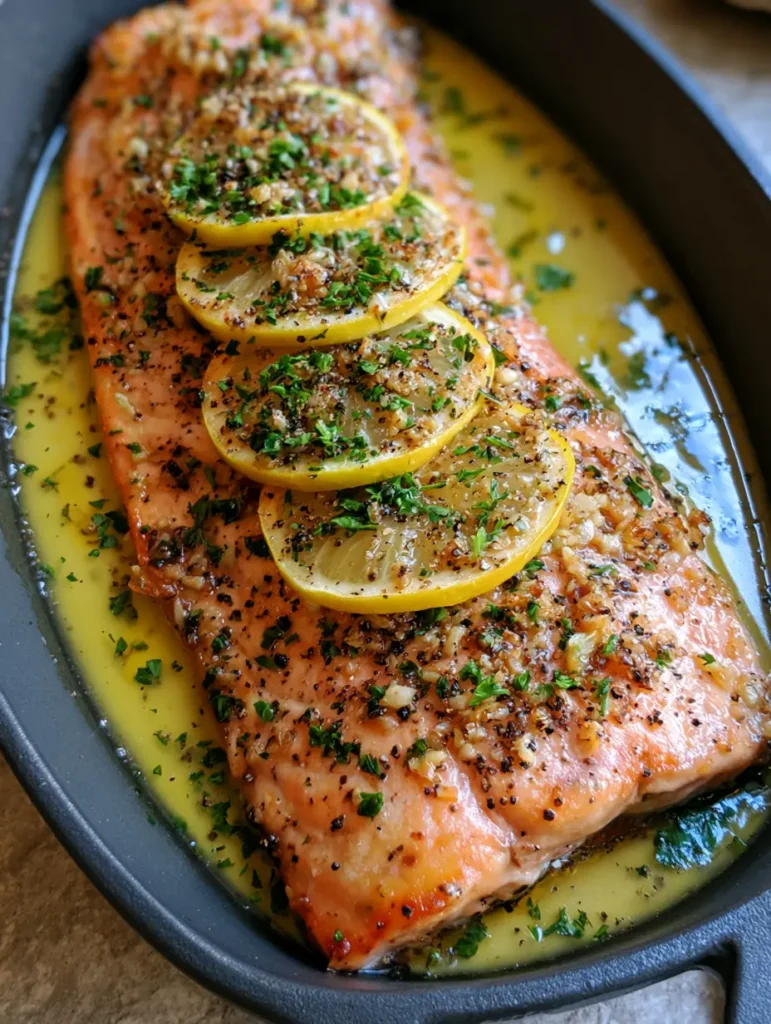
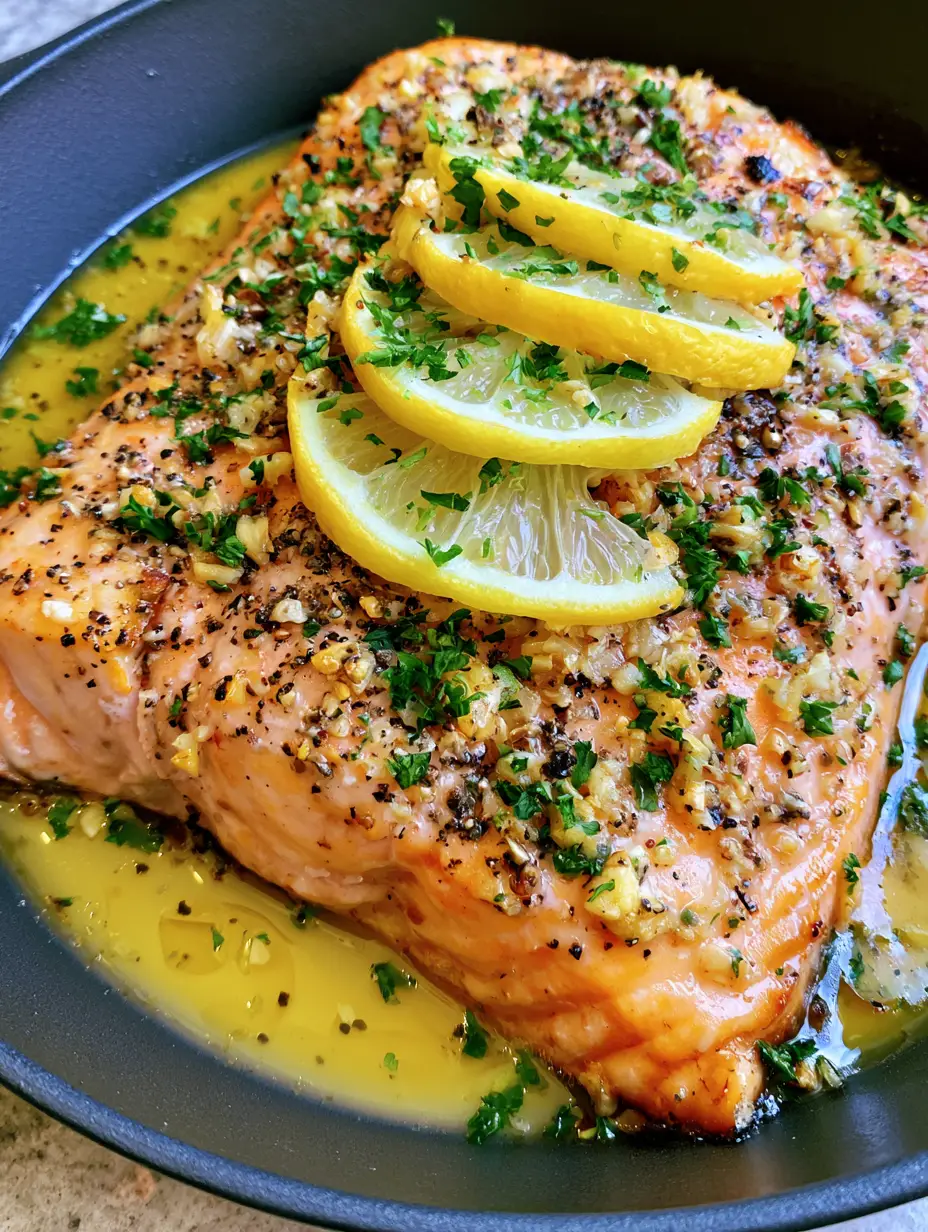
Imagine a large, succulent salmon fillet, its flesh a perfect opaque pink-orange, resting in a shallow, shimmering pool of glossy yellow sauce. The edges are just barely caramelized, offering a hint of sweetness to balance the savory garlic.
Every bite is a masterclass in texture and flavor, from the snap of coarse cracked black pepper to the herbaceous brightness of freshly chopped parsley. This isn’t just a meal; it’s a visual and sensory event served right out of a rustic cast iron skillet.
Why This Oven-Baked Masterpiece Works Every Single Time
- The Gloss Factor: By emulsifying the lemon juice with melted butter, we create a velvet-smooth sauce that clings to the fish rather than running off.
- Caramelized Complexity: High-heat baking ensures the salmon develops those coveted “gold edges” while the interior remains moist and flaky.
- Aromatic Density: Instead of a light dusting, we use a generous amount of sautéed minced garlic and cracked pepper to create a flavor crust.
- Visual Brilliance: The contrast between the bright yellow lemon slices, the deep green parsley, and the dark matte cast iron makes this dish an instant showstopper.
If you enjoy the rich, decadent flavors of butter-based seafood, you might also find yourself obsessed with our velvety garlic shrimp recipe for your next weeknight meal.
The Essential Components for a Glossy Citrus Glaze
To achieve the exact result seen in our visual blueprint, we must select our ingredients with forensic precision. Quality is the bridge between a “good” dinner and a “memorable” one.
The Salmon Fillet: Look for a center-cut fillet about 1.5 to 2 lbs (680-900g). This thickness ensures the outside caramelizes at the exact moment the center reaches a perfect medium-rare.
Unsalted Butter: Using 1/2 cup (115g) of high-quality unsalted butter allows us to control the seasoning perfectly. Butter provides the fat necessary for that “glossy yellow” finish described in our prompt.
Fresh Garlic: We use 4-5 large cloves (approx. 25g), finely minced. Sautéing them briefly before baking prevents the raw “bite” and develops a nutty, mellow sweetness.
Fresh Lemons: You will need 2 large lemons. One will be juiced for the sauce (approx. 4 tbsp or 60ml), and the other will be sliced into thin, bright yellow rounds for layering.
Foundational Seasonings: Coarse cracked black pepper and kosher salt are non-negotiable. The coarse grind of the pepper provides the visible “dark specks” that define the dish’s aesthetic.
Fresh Parsley: One bunch of flat-leaf parsley, finely chopped. This adds the “generous sprinkling of green” that cuts through the richness of the butter sauce.
For those who love the bold flavors of a garlic-heavy sauce, you should definitely explore the versatility of our famous cowboy butter (coming soon) for dipping your crusty bread.
Professional Tools for the Perfect Cast Iron Sear
To replicate the “unedited smartphone photo” look of a professional kitchen, you need the right heat conductors. The gear you use dictates the final texture of the salmon skin and edges.
12-inch Cast Iron Skillet: This is the star of the show. The dark matte surface of the cast iron provides incredible heat retention, which helps create those slightly caramelized edges.
Small Saucepan: Used for melting the butter and sautéing the minced garlic to ensure they are “glossy” and “fine bits” before they ever touch the fish.
Sharp Chef’s Knife: Essential for achieving those “thin, round slices” of lemon and the “finely chopped” parsley garnishes.
Instant-Read Thermometer: The only way to guarantee a “moist, flaky, opaque” interior without overcooking the delicate proteins.

Step-by-Step to Flaky, Gold-Edged Salmon
Cooking is as much about timing as it is about ingredients. Follow these steps to ensure your Lemon Garlic Butter Salmon matches the visual perfection of our blueprint.
Preparing the Salmon and Skillet
Preheat your oven to 400°F (200°C). While the oven heats, place your cast iron skillet inside for 5-10 minutes. This “pre-sears” the bottom of the fish the moment it hits the pan.
Pat the salmon fillet completely dry with paper towels. Any moisture on the surface will create steam, preventing that beautiful caramelization we are looking for.
Crafting the Glossy Lemon Garlic Butter
In a small saucepan over medium heat, melt 1/2 cup (115g) of unsalted butter. Add the minced garlic and sauté for 1-2 minutes until fragrant but not browned.
Whisk in 4 tbsp (60ml) of fresh lemon juice and a pinch of salt. The sauce should appear bright yellow and slightly thickened—this is your “glossy pool.”
If you’re a fan of this flavor profile, you might also enjoy our zesty lemon pepper chicken for a different take on citrus and spice.
The Assembly and Baking Process
Carefully remove the hot skillet from the oven. Brush the bottom with a teaspoon of oil (high smoke point) to prevent sticking, then lay the salmon fillet skin-side down.
Pour the lemon garlic butter over the salmon, ensuring the garlic bits stay on top. Season aggressively with coarse cracked black pepper.
Layer the thin lemon slices across the top of the fillet. Bake for 12-15 minutes, or until the thickest part of the salmon reaches an internal temperature of 135°F (57°C).
The Final Flourish: Broiling and Garnish
For those “slightly caramelized edges,” turn your broiler to high for the last 2 minutes of cooking. Watch closely; the butter will bubble and the lemon edges will start to brown.
Remove from the oven and immediately shower the salmon with the generous sprinkling of freshly chopped parsley. The residual heat will release the parsley’s oils, enhancing the aroma.
Mastering the Sizzle: Visual and Sensory Cues
How do you know when your Lemon Garlic Butter Salmon is perfect? Trust your senses, not just the timer. Professional chefs look for specific markers.
The Sound: When the salmon hits the preheated skillet, you should hear a gentle sizzle. This indicates the skin is crisping and the edges will soon turn golden.
The Look: The salmon should transition from translucent pink to a solid, opaque orange. When pressed lightly with a fork, the “flakes” should separate easily along the white fat lines.
The Smell: The kitchen should fill with the scent of toasted garlic and bright citrus. If the garlic smells bitter or burnt, it has cooked too long; aim for a nutty, buttery fragrance.
“The secret to restaurant-quality salmon isn’t the oven—it’s the prep. A dry fillet and a hot pan do 90% of the work for you.”
Expert Tips for Seamless Culinary Success
- Room Temperature: Take your salmon out of the fridge 15 minutes before cooking. This ensures even heat distribution throughout the fillet.
- Butter Emulsion: If your sauce separates, whisk in a teaspoon of cold water. This helps re-emulsify the fat and acid into a glossy glaze.
- Don’t Over-Garnish: While the prompt calls for “dense garnish,” ensure the parsley is fresh. Wilted parsley will turn dark and lose its vibrant green contrast.
- The Skillet Choice: If you don’t have cast iron, a heavy stainless steel pan works. Avoid glass baking dishes as they don’t produce the same edge caramelization.
For more high-heat inspiration, check out our garlic parmesan favorites that utilize similar aromatic bases.
What to Serve with Your Pan-Seared Salmon
To keep the focus on the glossy lemon sauce, pair this salmon with sides that can soak up the extra butter. A light, acidic salad also helps cut through the richness.
A side of fluffy butter swim biscuits is perfect for mopping up every last drop of the garlic butter from the skillet.
Alternatively, a crisp chickpea and black bean salad (coming soon) provides a refreshing, earthy contrast to the citrus-forward fish.
Storage, Reheating, and Make-Ahead Advice
Salmon is best enjoyed fresh, but if you have leftovers, they can be stored in an airtight container for up to 3 days in the refrigerator.
Reheating: Avoid the microwave, which can make the salmon rubbery. Instead, place the fillet back in a skillet over low heat with a splash of water and cover with a lid to steam gently.
Freezing: We do not recommend freezing the cooked salmon, as the texture of the “moist flakes” will degrade significantly upon thawing.
Frequently Asked Questions
While you can use olive oil, you will lose the ‘glossy yellow’ sauce texture and the rich, creamy flavor profile that defines this specific dish.
Yes, but ensure it is completely thawed and patted dry before cooking to avoid excess moisture, which prevents caramelization.
The salmon should be opaque pink-orange and flake easily with a fork. An internal temperature of 135°F (57°C) is ideal for a moist, tender result.
Sautéing the garlic briefly in butter before baking coats the bits in fat, which protects them from the direct heat of the oven and ensures they stay nutty and sweet.
Cast iron retains heat exceptionally well, allowing the bottom of the salmon to sear and the edges to caramelize more effectively than glass or ceramic dishes.
The Ultimate Lemon Garlic Butter Salmon Recipe
Lemon Garlic Butter Salmon: The Ultimate 20-Minute Gourmet Dinner
Ingredients
Equipment
Method
- Preheat oven to 400°F (200°C) and place the cast iron skillet inside to heat.
- Pat the salmon fillet dry with paper towels to ensure a good sear.
- Melt butter in a saucepan, sauté minced garlic for 1 minute, then whisk in lemon juice.
- Place salmon in the hot skillet, pour sauce over, top with lemon slices and pepper. Bake for 12-15 minutes.
- Optional: Broil for 2 minutes for caramelized edges and bubbling sauce.
Notes
Always use fresh parsley; dried parsley will not provide the same vibrant visual contrast.
Bringing the Restaurant Experience Home
This Lemon Garlic Butter Salmon proves that you don’t need a professional kitchen to produce a five-star meal. By focusing on the visual cues—the opaque flakes, the glossy sauce, and the caramelized edges—you create a dish that is as beautiful as it is delicious.
Whether you’re hosting a dinner party or just treating yourself to a high-RPM weeknight dinner, this recipe is a reliable win. The combination of the dark skillet against the light stone background makes for a presentation that looks just as good in person as it does on a smartphone screen.
If you loved this recipe, please leave a comment below and share your results! Don’t forget to follow us and save this recipe to your boards on Pinterest for more culinary inspiration.


