There is something inherently magical about the transformation of a humble yellow onion into a jammy, mahogany-hued masterpiece. When you marry that sweet, savory depth with succulent seared chicken and a velvety pasta, you get the French Onion Chicken Orzo—a dish that bridges the gap between a rustic bistro classic and modern home-cooked comfort.
This isn’t just another pasta recipe; it is a sensory experience designed to mimic the soulful profile of French Onion Soup. Imagine a cast iron skillet where every grain of orzo has been toasted to nutty perfection, then simmered in a rich onion-infused gravy until it achieves a risotto-like creaminess.
In this French Onion Chicken Orzo, we lean heavily into the Maillard reaction, ensuring every element—from the golden-brown chicken thighs to the toasted brown spots on the melted Gruyere—contributes to a complex flavor profile. The result is a visually stunning, top-down-worthy skillet meal that looks like it stepped right out of a professional food shoot and into your kitchen.
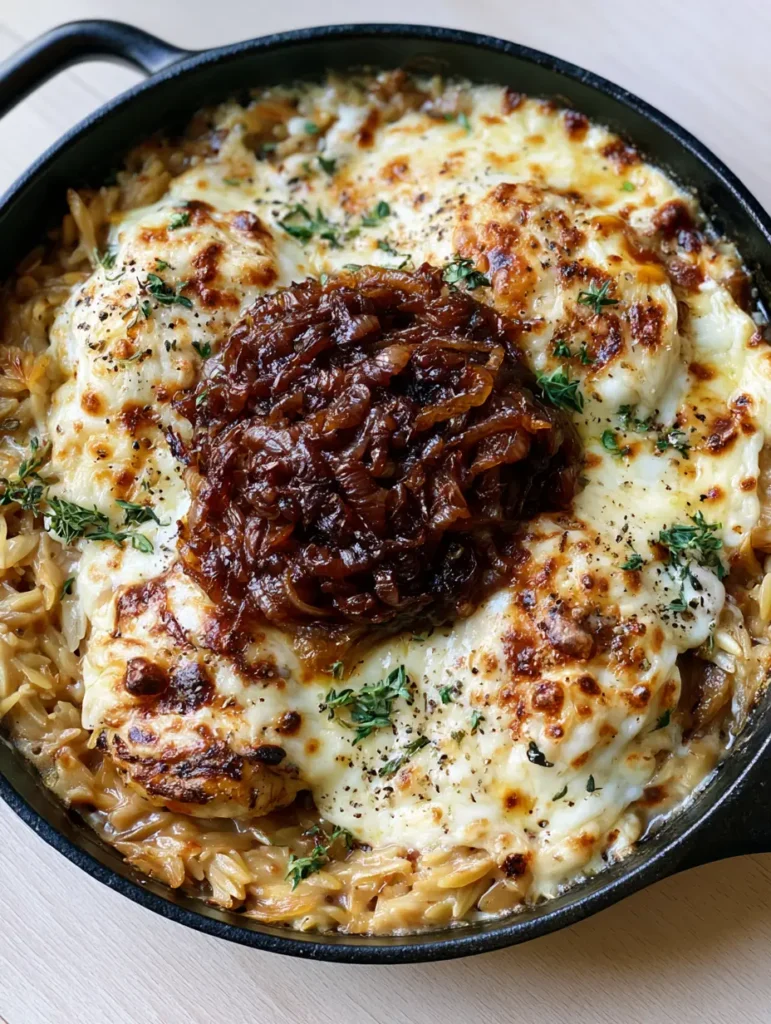
Why This French Onion Chicken Orzo Recipe Works
- Unrivaled Texture: We combine a foundation of creamy, tan-colored orzo with the gooey stretch of melted mozzarella and the sophisticated bite of aged Gruyere.
- Depth of Flavor: By building a savory onion gravy directly in the pan used to sear the chicken, we capture every bit of “fond” (the brown bits), maximizing the umami in the French Onion Chicken Orzo.
- Visual Masterpiece: Following professional culinary forensics, we crown the dish with a mountain of mahogany caramelized onions and fresh green thyme for a striking color contrast.
- One-Pan Efficiency: Despite its gourmet appearance, this entire meal comes together in a single rustic black cast iron skillet, making cleanup as easy as the cooking.
Essential Ingredients for Depth and Texture
Yellow Onions (3 Large / Approx. 900g): These are the soul of the dish. When sliced thin and cooked low and slow, they provide the “jammy” sweetness essential for a true French Onion Chicken Orzo experience.
Chicken Thighs or Breast (1.5 lbs / 680g): I recommend boneless, skinless thighs for their fat content and ability to stay juicy. We sear them until a deep golden-brown crust forms to ensure they stand up against the rich sauce.
Dry Orzo Pasta (1.5 cups / 300g): This rice-shaped pasta is the perfect vessel. Its high surface-area-to-volume ratio allows it to soak up the onion-infused sauce while maintaining a slight al dente “bite.”
Beef Broth (3.5 cups / 840ml): While chicken broth works, beef broth provides that signature dark, savory “gravy” look and flavor that defines the French onion style.
Gruyere and Mozzarella Blend (1 cup each / 115g each): Gruyere offers the classic nutty, salty flavor, while mozzarella provides the “thick, gooey blanket” and those iconic toasted brown spots when broiled.
Fresh Thyme and Cracked Black Pepper: These aren’t just garnishes; they provide the aromatic “lift” needed to cut through the richness of the cheese and cream.
Foundational Additions: You will also need 2 tbsp (30g) of unsalted butter for the onions, 1 tbsp (15ml) of olive oil for searing, and 1/4 cup (60ml) of heavy cream to achieve that “saturated in sauce” look.
The Essential Skillet and Tools
To achieve the visual result described in our blueprint, a 12-inch (30cm) rustic black cast iron skillet is non-negotiable. Cast iron retains heat exceptionally well, which is critical for getting that even, golden sear on the chicken and the high-heat broil for the cheese.
You will also need a sharp chef’s knife for the mountain of onions, a sturdy wooden spoon for deglazing the pan, and a microplane if you prefer to grate your Gruyere fresh—which I highly recommend for better melting.

Mastering the French Onion Chicken Orzo: Step-by-Step
Phase 1: Achieving the Jammy Onion Mountain
Heat your cast iron skillet over medium-low heat and melt 2 tbsp (30g) of butter. Add your thinly sliced onions with a pinch of salt to draw out moisture.
Cook these for 25–30 minutes, stirring occasionally. You are looking for a “dark mahogany” color and a jammy texture; if they start to stick too much, add a splash of water to deglaze.
Once they reach that deep caramel state, remove them from the skillet and set them aside. This “mountain” of onions will be the crowning glory of your French Onion Chicken Orzo.
Phase 2: Searing the Chicken for Maximum Fond
Wipe the skillet briefly and increase the heat to medium-high. Add 1 tbsp (15ml) of olive oil.
Season your chicken pieces generously with salt and cracked black pepper. Place them in the hot skillet and sear for 4–5 minutes per side.
Listen for a steady sizzle; this is the sound of the Maillard reaction. You want golden-brown seared chicken pieces with a visible crust. Remove the chicken and set aside; it will finish cooking in the oven.
Phase 3: Toasting the Orzo and Building the Gravy
In the same skillet (now full of flavorful chicken drippings), add your dry orzo. Stir it for 2 minutes until the grains turn a “tan-colored” or slightly toasted hue.
Slowly pour in the beef broth and 1/4 cup (60ml) of heavy cream. Use your wooden spoon to scrape up all the brown bits from the bottom—this creates the “savory onion gravy.”
Bring the mixture to a simmer, then nestle the chicken pieces back into the liquid. Let it simmer on the stove for 8–10 minutes until the orzo is tender and the liquid has reduced into a thick sauce.
Phase 4: The Gooey Cheese Blanket and Broil
Top the skillet with the shredded Gruyere and mozzarella. Ensure the cheese covers the chicken but leaves some of the creamy orzo visible around the edges.
Place the skillet under a broiler for 2–4 minutes. Watch closely! You want the cheese to be fully melted with those specific “toasted brown spots” mentioned in our visual prompt.
Once pulled from the oven, pile that reserved mountain of mahogany caramelized onions right in the center. Sprinkle with fresh green thyme leaves and another hit of cracked black pepper.
Expert Tips for Culinary Success
- The Deglazing Secret: If your pan looks like it’s burning during the onion phase, don’t panic. A tablespoon of water or dry sherry will lift those sugars and incorporate them back into the onions for a deeper color.
- Orzo Doneness: Orzo can overcook quickly. Remove the skillet from the heat when the pasta is just shy of “perfect,” as the residual heat of the cast iron will continue to cook it during the broiling phase.
- Cheese Quality: Always grate your Gruyere from a block. Pre-shredded cheeses are coated in potato starch to prevent clumping, which interferes with the “thick, gooey blanket” texture we want.
- Temperature Control: If the chicken is browning too fast but is raw inside, lower the heat. Remember, the chicken finishes cooking while the orzo simmers, so the initial sear is purely for flavor and color.
How to Store and Reheat Your Leftovers
This French Onion Chicken Orzo is best served fresh from the skillet, but it does hold up well for lunch the next day. Store leftovers in an airtight container in the refrigerator for up to 3 days.
When reheating, the orzo will likely have absorbed all the remaining sauce. To restore that “saturated in sauce” texture, add a splash of broth or milk before microwaving or reheating on the stovetop over low heat.
I do not recommend freezing this dish, as the cream and cheese can separate and become grainy upon thawing, ruining the luxurious mouthfeel.
What to Serve with French Onion Chicken Orzo
Because this dish is incredibly rich and savory, it pairs perfectly with something bright or acidic. A side of air fryer green beans provides a necessary snap and freshness to the meal.
If you are hosting a dinner party, start the evening with some garlic beef croquettes (coming soon) to lean into the umami theme. For those who love a bit of extra flavor, a dollop of roasted garlic butter melted over the hot chicken is a game-changer.
Finally, cleanse the palate with something sweet and portion-controlled like brownie bottom cheesecake bites for a perfect end to the night.
Frequently Asked Questions
You can substitute butter with oil, use a dairy-free cream alternative, and omit the cheese, though the flavor profile will significantly change.
Yes, you can use chicken breast. However, be careful not to over-sear them, as they dry out faster than thighs during the simmering process.
While highly recommended for the best sear and broiler safety, any heavy-bottomed, oven-safe skillet will work for this recipe.
The orzo should be tender to the bite but still have a slight firmness (al dente). It usually takes 8-10 minutes of simmering in the liquid.
Slice them pole-to-pole (root to stem) rather than into rings. This helps the onions maintain some structure during the long cooking process.
The Complete French Onion Chicken Orzo Recipe
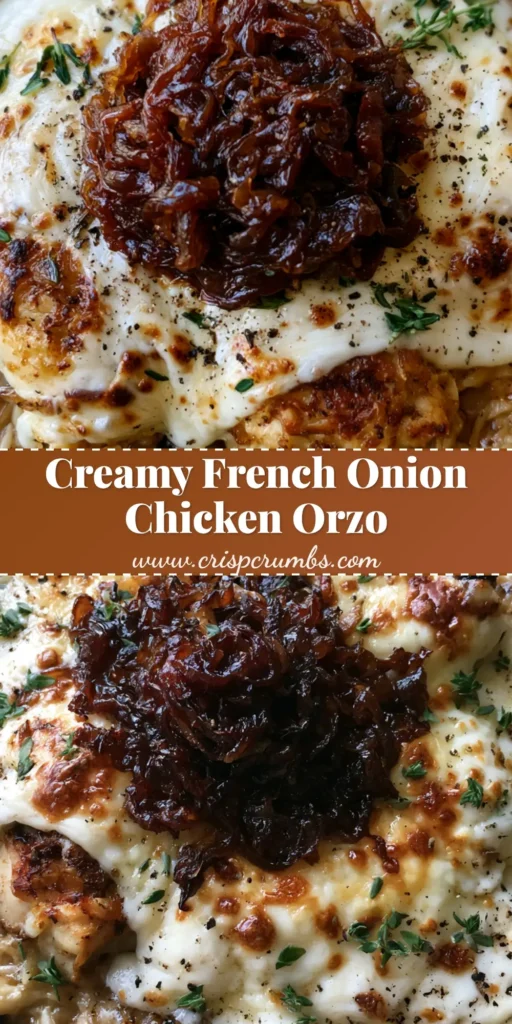
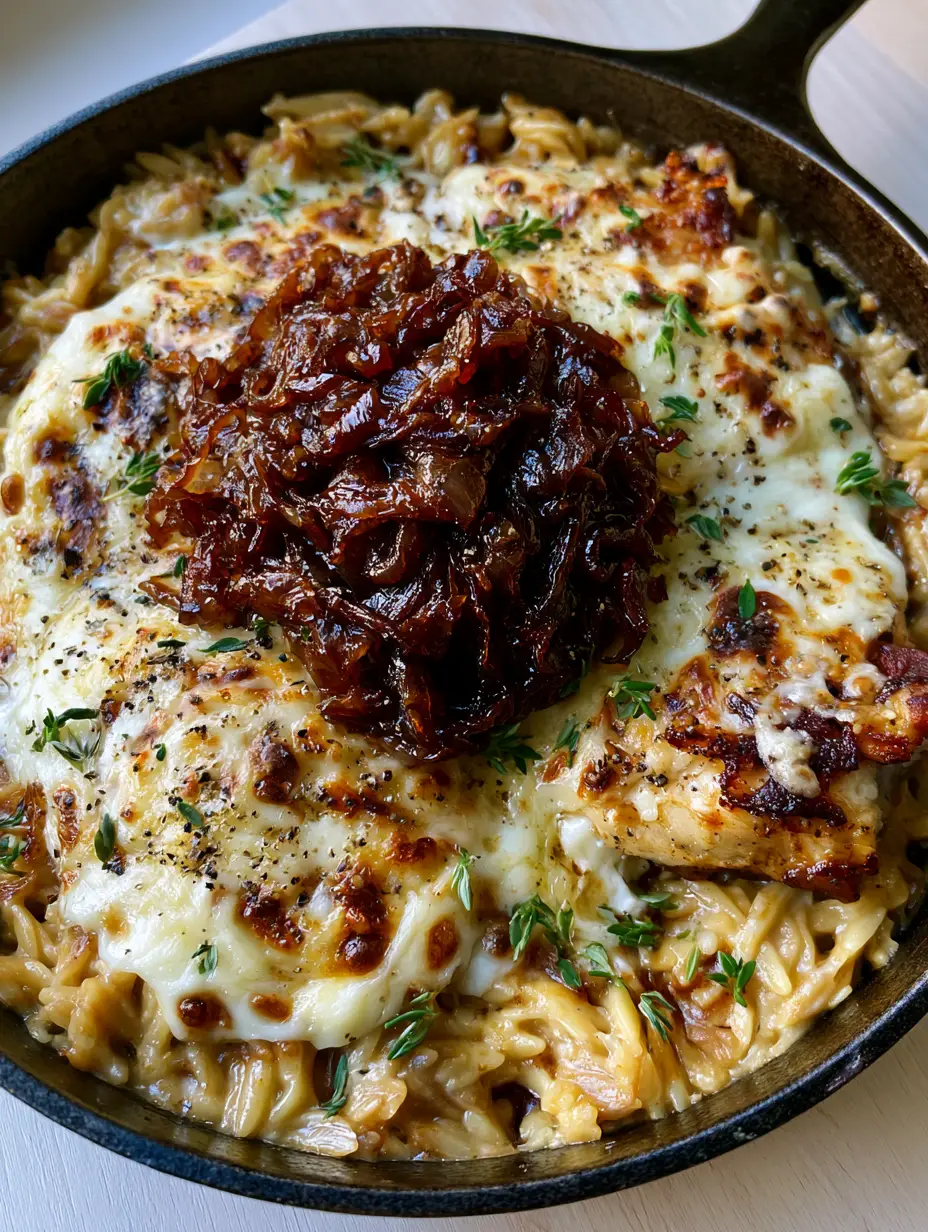
French Onion Chicken Orzo: The Ultimate One-Pan Comfort Meal
Ingredients
Equipment
Method
- Melt butter in the cast iron skillet over medium-low heat. Add onions and cook for 25-30 minutes until dark mahogany and jammy. Remove and set aside.
- Heat oil in the same skillet. Season chicken and sear until golden-brown. Remove and set aside.
- Toast orzo in chicken drippings for 2 minutes. Add broth and cream, deglazing the pan. Return chicken and simmer until orzo is tender (8-10 mins).
- Top with Gruyere and Mozzarella. Broil for 2-4 minutes until cheese has toasted brown spots. Top with the mountain of onions, thyme, and pepper.
Notes
Always grate cheese from a block for the best melt.
Conclusion: Bring the Bistro Home
The French Onion Chicken Orzo is more than just a meal; it is a testament to how simple ingredients like onions and pasta can be elevated through proper technique. Whether it’s the gooey pull of the Gruyere or the deep sweetness of the jammy onions, every bite is designed to comfort and impress.
If you enjoyed this recipe, please leave a comment below and let me know how your caramelization turned out! Don’t forget to share your skillet photos with us on Pinterest and sign up for our newsletter for more one-pan wonders.


