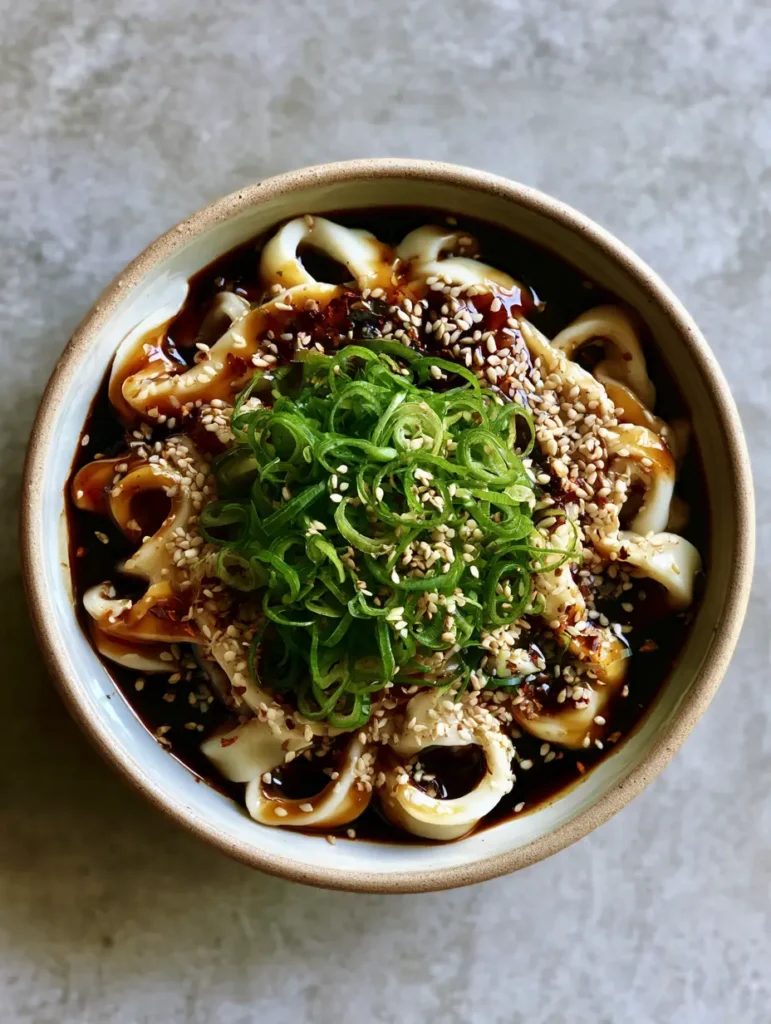
There is a specific kind of magic that happens when thick, chewy noodles meet a perfectly emulsified Udon Noodle Sauce. You know the look—that deep, mahogany sheen that catches the light and promises a hit of umami in every bite. This isn’t just a liquid seasoning; it is a culinary coat of armor for your noodles.
If you have ever stared at a bowl of restaurant-style stir-fry and wondered how they get that “glossy” finish without the dish being greasy, you are in the right place. We are recreating that exact visual today: thick white noodles draped in a dark, savory velvet, punctuated by the bite of fresh scallions and the crunch of toasted seeds.
This Udon Noodle Sauce recipe is designed for the home cook who wants high-impact flavor with minimal cleanup. By balancing fermented soy, toasted oils, and a touch of sweetness, we create a sauce that grips the noodle instead of pooling at the bottom of the bowl.
Why This Mahogany Udon Noodle Sauce is a Weeknight Game Changer
- Visual Perfection: Achieving that dark mahogany-colored savory sauce that reflects soft light isn’t luck; it’s food science involving specific soy ratios.
- Textural Harmony: The contrast between the soft, yielding boiled thick udon noodles and the crisp, fresh green scallions creates a professional mouthfeel.
- Pantry Friendly: Most of these components are likely already in your cupboard, ready to be whisked into a five-star meal.
- Speed: From the moment you boil your water to the final sprinkling of dried red chili flakes, you are looking at less than 15 minutes of total time.
The Flavor Foundry: Essential Ingredients for Your Udon Noodle Sauce
Thick Udon Noodles (Fresh or Frozen): These are the canvas for our work. Their high starch content and chewy diameter are essential for holding onto a heavy, glossy sauce.
Dark Soy Sauce: This provides the signature mahogany color. It is thicker and less salty than regular soy, acting more as a dye and a rich flavor base.
Light Soy Sauce: This is where the primary salt seasoning comes from. It penetrates the noodles to ensure they are flavored all the way through, not just on the outside.
Mirin: A Japanese rice wine that provides a subtle sweetness and a distinct luster. This is the secret to that “reflects soft light” glow mentioned in our visual blueprint.
Toasted Sesame Oil: Used sparingly at the end, this oil provides an aromatic depth that ties the fermented soy notes together. It also helps lubricate the noodles to prevent sticking.
Brown Sugar or Honey: A small amount of sugar is required to balance the salt. More importantly, it helps the Udon Noodle Sauce caramelize slightly when it hits the hot pan.
Cornstarch (Foundational Secret): A tiny slurry of cornstarch is what gives the sauce its “body.” It transforms a thin liquid into a glossy glaze that clings to every curve of the noodle.
Fresh Green Scallions: We use a dense cluster of thinly sliced scallions in the center. They provide a necessary sulfurous “pop” and a vibrant green visual contrast to the dark sauce.
Toasted White Sesame Seeds: These add a nutty finish and a professional aesthetic. Always toast them briefly to release their natural oils before garnishing.
Dried Red Chili Flakes: These tiny flecks of red are scattered throughout for a controlled heat. They break up the brown-on-brown color palette with a hint of spice.
Essential Kitchen Tools for High-Heat Noodle Tossing
To achieve the results seen in our handheld smartphone photo style, you need a high-walled skillet or a wok. The extra surface area allows the Udon Noodle Sauce to reduce quickly without overcooking the noodles themselves.
You will also want a sturdy pair of silicone-tipped tongs. Unlike a spatula, tongs allow you to lift and swirl the noodles, ensuring every inch is thoroughly coated in that glossy, dark mahogany-colored savory sauce.
Lastly, a small fine-mesh strainer is helpful for rinsing the noodles after boiling. Removing excess surface starch ensures the sauce sticks to the noodle rather than turning into a gummy paste.

The Roadmap to Noodle Perfection: Step-by-Step Instructions
1. Preparing the Thick, Chewy Noodle Base
Bring a large pot of water to a rolling boil. Drop in your 14 oz (400g) of udon noodles and stir gently to separate them. If using frozen noodles, they only need about 1-2 minutes; fresh noodles may take slightly longer.
Look for the noodles to become opaque and slightly bouncy. Immediately drain them and rinse under cold water to stop the cooking process and remove excess starch. This ensures your final dish has distinct, individual noodles rather than a clump.
2. Whisking the Dark Mahogany Sauce
In a small bowl, combine 2 tbsp (30ml) dark soy sauce, 1 tbsp (15ml) light soy sauce, 1 tbsp (15ml) mirin, and 1 tsp (5g) brown sugar. Add 1/2 tsp (2.5g) cornstarch and whisk until no lumps remain.
Listen for the whisk hitting the glass; as the sugar dissolves, the sound will change from gritty to smooth. This mixture will look quite dark, but it will thin out and brighten slightly once it hits the heat and the moisture from the noodles.
3. The Sizzle and the Glaze
Heat a skillet over medium-high heat with 1 tsp (5ml) of neutral oil. Once the oil shimmers, add the drained noodles and toss for 30 seconds to drive off any remaining surface water.
Pour the Udon Noodle Sauce over the noodles. You will immediately hear a loud sizzle and smell the toasted aroma of caramelized soy. Toss constantly for 60-90 seconds until the sauce thickens into a glossy, dark coating that reflects the light.
4. Garnishing for Visual Impact
Turn off the heat and drizzle with 1/2 tsp (2.5ml) toasted sesame oil. Transfer the noodles to a shallow ceramic bowl, twisting them with tongs to create height in the center.
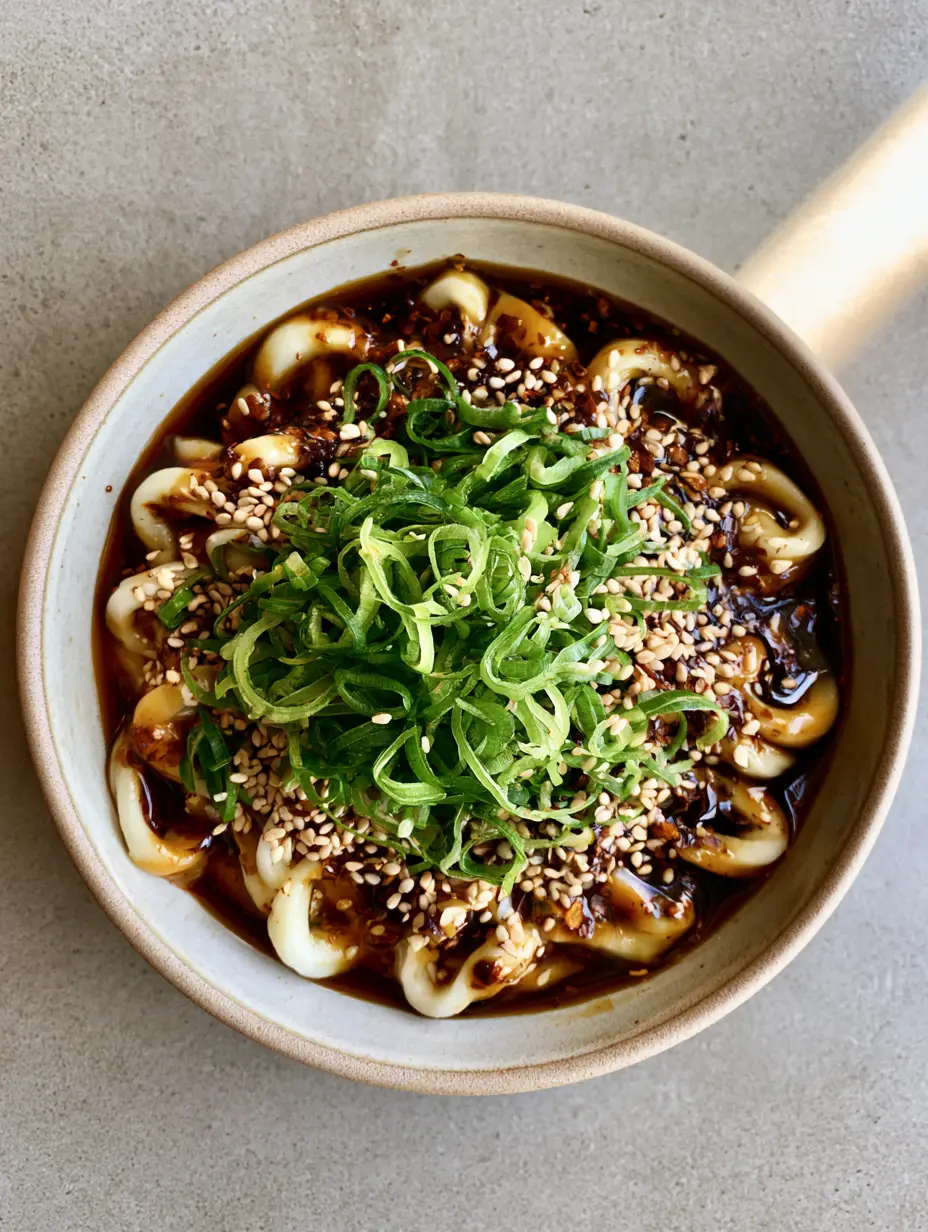
Top with a dense cluster of thinly sliced bright green scallions right in the middle. Generously sprinkle the toasted white sesame seeds around the edges and finish with a scattered pinch of dried red chili flakes for that perfect top-down photo finish.
Pro Secrets for Silky-Smooth Noodle Coating
- Don’t Overcrowd: If you are doubling the recipe, cook in two batches. Too many noodles in the pan will cause the temperature to drop, resulting in soggy noodles instead of a seared glaze.
- The Rinse is Vital: Skipping the cold water rinse after boiling is the #1 reason for “gloopy” udon. You want the Udon Noodle Sauce to provide the texture, not the noodle starch.
- Watch the Heat: Because this sauce contains sugar and soy, it can burn quickly. If the sauce looks too thick before the noodles are coated, add a splash of water (1 tbsp) to loosen it.
- Scallion Freshness: Only slice your scallions right before serving. This keeps them “bright green” and turgid, providing that crisp texture described in the visual prompt.
Handling Leftovers and Meal Prep Logistics
While this dish is best served immediately to appreciate the “steam” and “glossy” texture, it does keep well in the fridge for up to 3 days. Store in an airtight container once completely cooled.
To reheat, avoid the microwave if possible, as it can make udon rubbery. Instead, toss them back into a hot skillet with a tiny splash of water to re-emulsify the Udon Noodle Sauce and bring back that mahogany shine.
Do not freeze cooked udon noodles. The high water content in the thick noodles leads to ice crystals that destroy the cellular structure, leaving you with mushy noodles upon thawing.
What to Serve Alongside Your Savory Udon Creation
This Udon Noodle Sauce provides a rich, heavy flavor profile that pairs beautifully with bright, acidic side dishes. A crisp jalapeno slaw (coming soon) offers a cooling crunch that cuts through the saltiness of the soy base.
If you want to add a protein element, these noodles serve as a fantastic bed for honey garlic salmon bites or even a classic Chinese beef stir-fry. The dark sauce of the noodles complements the charred edges of the beef perfectly.
For a fun fusion appetizer, try serving these alongside spicy garlic beef croquettes (coming soon). The soft interior of the croquette and the chewy noodle create a textural playground for your guests.
Common Questions About Stir-Fry Sauces
Yes, frozen ‘Sanuki-style’ udon noodles are superior for this recipe as they maintain a much better chew and thickness, which is essential for holding the heavy sauce.
You can use regular soy sauce, but you will lose the deep mahogany color and the slightly thicker consistency. To compensate, add an extra teaspoon of brown sugar and a tiny drop more cornstarch.
The gloss comes from two sources: the sugars in the mirin/brown sugar caramelizing and the addition of a cornstarch slurry which creates a smooth, reflective surface when heated.
As written, it has a very mild heat from the dried red chili flakes. You can easily adjust the spice level by increasing the flakes or adding a teaspoon of chili oil to the base.
This usually happens if the noodles weren’t drained well or if the sauce wasn’t cooked long enough to activate the cornstarch. Ensure the skillet is hot so the sauce reduces and clings immediately.
The Ultimate Glossy Udon Noodle Sauce Recipe
Udon Noodle Sauce: The Ultimate 15-Minute Glossy Stir-Fry Secret
Ingredients
Equipment
Method
- Boil thick udon noodles in water until chewy and opaque. Drain and rinse immediately with cold water to remove surface starch.
- In a bowl, whisk together dark soy sauce, light soy sauce, mirin, brown sugar, and cornstarch until a smooth, dark mahogany liquid forms.
- Heat oil in a skillet over high heat. Add noodles and the Udon Noodle Sauce. Toss constantly until the sauce thickens and reflects light with a glossy sheen.
- Plate the noodles in a shallow bowl. Top with a dense cluster of scallions, sesame seeds, and chili flakes.
Notes
Use Dark Soy Sauce specifically to achieve the deep mahogany color shown in the photos.
Bring the Noodle House Home
Creating a restaurant-quality bowl of udon doesn’t require years of training—just the right balance of ingredients and a focus on that signature glossy finish. This Udon Noodle Sauce is the perfect entry point for anyone looking to master Japanese-inspired comfort food at home.
If you enjoyed this recipe, please leave a comment below and let us know how your mahogany glaze turned out! Don’t forget to follow CrispCrumbs on Pinterest for more visual recipe guides and weeknight dinner inspiration. Share your photos and tag us; we love seeing your kitchen wins!


