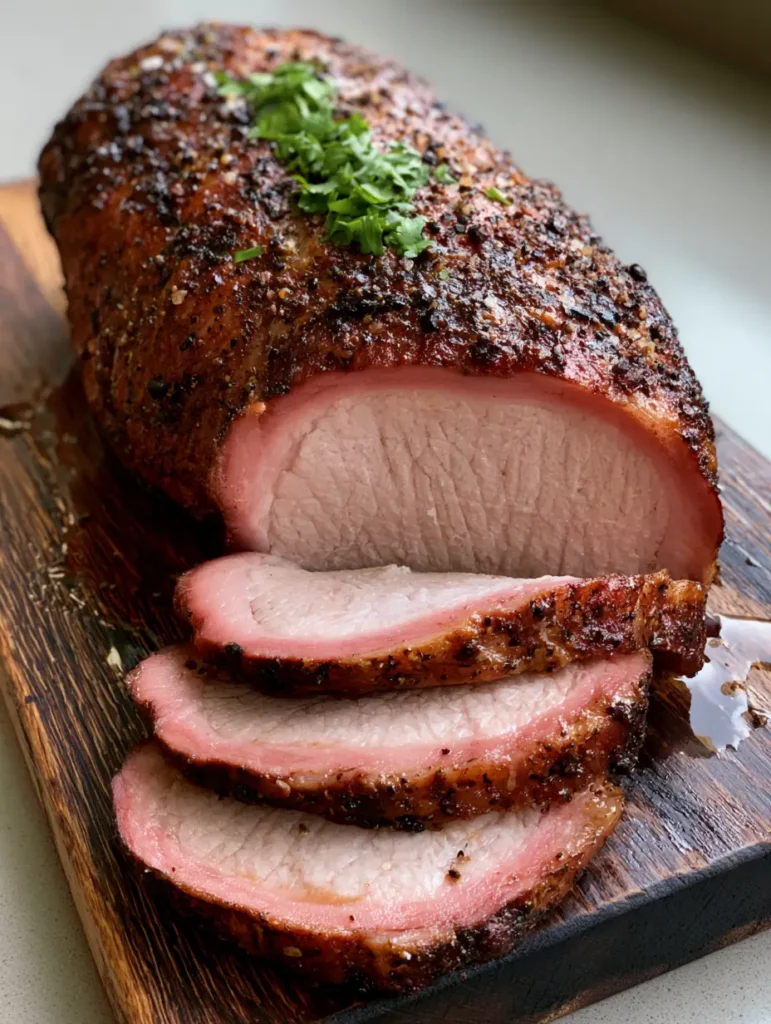
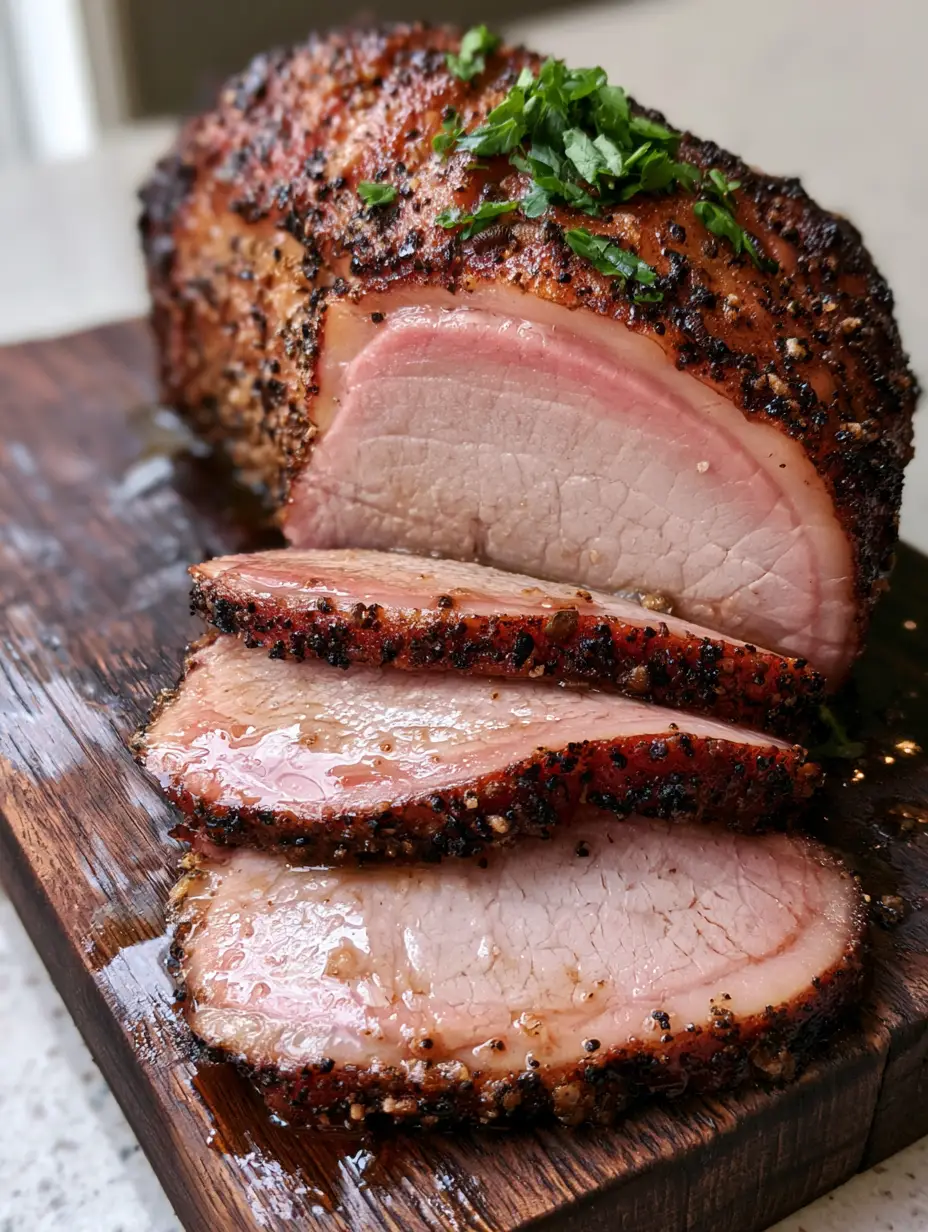
When you master this Smoked Pork Loin Recipe, you aren’t just cooking dinner; you are creating a culinary centerpiece. Imagine a boneless roast with a dark, well-seasoned mahogany brown bark, encrusting a center that is incredibly moist and pale pink. As you slice through it, a distinct pink smoke ring reveals itself—the hallmark of a true pitmaster.
The visual appeal is undeniable. On a rustic wooden cutting board, the thick slices glisten with natural juices, accented by flecks of coarse salt and cracked black pepper. A final sprinkle of fresh green parsley adds that pop of color that makes the dish look as good as it tastes. This recipe bridges the gap between backyard barbecue and fine dining.
Achieving this level of perfection requires more than just heat; it requires an understanding of smoke, salt, and temperature. Whether you are using a pellet grill, an offset smoker, or a ceramic egg, this guide will walk you through the nuances of the “low and slow” method. We will ensure your pork loin remains succulent rather than dry, a common pitfall we are about to solve forever.
Why This Is the Only Smoked Pork Loin Recipe You’ll Ever Need
- The Perfect Smoke Ring: We utilize specific temperature control and wood selection to ensure that coveted 1/4-inch pink border.
- Maximum Surface Texture: Our coarse-grain rub creates a “bark” that provides a satisfying, salty-peppery crunch in every bite.
- Internal Moisture Retention: By targeting a specific internal temperature and honoring the rest period, we keep the meat juices on your plate, not the cutting board.
- Visual Masterpiece: Every step is designed to replicate the stunning aesthetic of a dark mahogany exterior contrasting with a tender, pale interior.
The Essential Rub and Prep for a World-Class Smoked Pork Loin
To achieve the visual and textural results seen in professional barbecue, the ingredients must be selected for both flavor and chemical reaction. This Smoked Pork Loin Recipe relies on a balance of moisture-attracting salts and aromatic spices.
1 (4-5 lb / 1.8-2.3 kg) Boneless Pork Loin Roast: Choose a roast with a small fat cap still attached to provide self-basting moisture during the long smoke. Ensure it is uniform in shape for even cooking.
2 tbsp (30ml) Yellow Mustard: This acts as a “binder.” You won’t taste the mustard after smoking, but it allows the rub to adhere perfectly to the meat to form that thick bark.
3 tbsp (45g) Coarse Kosher Salt: Unlike table salt, coarse salt crystals draw moisture out then pull the seasoning back in, deeply flavoring the meat while enhancing the surface texture.
3 tbsp (45g) Coarse Ground Black Pepper: This is the backbone of the “Texas-style” bark. The coarse grind is essential for the visual flecks and the spicy heat that cuts through the pork’s richness.
1 tbsp (15g) Garlic Powder: This provides a foundational savory note that complements the smoke without burning like fresh garlic would.
1 tbsp (15g) Onion Powder: Onion powder adds a subtle sweetness and depth, helping the mahogany color develop as it caramelizes on the surface.
1/2 cup (10g) Fresh Parsley, finely chopped: This is our vibrant garnish. It provides a clean, herbaceous finish that brightens the heavy, smoky flavors of the meat.
Professional Tools for Smoked Pork Success
To replicate the result of a dark, seasoned bark and a glistening center, you need the right equipment. You cannot guess the internal temperature of a pork loin; precision is the difference between juicy and rubbery.
A Quality Smoker: Whether it’s a Traeger, Big Green Egg, or an offset smoker, you need a unit that can maintain a steady 225°F (107°C).
Wood Chunks or Pellets: Use Fruitwoods like apple or cherry for a lighter, sweeter smoke, or Hickory for a more traditional, aggressive BBQ profile.
Digital Meat Thermometer: An instant-read or leave-in probe thermometer is mandatory. We are looking for a final internal pull temperature of 145°F (63°C).
Dark Rustic Wooden Cutting Board: For the best presentation, a dark wood board highlights the glistening meat juices and the pink smoke ring beautifully.
The Step-by-Step Blueprint for Smoked Pork Loin
Preparing the Meat for the Smoke
Start by patting your pork loin completely dry with paper towels. Any surface moisture will steam rather than smoke, preventing that dark bark from forming. If there is an excessively thick fat cap (more than 1/4 inch), trim it down so the smoke can penetrate the meat.
Apply the yellow mustard binder over the entire surface of the loin. Use your hands to massage it into every crevice. Once coated, liberally apply the salt, pepper, garlic, and onion powder mixture. You want to see “visible flecks” of seasoning; do not be shy with the rub.
Mastering the Low and Slow Fire
Preheat your smoker to 225°F (107°C). If you are using a charcoal smoker, set up a water pan to add humidity to the cooking chamber. This helps the smoke “stick” to the meat and keeps the exterior from drying out before the interior is cooked.
Place the pork loin directly on the grill grates, fat side up. This allows the melting fat to run over the roast. Close the lid and resist the urge to peek. Every time you open the lid, you lose heat and smoke density, which are vital for that mahogany color.

Monitoring Sensory Cues and Color
After about 2 hours, check the color of your roast. You are looking for a transformation from pale pink to a deep, seasoned mahogany brown. The surface should look dry and set—this means your bark has formed. If the meat looks dry, you can lightly spritz it with apple juice or water, but do not over-saturate.
Insert your thermometer into the thickest part of the loin. We are aiming for an internal temperature of 145°F (63°C). Depending on the thickness of your roast, this typically takes 2.5 to 3.5 hours. At 140°F (60°C), the meat will have a pale pink center, which will carry over to a perfect 145°F (63°C) while resting.
The Critical Rest and Slicing
Once you hit your target temperature, remove the pork loin and place it on your wooden cutting board. Tent it loosely with foil. Do NOT wrap it tightly, or the steam will soften the beautiful bark you just worked so hard to create.
Let the meat rest for at least 15-20 minutes. This allows the muscle fibers to relax and reabsorb the glistening juices. If you slice too soon, the juices will run out, leaving the meat dry. Slice the roast into thick, succulent rounds. You will see the pink smoke ring clearly defined against the pale center.
Expert Tips for Pitmaster Results
- The “Cold Start” Trick: Put your meat in the smoker while it is still cold from the fridge. Smoke is attracted to cold, moist surfaces, which helps develop a deeper smoke ring.
- Consistent Pellet Quality: If using a pellet grill, ensure your pellets are dry. Damp pellets produce “dirty smoke,” which can make your bark taste bitter instead of savory.
- Don’t Oversmoke: Pork loin is lean. Avoid using heavy woods like Mesquite, which can overwhelm the delicate flavor of the pork. Apple wood is the gold standard for this Smoked Pork Loin Recipe.
- The Slicing Angle: Slice against the grain. Even in a tender loin, slicing against the grain ensures the shortest muscle fibers and the most “melt-in-your-mouth” texture.
The Science of Storing and Reheating Smoked Meat
Leftover smoked pork loin is a gift. Store it in an airtight container in the refrigerator for up to 4 days. To maintain the juicy texture, avoid the microwave when reheating.
For the best results, reheat slices in a pan with a splash of apple juice or broth over low heat. This creates a steam effect that warms the meat without drying it out. You can also freeze the smoked loin; wrap it tightly in plastic wrap and then foil to prevent freezer burn, lasting up to 3 months.
If you find yourself with leftovers, they are incredible in a spicy chipotle breakfast sandwich the next morning, or chopped up for a quick chinese beef stir fry style pork dish.
Perfect Pairings: What to Serve with Smoked Pork
Because this Smoked Pork Loin Recipe is rich and smoky, it pairs beautifully with side dishes that offer acidity or creaminess. A classic deviled egg macaroni salad provides a cool, tangy contrast to the warm bark of the pork.
If you want something lighter, a crisp asian cabbage salad offers a crunch that mimics the texture of the pork’s crust. For those who enjoy a bit of fruitiness with their pork, consider serving it alongside a slice of orange creamsicle jello pie for a nostalgic, sweet finish to the meal.
Don’t forget the beverages! A smoky meal like this goes perfectly with a refreshing campfire dirty soda to keep the outdoor theme alive.
Common Questions About Smoking Pork Loin
While not strictly necessary for this recipe due to the low-and-slow method, a dry brine (salting the meat 12-24 hours in advance) can help further tenderize the proteins and enhance moisture retention.
The smoke ring is a chemical reaction between nitrogen dioxide in the smoke and myoglobin in the meat. To enhance it, put the meat in the smoker while it’s cold and maintain a moist environment using a water pan.
Typically, it takes between 35 to 45 minutes per pound. For a standard 4-5 lb roast, expect a total cook time of 2.5 to 3.5 hours to reach an internal temperature of 145°F (63°C).
Fruitwoods like apple and cherry are ideal because they provide a mild, sweet flavor that doesn’t overpower the pork. Hickory is a great choice if you prefer a stronger, more traditional BBQ aroma.
Pork loin is very lean and dries out quickly if overcooked. Ensure you pull the meat at 140-142°F and let carry-over cooking bring it to 145°F. Also, avoid slicing it immediately; a 20-minute rest is essential to lock in juices.
The Ultimate Smoked Pork Loin Recipe Card
Smoked Pork Loin Recipe: The Ultimate Guide to Juicy, Mahogany-Crusted Perfection
Ingredients
Equipment
Method
- Pat the pork loin dry with paper towels. Trim excess fat to 1/4 inch thickness.
- Coat the entire loin in yellow mustard. Mix the salt, pepper, garlic, and onion powder, then press firmly into the meat until covered in visible flecks.
- Set smoker to 225°F (107°C) using apple or hickory wood.
- Place meat on grates fat-side up. Smoke until the exterior reaches a mahogany brown bark and internal temp hits 140°F (60°C).
- Remove from smoker and tent loosely with foil on a wooden board. Let rest for 20 minutes to allow internal temp to reach 145°F (63°C).
- Slice into thick rounds, showing off the pink smoke ring. Sprinkle with fresh chopped parsley and serve with glistening juices.
Notes
Never wrap tightly in foil during the rest, or you will ruin the crispy bark texture.
Conclusion: Bring the Smokehouse Home
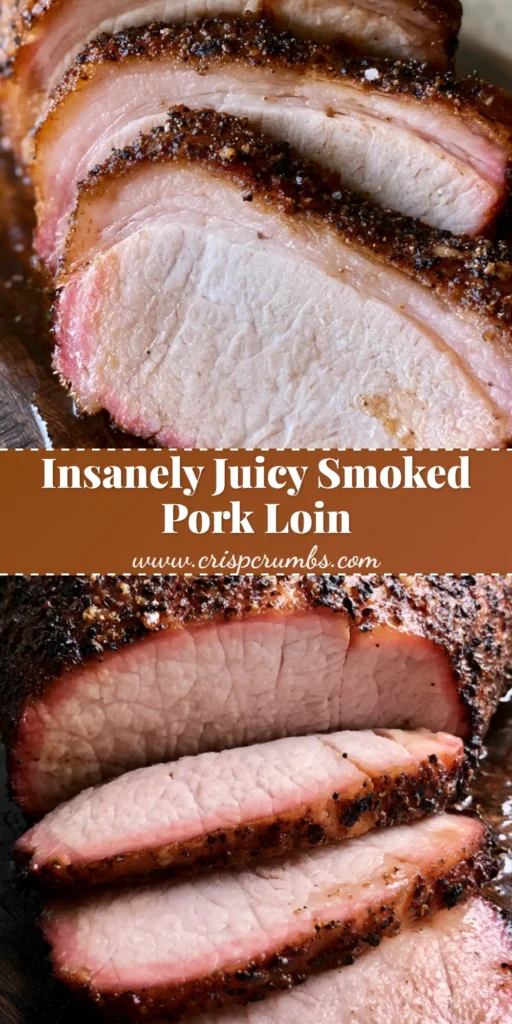
This Smoked Pork Loin Recipe is more than just a meal; it’s a masterclass in texture and flavor. From the glistening juices to the peppery bark and the perfect pink smoke ring, this roast is designed to impress. The combination of “low and slow” science and simple, high-quality ingredients ensures a result that looks like a professional photograph every time.
We invite you to share your results! Did you get that deep mahogany crust? Tag us in your photos and follow our Pinterest for more backyard barbecue inspiration. Don’t forget to leave a comment below with your favorite wood pairings!


