There is a specific, intoxicating aroma that drifts through the streets of Lisbon and the Algarve—the scent of salt, smoke, and bird’s eye chilies. This Portuguese Grilled Chicken is more than just a meal; it is a sensory journey designed to replicate that exact roadside churrasqueira experience in your own backyard.
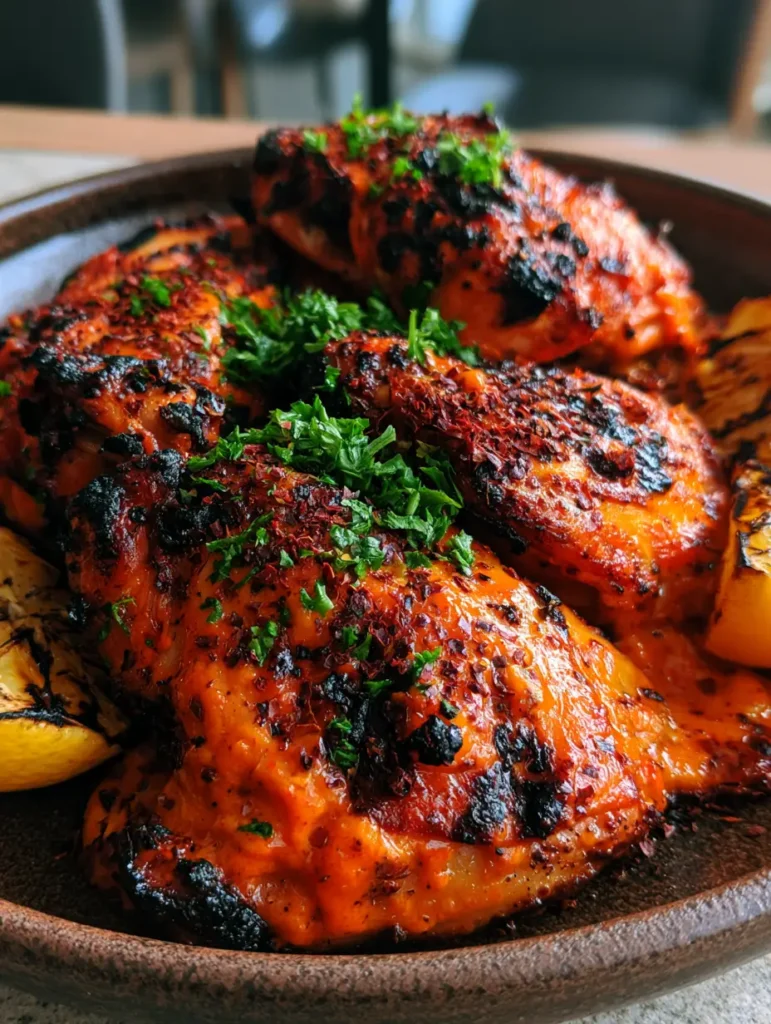
We are focusing on achieving that iconic visual: chicken pieces with deeply charred crispy skin, punctuated by dark grill marks that tell a story of high-heat mastery. The centerpiece is a thick, vibrant reddish-orange piri piri glaze that clings to every crevice of the meat.
To finish the dish, we lean into the freshness of finely chopped green parsley and a bold sprinkle of dried red pepper flakes. Served alongside grilled lemon wedges on a rustic platter, this recipe delivers a professional-grade aesthetic that looks like an unedited handheld smartphone photo from a high-end culinary tour.
Why This Piri Piri Chicken Recipe Wins Every Time
- The Perfect Char: We utilize a dual-zone grilling technique to ensure the skin achieves a shatteringly crisp texture without drying out the interior.
- Vibrant Visual Contrast: The reddish-orange glaze against the green parsley creates a stunning color palette that pops on any serving dish.
- Forensic Flavor Accuracy: By using authentic bird’s eye chilies (or high-quality substitutes), we achieve the specific heat profile native to Portuguese cuisine.
- Textural Balance: The addition of dried red pepper flakes adds a secondary layer of crunch and heat that complements the smooth, thick glaze.
The Anatomy of an Authentic Portuguese Marinade and Glaze
To achieve the “thick vibrant reddish-orange” look required for this Portuguese Grilled Chicken, we must understand the chemistry of the sauce. We aren’t just making a thin hot sauce; we are building an emulsified glaze that stands up to the heat of the grill.
Chicken Pieces: We recommend a mix of bone-in, skin-on thighs and drumsticks. The bone acts as an insulator, keeping the meat juicy while the skin renders into that desired charred crispiness.
Bird’s Eye Chilies (Piri Piri): 8-10 chilies (roughly 15g). These provide the signature heat and contribute to the underlying red hue of the glaze.
Smoked Paprika: 2 tbsp (14g). This is the secret to the deep reddish-orange color and adds a foundational earthiness that mimics wood-fire cooking.
Garlic Cloves: 6 large cloves (30g). Fresh garlic is essential for the pungent, aromatic profile that defines Mediterranean and Atlantic Portuguese cooking.
Extra Virgin Olive Oil: 1/2 cup (120ml). Oil is the vehicle for flavor; it emulsifies the sauce and helps the chicken sear properly on the grill grates.
Lemon Juice and Zest: 2 lemons. The acidity cuts through the fat of the chicken skin, brightening the entire flavor profile and tenderizing the meat.
Red Wine Vinegar: 2 tbsp (30ml). This adds a sharp tang that lingers on the palate, a classic characteristic of authentic piri piri sauces.
Kosher Salt: 1 tbsp (15g). Crucial for dry-brining the chicken skin to ensure it becomes crispy rather than rubbery when exposed to heat.
Dried Oregano: 1 tsp (2g). An “invisible” ingredient that provides a floral, herbal backbone to the spicy sauce.
Fresh Parsley: 1/4 cup (15g), finely chopped. This provides the vibrant green garnish that contrasts beautifully with the reddish-orange glaze.
Dried Red Pepper Flakes: 1 tsp (2g). Used as a finishing touch to add visual texture and a final hit of raw heat.
Lemons for Grilling: 2 lemons, halved. Grilling the lemons caramelizes their sugars, making the juice sweeter and more complex when squeezed over the finished chicken.
Essential Tools for the Ultimate Churrasco Experience
Achieving dark grill marks and charred skin requires the right equipment. A heavy-duty charcoal or gas grill is the primary requirement for that authentic smoky flavor.
You will also need a high-speed blender or food processor to ensure the glaze is perfectly smooth and thick. A long-handled basting brush is vital for applying the glaze during the final stages of cooking without burning your hands.
Finally, a dark rustic ceramic platter is recommended for serving. The dark background makes the vibrant orange tones of the chicken and the bright green of the parsley truly stand out for that professional food blog aesthetic.

Mastering the Flame: Step-by-Step Instructions
Phase 1: Preparing the Signature Piri Piri Glaze
In a blender, combine the bird’s eye chilies, garlic, smoked paprika, olive oil, lemon juice, zest, red wine vinegar, salt, and oregano. Process on high speed for 2 minutes until the sauce is completely smooth and has a thick, emulsified consistency.
Reserve half of this sauce in a separate bowl to use as the final glaze. Use the other half to coat your chicken pieces in a large glass bowl or zip-top bag.
Allow the chicken to marinate for at least 4 hours, or ideally overnight. This allows the salt and acid to penetrate the muscle fibers, ensuring every bite of your Portuguese Grilled Chicken is seasoned to the bone.
Phase 2: Achieving the Perfect Char and Grill Marks
Preheat your grill to medium-high heat (approximately 400°F / 200°C). Clean the grates thoroughly and lightly oil them to prevent the chicken skin from sticking, which would ruin our visual goal of intact, crispy skin.
Place the chicken pieces on the grill, skin-side down. Listen for the immediate sizzle—this is the sound of the Maillard reaction beginning. Sear for 5-7 minutes without moving the pieces to develop those deep, dark grill marks.
Flip the chicken and move it to the cooler side of the grill (indirect heat). Close the lid and continue cooking for 15-20 minutes, or until the internal temperature reaches 165°F (74°C).
Phase 3: The Glazing and Garnishing Ritual
During the last 5 minutes of cooking, use your basting brush to apply a thick layer of the reserved piri piri sauce. The heat will cause the sugars in the glaze to caramelize, creating that vibrant reddish-orange coating seen in our visual blueprint.
Place the lemon halves cut-side down on the direct heat side of the grill. Leave them for 2-3 minutes until they have distinct charred rings and are softened.
Remove the chicken from the grill and let it rest for 5 minutes. This allows the juices to redistribute, ensuring the meat remains succulent when you bite through the charred skin.
Chef’s Secrets for Visual and Flavor Excellence
- Dry the Skin: Before marinating, pat the chicken pieces extremely dry with paper towels. Excess moisture is the enemy of a good char.
- Temperature Control: If the glaze starts to blacken too quickly, move the chicken further away from the heat source. We want “charred,” not “burnt.”
- The Garnish Layer: Don’t just toss the parsley on; sprinkle it from a height of about 12 inches to ensure an even, professional distribution across the platter.
- Freshness Matters: Use flat-leaf Italian parsley for a cleaner look and more robust flavor compared to curly parsley.
Optimal Storage and Reheating Protocols
Leftover Portuguese Grilled Chicken can be stored in an airtight container in the refrigerator for up to 3 days. To maintain the crispy skin during reheating, avoid the microwave.
Instead, place the chicken on a wire rack over a baking sheet and heat in a 350°F (175°C) oven for 10-12 minutes. This allows the hot air to circulate, reviving the texture of the piri piri glaze.
We do not recommend freezing the fully cooked chicken if you wish to preserve the exact visual quality of the charred skin, as ice crystals will cause the skin to become soft upon thawing.
What to Serve With Your Piri Piri Masterpiece
To balance the intense heat of the piri piri, consider serving this dish with a cooling creamy jalapeno slaw (coming soon). The crunch of the cabbage provides a wonderful textural contrast to the tender chicken.
If you are hosting a larger Mediterranean-themed dinner, start the meal with garlic butter shrimp scampi (coming soon) or some crispy feta rolls. The salty cheese and seafood notes complement the smoky chicken perfectly.
For a hearty side that soaks up all that extra reddish-orange glaze, a bowl of one-pot black beans and rice is the ultimate comfort pairing.
Frequently Asked Questions
Yes, but be careful with cook times. Bone-in, skin-on thighs are preferred for the best charred skin and juicy texture without drying out.
Sear the chicken first with just the marinade, then apply the thick finishing glaze only during the last 5 minutes of cooking to prevent the sugars from scorching.
Habaneros or Thai red chilies are good substitutes. Adjust the quantity based on your heat tolerance, as bird’s eye chilies are quite spicy.
The vibrant color comes from the combination of fresh bird’s eye chilies and a significant amount of high-quality smoked paprika emulsified with olive oil.
Grilling lemons caramelizes the natural sugars and creates a smokier juice that perfectly complements the spicy piri piri flavor profile.
The Ultimate Portuguese Grilled Chicken Recipe

Portuguese Grilled Chicken with Spicy Piri Piri Glaze and Charred Lemon
Ingredients
Equipment
Method
- Combine chilies, garlic, paprika, oil, lemon juice, vinegar, salt, and oregano in a blender. Process for 2 minutes until a thick reddish-orange emulsion forms.
- Coat chicken in half the sauce and marinate for at least 4 hours.
- Place chicken skin-side down on a 400°F (200°C) grill. Sear for 5-7 minutes until dark grill marks appear.
- Move chicken to indirect heat and cook for 15-20 minutes until internal temp is 165°F (74°C).
- Brush generously with the reserved piri piri sauce during the last 5 minutes. Grill lemon halves until charred.
Notes
Use a dark ceramic platter to make the vibrant orange and green colors pop.
Join the CrispCrumbs Culinary Community
This Portuguese Grilled Chicken is a testament to how simple ingredients, when treated with the right technique, can create a world-class dining experience. The combination of charred skin and that signature spicy glaze is something you’ll want to recreate again and again.
Did you achieve those perfect grill marks? We want to see your results! Leave a comment below and tell us how your piri piri adventure went. Don’t forget to follow us on Pinterest for more visually stunning recipe inspiration.


