There is a specific culinary magic that happens when high-heat roasting meets the salty, umami-rich profile of aged cheese. Our Parmesan Roasted Cauliflower isn’t just another vegetable side dish; it is a masterclass in texture and flavor contrast. Imagine tender, buttery cauliflower florets enveloped in a shatteringly crisp crust of melted parmesan and toasted golden breadcrumbs, all finished with the bite of cracked black pepper and the brightness of fresh parsley.
Inspired by the rustic elegance of modern bistro cooking, this dish transforms the humble brassica into a crave-worthy centerpiece. Whether you are looking for a low-carb alternative to roasted potatoes or a sophisticated side for your next Sunday roast, this recipe delivers on the promise of those coveted charred, crispy edges. We have meticulously tested the ratios to ensure every floret is heavily coated, mimicking the stunning handheld-style photography of a perfectly prepared home-cooked meal.
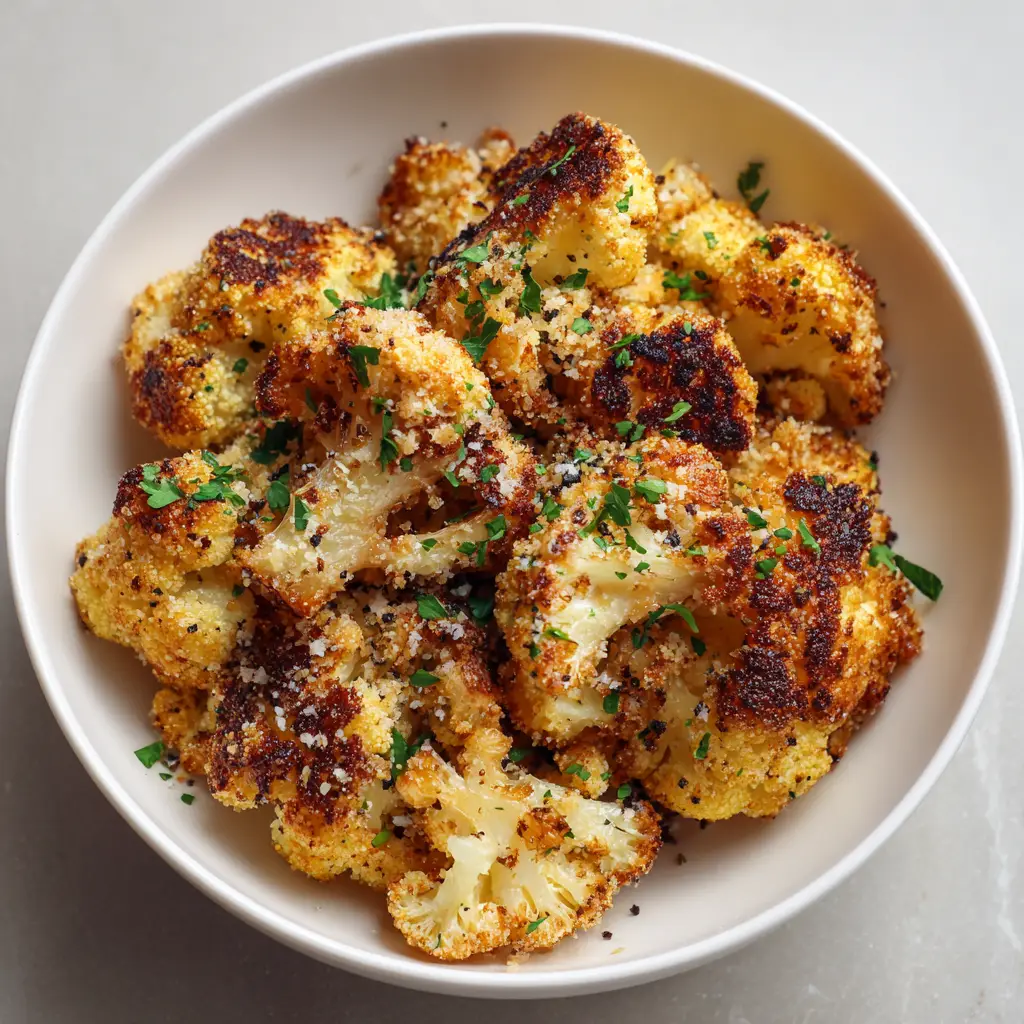
Why This Crispy Parmesan Cauliflower Wins Every Time
- The Crunch Factor: By combining finely grated parmesan with toasted breadcrumbs, we create a multi-dimensional “crunch” that stays crispy even as the cauliflower cools.
- Charred Perfection: We utilize high-temperature roasting to achieve those signature charred crispy edges that provide a smoky depth of flavor.
- Visual Appeal: The contrast between the golden-brown florets and the vibrant green finely chopped fresh parsley makes this a “camera-ready” dish for any table.
- Scientific Seasoning: We use a specific layering technique—fat, then dry seasoning, then cheese—to ensure the coating adheres to the cauliflower rather than sliding off onto the pan.
The Anatomy of a Perfect Roast: What You Will Need
To achieve the result seen in our visual blueprint, you must select high-quality ingredients. The quality of your cheese and the size of your breadcrumbs will directly impact the final structural integrity of the crust.
1 Large Head (approx. 800g) Cauliflower: Look for a dense, heavy head with no brown spots; this ensures the florets remain firm enough to withstand the high heat without turning to mush.
4 tbsp (60ml) Extra Virgin Olive Oil: This acts as the heat conductor, ensuring the cauliflower sears against the pan while providing a rich mouthfeel.
1/2 cup (45g) Finely Grated Parmesan Cheese: Use “sandy” grated parmesan rather than long shreds to ensure every nook and cranny of the floret is coated in melted cheese.
1/3 cup (30g) Panko or Toasted Breadcrumbs: These provide the “toasted golden” visual and the structural crunch that parmesan alone cannot achieve.
1 tsp (5g) Garlic Powder: This “invisible” ingredient provides a foundational savory note that penetrates the cauliflower as it roasts.
1/2 tsp (3g) Kosher Salt: Essential for drawing out just enough moisture to allow the natural sugars in the cauliflower to caramelize.
1/2 tsp (1g) Freshly Cracked Black Pepper: Large cracks of pepper provide visual contrast and a rhythmic heat that cuts through the richness of the cheese.
2 tbsp (8g) Fresh Flat-Leaf Parsley: Chopped finely, this adds the necessary herbaceous lift and a pop of green color to the neutral grey background of the finished dish.
Essential Tools for Achieving Maximum Crunch
To replicate the golden-brown results of our visual guide, you need tools that manage moisture and maximize heat distribution. A crowded pan is the enemy of a crispy floret.
Extra-Large Rimmed Baking Sheet: A large surface area is critical; if the florets are too close, they will steam instead of roast, preventing the formation of charred edges.
Parchment Paper or Silicone Mat: While the cheese needs to crisp, it can also stick; a high-quality liner ensures you don’t lose that delicious parmesan coating to the pan.
Sharp Chef’s Knife: Essential for creating flat surfaces on the cauliflower florets, which increases the “sear zone” when they contact the hot baking sheet.

Step-by-Step: From Raw Florets to Golden Perfection
Preparing the Canvas
Preheat your oven to 425°F (220°C). This high temperature is non-negotiable for achieving the charred crispy edges described in our blueprint. While the oven heats, break the cauliflower head into bite-sized florets. Try to ensure at least one side of each floret is flat; this flat surface will become the “crust zone” where the parmesan and breadcrumbs form a lacy, golden seal against the heat.
The Double-Coating Technique
In a large mixing bowl, toss the cauliflower florets with the olive oil, salt, and garlic powder. Once every piece is glistening, add the breadcrumbs and parmesan. Use your hands to massage the cheese into the florets. You want the cheese to find its way into the “trees” of the cauliflower. This ensures that as the cheese melts, it creates a structural bond with the breadcrumbs, resulting in that heavily coated appearance.
The Roasting Phase
Spread the cauliflower onto your prepared baking sheet in a single layer. Ensure there is visible space between each piece. Roast for 20-25 minutes. At the 15-minute mark, use a spatula to flip the florets. You are looking for a visual cue: the edges should be turning a deep mahogany, and the cheese should be bubbling and forming a golden-brown lace. This is the Maillard reaction in full effect.
The Final Flourish
Remove the tray from the oven. While the cauliflower is still sizzling, sprinkle over the freshly cracked black pepper. Transfer the hot florets to a white ceramic bowl. This is the moment to add the finely chopped fresh parsley. The residual heat will wake up the oils in the parsley, releasing a fresh aroma that perfectly balances the toasted, nutty scent of the roasted cheese.
Pro-Level Tips for the Best Roasted Veggies
- Dry is Die-Hard: Ensure your cauliflower is bone-dry after washing. Any water left on the florets will create steam, resulting in a soggy texture rather than a crisp one.
- The Grate Debate: Always grate your parmesan fresh if possible. Pre-shredded cheeses are often coated in potato starch to prevent clumping, which can interfere with the “melt and lace” effect we want.
- Don’t Skimp on Oil: The oil is what fries the breadcrumbs and cheese against the cauliflower. If it looks dry, add an extra teaspoon (5ml).
- High Heat is Key: If your oven runs cold, the cauliflower will overcook and get mushy before the cheese gets crispy. Use an oven thermometer to verify you hit 425°F (220°C).
Managing Leftovers: Storage and Reheating
While this dish is best served immediately to enjoy the maximum crunch of the toasted breadcrumbs, you can store leftovers in an airtight container in the refrigerator for up to 3 days.
To reheat and maintain that crispy parmesan coating, avoid the microwave. Instead, place the florets back on a baking sheet and toast in a 400°F (200°C) oven or an air fryer for 4-5 minutes. This will re-crisp the cheese and breadcrumbs, bringing back that “freshly roasted” sensory experience.
Perfect Pairings: What to Serve with Parmesan Roasted Cauliflower
This versatile side dish complements a wide variety of main courses. For a hearty Italian-inspired lunch, serve it alongside a fresh Italian Grinder Tortellini Salad. The acidity in the salad’s dressing cuts beautifully through the richness of the roasted parmesan.
If you’re keeping things low-carb, these florets are the perfect companion for Keto Crack Burgers, providing a satisfying crunch without the extra carbs. For a lighter, Mediterranean-style dinner, pair the cauliflower with Mediterranean Rice and Beans.
For a classic “meat and three” style meal, try serving this alongside Grilled Brown Sugar Pork Chops. The sweetness of the pork marinade creates a beautiful contrast with the salty, charred edges of the cauliflower.
Your Questions Answered
Yes! Simply omit the breadcrumbs or replace them with crushed pork rinds or almond flour to keep the signature crunch while reducing the carb count.
No, par-boiling is unnecessary and can lead to a soggy texture. Roasting at a high temperature (425°F) tenderizes the inside while crisping the outside perfectly.
The secret is high heat and ‘flat-surface contact.’ Cut your florets with at least one flat side and place that side directly against the hot baking sheet.
Finely grated parmesan (the kind that looks like coarse sand) works best as it creates an even coating that adheres to the breadcrumbs and florets.
Mushy cauliflower usually results from overcrowding the pan, which creates steam. Ensure florets are in a single layer with space between them and that they are completely dry before roasting.
The Master Recipe: Parmesan Roasted Cauliflower
Parmesan Roasted Cauliflower: The Ultimate Crispy Garlic Side Dish
Ingredients
Equipment
Method
- Preheat your oven to 425°F (220°C). Line a large baking sheet with parchment paper. Cut the cauliflower into uniform bite-sized florets, ensuring many have a flat side.
- In a large bowl, toss the cauliflower florets with olive oil, garlic powder, and salt until evenly coated.
- Add the finely grated parmesan and breadcrumbs to the bowl. Toss thoroughly, using your hands to press the cheese and crumbs onto the florets.
- Spread the florets onto the baking sheet in a single layer with space between them. Place flat sides down to maximize browning.
- Roast for 20-25 minutes, flipping halfway through. Look for deep golden-brown color and distinct charred edges.
- Remove from oven, transfer to a bowl, and immediately top with cracked black pepper and fresh parsley.
Notes
Use finely grated parmesan (sandy texture) rather than shreds for better coverage.
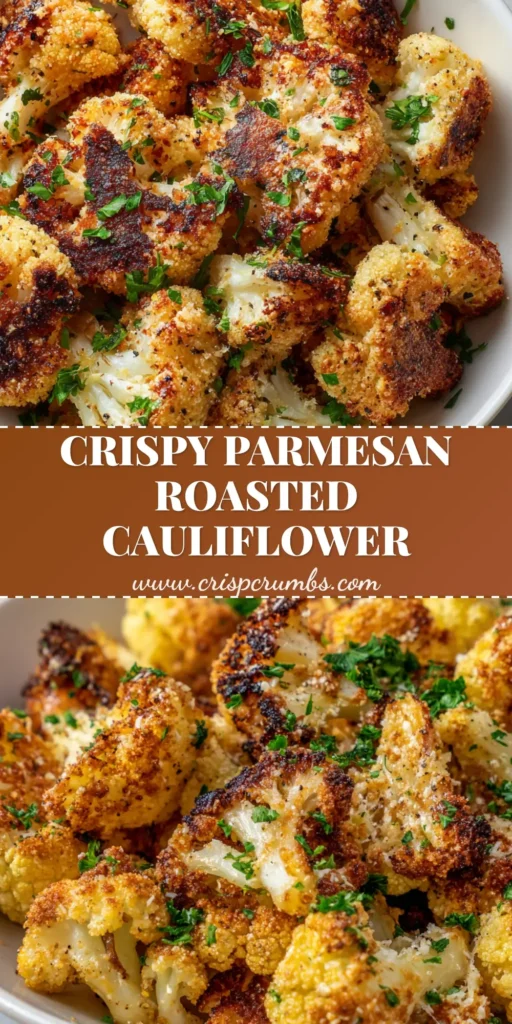
Join the CrispCrumbs Community!
We hope this Parmesan Roasted Cauliflower becomes a new staple in your kitchen rotation. There is nothing quite like the smell of toasted cheese and garlic wafting through the house to bring everyone to the table. If you enjoyed this recipe, please leave a comment below and tell us how yours turned out!
Don’t forget to snap a photo and tag us! For more crispy, golden-brown inspiration, follow us on Pinterest. Share this recipe with your fellow home cooks and let’s make every side dish spectacular.


