When you imagine the perfect weeknight dinner, it often involves a balance of vibrant color, contrasting textures, and a sauce so glossy it looks like it belongs in a high-end restaurant. This Mango Glazed Chicken is the embodiment of that vision. It captures the essence of a realistic, home-cooked meal that doesn’t compromise on professional-grade flavor profiles. Imagine cubed chicken breast seared to a perfect golden brown, then tossed in a thick, translucent orange glaze that clings to every crevice. This isn’t just a recipe; it’s a sensory experience captured in a single white ceramic bowl.
The beauty of this dish lies in its visual honesty. Unlike overly processed takeout, this Mango Glazed Chicken features soft, vibrant orange mango cubes that provide a fresh burst of sweetness against the savory, seared protein. The addition of sautéed red bell pepper strips and translucent sliced onions adds a necessary crunch and aromatic depth. Topped with a heavy garnish of toasted white sesame seeds and finely chopped green scallion rings, every bite offers a symphony of tropical notes and umami richness, all served over a bed of fluffy steamed white rice.
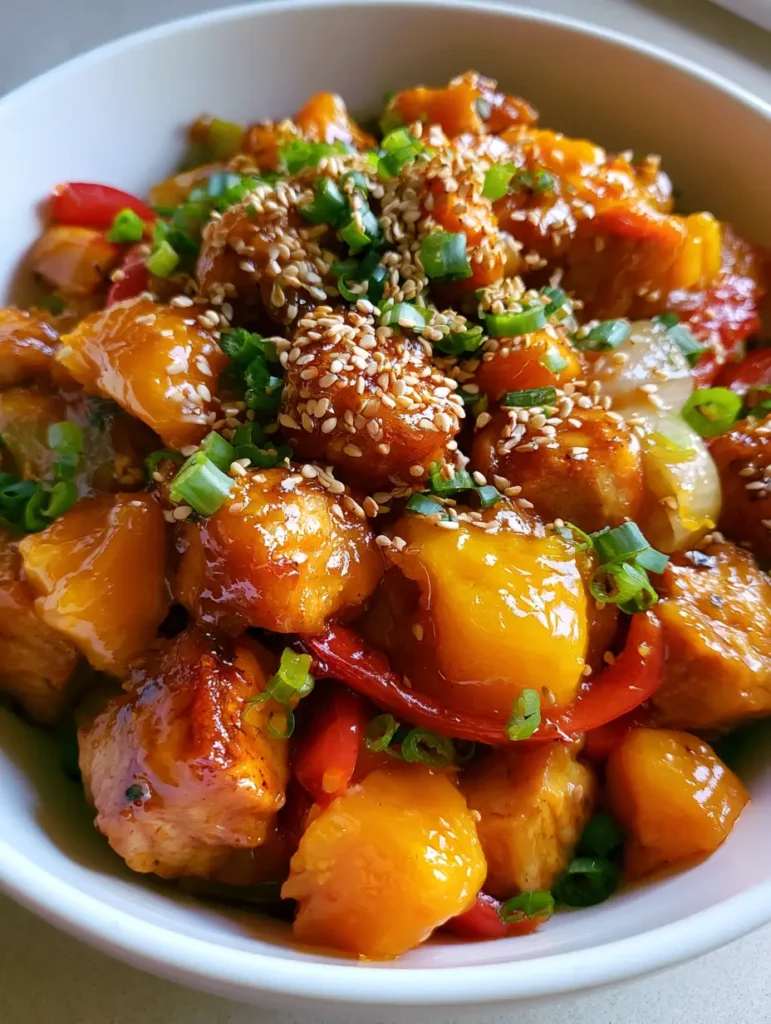
Why This Mango Glazed Chicken Will Become Your New Favorite Obsession
- Structural Contrast: The combination of high-heat seared chicken edges and soft, juicy fresh mango chunks creates a professional-level mouthfeel.
- Visual Transparency: Our glaze technique ensures a thick, glossy, and translucent finish that showcases the ingredients rather than hiding them under a heavy sauce.
- The “Maillard” Advantage: By searing the chicken breast cubes separately, we lock in moisture while developing a deep golden-brown crust that stands up to the sticky glaze.
- Balanced Aromatics: The interplay between the sharp bite of white onions and the mild sweetness of red bell peppers provides a sophisticated flavor base.
- Pinterest-Ready Realism: This dish looks exactly like a high-quality handheld smartphone photo—unpretentious, vibrant, and undeniably appetizing.
Essential Components for a Glossy Tropical Finish
To achieve the specific visual and flavor results of this Mango Glazed Chicken, each ingredient serves a scientific and aesthetic purpose. We don’t just use ingredients for calories; we use them for chemistry.
1.5 lbs (680g) Chicken Breast: We use boneless, skinless breasts cut into uniform 1-inch (2.5cm) cubes to ensure even cooking and maximum surface area for that signature golden-brown sear. The protein provides the structural foundation of the bowl.
2 tbsp (30ml) Neutral Searing Oil: A high-smoke point oil like avocado or grapeseed is foundational. It allows us to reach the temperatures necessary for the Maillard reaction without the oil breaking down or smoking.
1 cup (240ml) Mango Puree: This is the heart of our translucent orange glaze. It provides the base color and the natural sugars that will eventually caramelize and thicken into a sticky coating.
2 tbsp (30ml) Rice Vinegar: Every sweet glaze needs an acid to cut through the sugar. This provides the “tang” that makes the mango flavor pop against the savory chicken.
1 tbsp (15ml) Soy Sauce: This adds the “translucent” depth to the orange glaze, contributing salt and umami without turning the sauce brown or muddy.
1 tbsp (15g) Cornstarch: This is our secret to the “thick and glossy” visual prompt. When hydrated and heated, cornstarch granules swell and create a clear, viscous suspension that clings perfectly to the chicken.
1 Large Red Bell Pepper: Sliced into thin strips, these provide a vibrant red contrast to the orange mango. They are sautéed just until soft to maintain their vivid color.
1 Medium White Onion: Sliced thinly, these turn translucent when sautéed, adding a soft, silky texture and a mild sweetness that bridges the fruit and the meat.
1 cup (165g) Fresh Mango Cubes: These are added at the very end. We want them to remain soft and vibrant orange, not cooked down into mush, providing a “fresh” visual element to the Mango Glazed Chicken.
Garnishes: 1 tbsp (9g) toasted white sesame seeds and 2 stalks of finely chopped green scallions. These provide the high-frequency visual detail that finishes the dish.
The Culinary Toolset for Success
To replicate the handheld smartphone photo look, you need tools that manage heat effectively. A large cast-iron skillet or a heavy-bottomed stainless steel pan is preferred for searing the chicken breast. These materials retain heat better than non-stick pans, ensuring you get those golden-brown edges rather than gray, steamed meat.
You will also need a sharp chef’s knife for precisely cubing the chicken and slicing the peppers into uniform strips. A small whisk is essential for emulsifying the cornstarch into the mango puree to prevent clumps, ensuring that “translucent” finish we are aiming for. Finally, a rice cooker or a heavy pot with a tight-fitting lid is required for the steamed white rice base.
Step-by-Step Evolution of the Mango Glazed Chicken
Preparing the Flavor Foundation
Begin by patting your 1.5 lbs (680g) of cubed chicken breast completely dry with paper towels. This is a non-negotiable step for a proper sear; moisture is the enemy of the golden-brown crust. Season the chicken liberally with salt and a pinch of white pepper.
In a small bowl, whisk together the 1 cup (240ml) mango puree, rice vinegar, soy sauce, and 1 tbsp (15g) cornstarch. Whisk until no lumps remain. This mixture will look opaque now but will transform into a glossy, translucent orange glaze once it hits the heat of the pan.
Achieving the Perfect Maillard Sear
Heat 2 tbsp (30ml) of oil in your skillet over medium-high heat. Once the oil shimmers, add the chicken cubes in a single layer. Do not crowd the pan; if necessary, work in two batches. Let the chicken sit undisturbed for 2-3 minutes.
Look for the visual cue: the edges of the chicken should start to turn opaque and a deep golden-brown crust should form on the bottom. Flip and sear for another 2 minutes until the chicken shows those beautiful seared edges described in our visual blueprint. Remove the chicken from the pan and set aside.
Developing the Vegetable Texture
In the same pan, add the sliced white onions and red bell pepper strips. Sauté for 3-4 minutes. You are looking for the onions to become translucent and the peppers to soften slightly while maintaining their vibrant red hue. The fond (the brown bits) left from the chicken will begin to coat the vegetables, adding another layer of flavor.
The Transformation: Thickening the Glaze
Lower the heat to medium and pour the mango puree mixture into the skillet with the vegetables. Stir constantly. Within 60 to 90 seconds, you will see a dramatic change: the sauce will transition from a dull orange to a bright, translucent, and glossy glaze. This is the cornstarch gelatinizing.
Return the seared chicken breast to the pan. Toss everything together until the chicken is thoroughly coated in the thick mango glaze. Fold in the 1 cup (165g) of fresh mango cubes gently at the very last second. We want them warm but structurally intact and vibrant.

Professional Tips for the Ultimate Stir-Fry Results
- Don’t Overcook the Mango: The fresh mango cubes should be added when the heat is off or at the very end. This preserves their “soft, vibrant” quality seen in the photo.
- The Cornstarch Slurry: Always whisk cornstarch into a cold or room-temperature liquid (like the mango puree) before adding it to a hot pan. Adding dry cornstarch to a hot pan will create irreversible lumps.
- Rice Consistency: For the best “bowl” experience, use a long-grain jasmine rice. Its floral aroma complements the Mango Glazed Chicken perfectly and provides a clean, white backdrop for the colorful toppings.
- Garnish Generously: The “heavy garnish” of sesame seeds and scallions isn’t just for looks; it adds a nutty crunch and a fresh onion bite that cuts through the sweetness of the glaze.
Managing Your Leftovers: Storage and Reheating
This Mango Glazed Chicken keeps remarkably well for meal prep. Store leftovers in an airtight container in the refrigerator for up to 3 days. The glaze may thicken further as it cools; when reheating, add a splash of water or chicken broth to loosen the sauce back to its glossy state.
For reheating, we recommend using a skillet over medium heat rather than a microwave. This helps maintain the texture of the seared chicken edges. We do not recommend freezing this dish, as the fresh mango chunks and bell peppers will lose their structural integrity and become mushy upon thawing.
What to Serve With Mango Glazed Chicken
While this dish is a complete meal when served over steamed white rice, you can elevate the experience with strategic pairings. If you want to add a bit of a spicy kick to balance the sweetness, consider serving this alongside a zesty jalapeno slaw (coming soon). The acidity of the slaw acts as a perfect palate cleanser between bites of sticky chicken.
If you are looking for a multi-course tropical feast, start your meal with blueberry brie jalapeno poppers for a unique sweet-and-savory appetizer. For those who prefer a more traditional stir-fry spread, this chicken pairs beautifully with a side of Egg Roll in a Bowl, which adds a savory, cabbage-heavy contrast to the fruit-forward main dish.
Common Questions About This Recipe
You can use frozen mango for the puree base of the glaze, but for the fresh chunks mixed in at the end, fresh mango is highly recommended to maintain the soft, vibrant texture seen in the photo.
You must pat the chicken dry before cooking and use a high-smoke point oil in a very hot pan. Do not crowd the skillet, as this causes the chicken to steam rather than sear.
This specific version is mild and fruit-forward. If you want heat, we recommend adding a teaspoon of red chili flakes to the glaze or pairing it with a spicy jalapeno slaw.
The secret is using cornstarch dissolved in a cold liquid (mango puree). When heated, cornstarch gelatinizes, turning the sauce from opaque to a clear, glossy, and thick glaze that clings to the chicken.
A ripe but firm mango like a Kent or Keitt variety works best. It needs to be sweet enough for flavor but firm enough to hold its cube shape when tossed in the hot glaze.
The Complete Mango Glazed Chicken Recipe
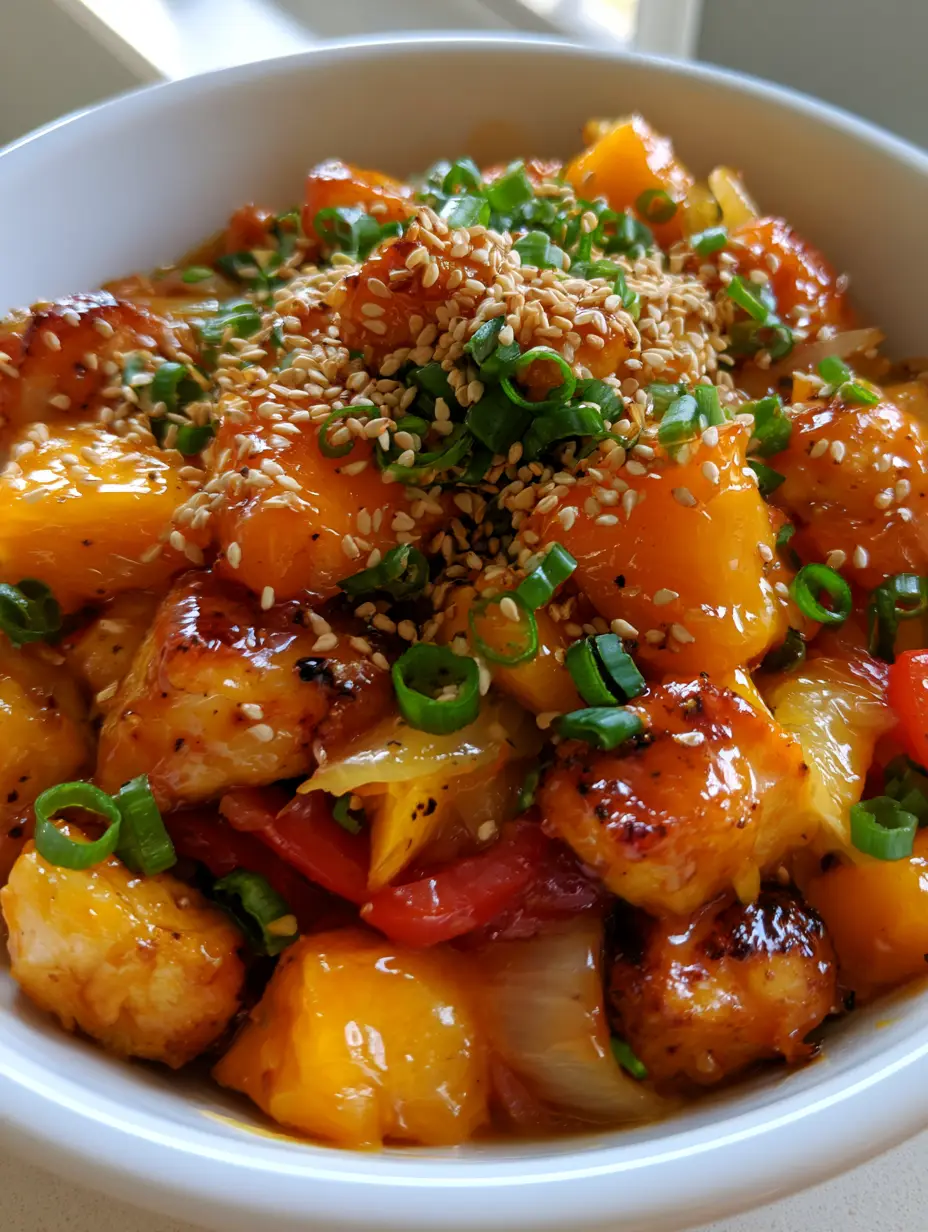
Mango Glazed Chicken: The Ultimate Sticky Tropical Stir-Fry
Ingredients
Equipment
Method
- Pat cubed chicken breast dry with paper towels to ensure a golden-brown sear. Season with salt and pepper.
- Whisk mango puree, rice vinegar, soy sauce, and cornstarch in a small bowl until smooth and translucent in potential.
- Heat oil in a skillet over medium-high heat. Sear chicken cubes until golden-brown edges form (approx. 5 mins). Remove chicken.
- Add onions and bell peppers to the same pan. Sauté until onions are translucent and peppers are soft.
- Pour in mango mixture. Stir constantly until the glaze becomes thick and glossy. Return chicken to the pan.
- Gently fold in fresh mango cubes. Serve over steamed white rice and garnish heavily with sesame seeds and scallions.
Notes
Add fresh mango at the very end to prevent it from dissolving into the sauce.
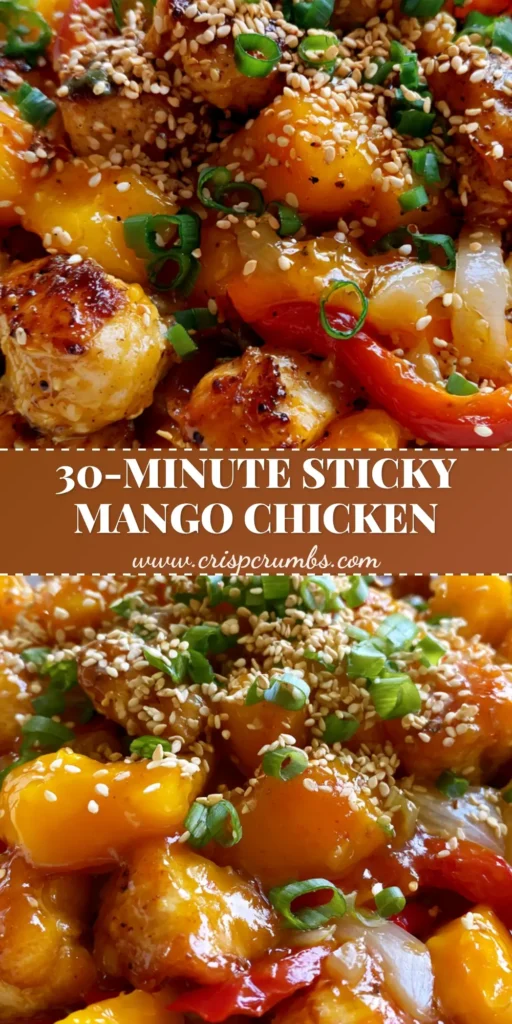
Experience the Taste of the Tropics at Home
This Mango Glazed Chicken is more than just a quick dinner; it’s a testament to how simple ingredients, when treated with proper culinary technique, can create a visually stunning and delicious result. The contrast of the golden-brown seared chicken against the translucent orange glaze and fresh green scallions makes every bowl a masterpiece of home cooking. We invite you to try this recipe tonight and see how easy it is to achieve professional results in your own kitchen.
If you enjoyed this recipe, please leave a comment below and let us know how your version turned out! Don’t forget to share your creations and follow us on Pinterest for more visually inspired culinary adventures. Happy cooking!


