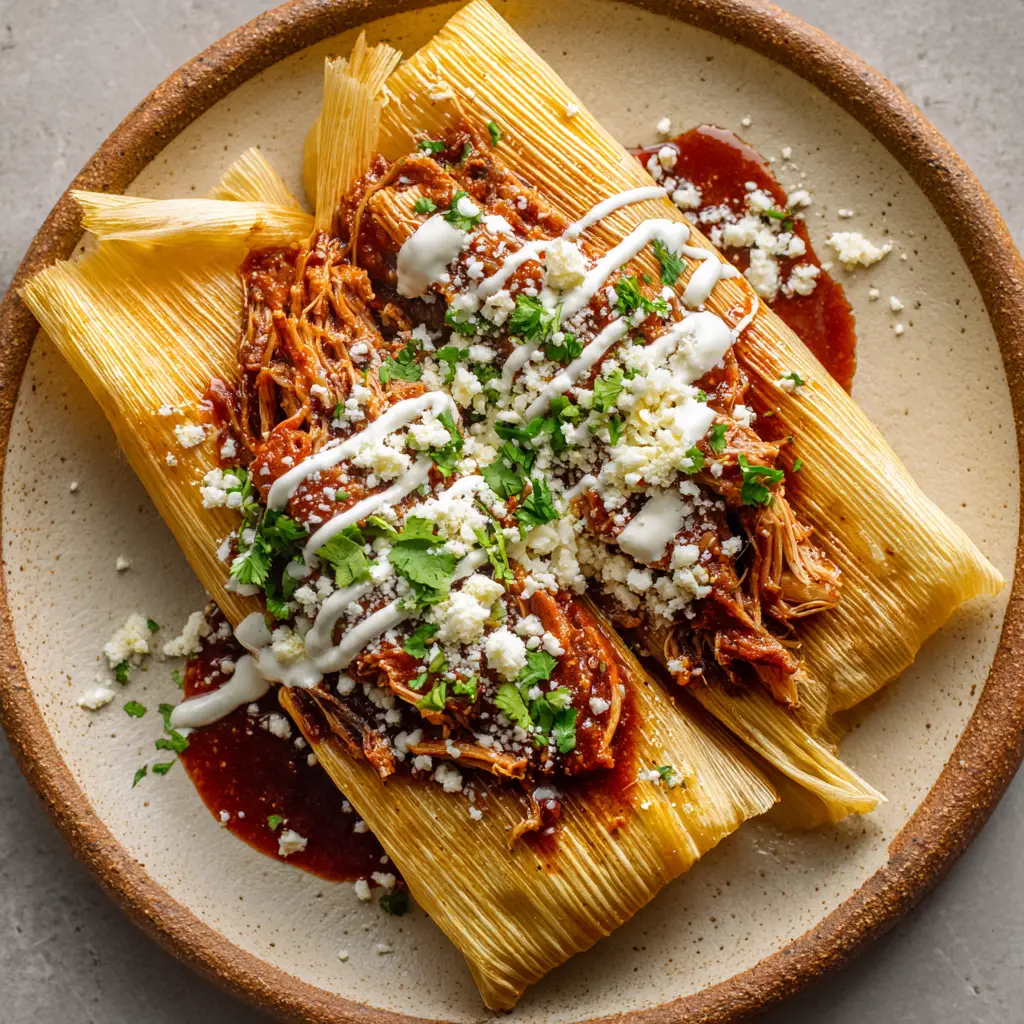
There is nothing quite as rewarding as mastering a truly authentic Homemade Tamales Recipe in your own kitchen. Picture an open, perfectly steamed tan corn husk resting on a rustic ceramic plate, releasing an irresistible aroma. Inside sits a freshly cooked tamale made of thick, textured yellow corn masa, split right down the middle.
The star of the show is the rich filling of tender shredded pork, deeply coated in a dark, glossy red chili sauce that offers a symphony of savory heat. To perfectly balance the spices, the tamale is elegantly garnished with a light zigzag drizzle of white Mexican crema, a sprinkle of crumbly white cotija cheese, and a few small flakes of freshly chopped green cilantro.
Whether you are preparing for a festive holiday gathering or simply indulging a weekend culinary craving, this comprehensive guide will walk you through every critical step. Let’s dive into making this visually stunning, mouthwatering Mexican classic from scratch.
Why This Homemade Tamales Recipe Yields Perfect Results Every Time
Creating authentic tamales is a labor of love, but the sensory payoff is absolutely extraordinary. This specific Homemade Tamales Recipe has been engineered to perfectly replicate the traditional textures and vibrant visuals you crave.
- Thick, Textured Masa: Whipping the lard before folding in the yellow masa harina creates an incredibly airy, cloud-like dough.
- Glossy Red Chili Sauce: By carefully blending toasted dried chilies and simmering them to a deep reduction, the sauce beautifully coats the shredded pork.
- Melt-in-Your-Mouth Pork: Slow-braising the pork shoulder ensures the meat breaks down into ultra-tender strands that absorb the chili flavor completely.
- Contrasting Garnishes: The bright, acidic crunch of fresh chopped green cilantro cuts through the rich pork, while the white Mexican crema and crumbly cotija cheese provide a cooling, creamy finish.
Essential Components for Authentic Red Chile Pork Tamales
To achieve the stunning visual aesthetics and profound flavor profile of this dish, high-quality foundational ingredients are essential. Do not skip or substitute the core fats and spices, as they provide the structural integrity.
Yellow Masa Harina: You will need 3 cups (360g) of yellow masa harina specifically milled for tamales. This finely ground nixtamalized corn provides the distinct earthy flavor and gorgeous yellow hue.
Lard (or Vegetable Shortening): Exactly 1 cup (205g) of high-quality pork lard is required to achieve a thick, textured masa. The fat is crucial for tenderness, ensuring the dough steams into a soft, spongey encasement rather than a dense brick.
Pork Shoulder (Butt): Utilize 2.5 lbs (1.1kg) of boneless pork shoulder. This cut has the perfect ratio of fat to lean meat, allowing it to easily pull apart into tender shredded pork after braising.
Dried Red Chilies: A combination of 4 dried Ancho chilies and 4 dried Guajillo chilies will create the foundation for our sauce. Once rehydrated and blended, they yield that signature dark, glossy red chili sauce.
Corn Husks: You need 25-30 dried tan corn husks. These act as the cooking vessel, trapping steam and infusing the masa with a subtle, rustic corn flavor.
Foundational Seasonings: Gather 2 tsp (10g) of baking powder for a fluffy masa, 1 tbsp (15g) kosher salt, 4 cloves of garlic, 1 white onion, and 1 tsp (2g) of dried Mexican oregano. These invisible flavor builders are scientifically necessary to elevate the dish.
The Visual Garnishes: You must have 1/4 cup (60ml) of white Mexican crema, 1/4 cup (35g) of crumbly white cotija cheese, and 2 tbsp (5g) of freshly chopped green cilantro. These finishing touches replicate the exact visual blueprint of an authentic tamale plate.

Tools Required for Perfectly Steamed Tamales
Having the right equipment is just as important as your ingredients. A large tamale steamer pot (vaporera) with a metal rack insert is absolutely critical to keep the tamales elevated above the boiling water.
You will also need a high-speed blender to achieve a completely smooth, glossy chili sauce without grainy skins. A stand mixer fitted with a paddle attachment will save your arms when whipping the lard and masa into an airy, spreadable consistency.
Step-by-Step Guide to Mastering This Homemade Tamales Recipe
Follow these instructions meticulously to ensure your final dish mirrors the visual beauty and complex flavor profile of an artisanal Mexican tamale. Timing and temperature control are your best friends here.
1. Hydrating the Tan Corn Husks
Place your dried tan corn husks into a large bowl or sink and submerge them entirely in very hot water. Place a heavy plate on top to keep them weighed down.
Allow the husks to soak for at least 45 minutes until they become completely soft and pliable. Once softened, pat them dry with a clean kitchen towel so the masa will stick to them properly.
2. Braising the Pork to Tender Perfection
Cut the 2.5 lbs (1.1kg) of pork shoulder into large chunks and place them in a heavy-bottomed pot. Cover with water and add half a white onion, 2 cloves of garlic, and 1 tsp (5g) of salt.
Bring the pot to a boil, then reduce the heat, cover, and simmer gently for about 1.5 to 2 hours. When the pork yields easily to a fork, remove it from the broth (reserve the broth) and use two forks to pull it into tender shredded pork.
3. Crafting the Dark Glossy Red Chili Sauce
Remove the stems and seeds from your dried Ancho and Guajillo chilies. Toast them lightly in a dry skillet over medium heat for 30 seconds per side until fragrant, then submerge them in hot water for 15 minutes to soften.
Transfer the softened chilies to a blender with 1/2 cup (120ml) of the reserved pork broth, 2 cloves of garlic, 1/2 onion, and 1 tsp (2g) of oregano. Blend on high until completely smooth, then simmer the puree in a skillet with 1 tbsp (15ml) of oil for 10 minutes until it becomes a deeply reduced, dark glossy red chili sauce.
Toss the tender shredded pork into this glossy sauce until every single strand is deeply coated. Set aside to cool slightly.
4. Whipping the Thick Yellow Corn Masa
In the bowl of your stand mixer, whip 1 cup (205g) of lard on medium-high speed for 3-4 minutes until it turns light, fluffy, and white. This step is the culinary secret to achieving a tender, textured masa.
In a separate bowl, whisk together 3 cups (360g) of yellow masa harina, 2 tsp (10g) of baking powder, and 1.5 tsp (9g) of salt. Gradually alternate adding this dry mixture and 2 cups (480ml) of warm, reserved pork broth into the whipped lard.
Beat the mixture until it resembles thick hummus. Sensory Cue: Drop a small half-teaspoon of the masa into a cup of cold water; if it floats to the top, your masa is perfectly airy and ready to spread.
5. Assembling the Tamales in the Husks
Take a softened tan corn husk and lay it flat with the smooth side facing up and the wider end towards you. Spoon about 3 tbsp (45g) of the thick yellow corn masa onto the upper-middle section of the husk.
Using the back of a spoon, spread the masa into a thin, even square, leaving a 1-inch border at the sides and the narrow bottom completely bare. Spoon a generous 2 tbsp (30g) of the glossy red chili pork filling directly down the center of the masa.
Fold one long side of the husk over the filling, then fold the other side over to overlap, completely encasing the pork in the masa. Finally, fold the narrow, empty bottom tail up towards the seam to seal the tamale.
6. Steaming the Tamales
Fill your steamer pot with enough water to reach just below the steamer rack. Stand the tamales upright in the pot, leaning them against each other with the open ends pointing up so the filling doesn’t spill out.
Cover the pot with a tight-fitting lid and steam over medium heat for 60 to 75 minutes. Sensory Cue: Carefully pull out one tamale and let it rest for 5 minutes; if the husk peels away cleanly without sticking to the yellow masa, they are fully cooked.
7. The Final Visual Presentation
To serve, unwrap the steamed tan corn husk and let the tamale rest on a rustic ceramic plate. Take a knife and gently split the thick, textured yellow corn masa down the middle to reveal the glossy, dark red pork.
Execute a light zigzag drizzle of white Mexican crema across the top. Finish by generously scattering the crumbly white cotija cheese and a pinch of freshly chopped green cilantro for vibrant color contrast.
Pro-Level Secrets for Foolproof Masa and Glossy Fillings
Even the best Homemade Tamales Recipe requires a bit of technique. Keep these culinary tips in mind to ensure flawless execution.
- The Float Test is Mandatory: Never skip dropping a bit of masa into water. If it sinks, whip it for another 3 minutes or add a tablespoon more of broth. Heavy masa results in dense tamales.
- Cool the Filling: Always allow your glossy red chili pork to cool to room temperature before assembling. Hot filling will melt the lard in your masa, causing a greasy, structural failure.
- Do Not Overpack the Steamer: The tamales need room to expand slightly as the baking powder activates. Pack them snugly so they stand upright, but don’t crush them together.
- Rest Before Eating: Freshly steamed tamales will seem too soft immediately out of the pot. They require a 10-minute resting period on the plate to firm up into their final, perfect texture.
Preserving and Reheating Your Pork Tamales
This recipe produces a wonderful large batch, making leftovers a distinct possibility. Allow any uneaten tamales to cool completely before transferring them to an airtight container.
They will keep in the refrigerator for up to 5 days. For long-term storage, leave them in their husks, place them in a freezer-safe bag, and freeze for up to 3 months.
To reheat, do not microwave them from frozen. Instead, pop the husked tamales back into a steamer pot for 15-20 minutes, or wrap a refrigerated tamale in a damp paper towel and microwave for 90 seconds until piping hot.
What to Serve Alongside Your Authentic Tamales
While this dish is robust enough to stand completely on its own, pairing it with complementary flavors can elevate your entire dinner spread. A simple side of black beans or cilantro-lime rice is always a classic choice.
If you are planning a massive Mexican-inspired feast, consider serving these alongside some creamy Mexican chicken with cheese sauce for a decadent protein variation. Alternatively, pair them with loaded taco potato bowls to offer your guests a diverse, customizable dining experience.
For a unique fusion night, you might even start the evening with a light jalapeno popper chicken salad, which mirrors the creamy and spicy notes of the tamale garnishes.
Frequently Asked Questions About Cooking Tamales
Yes! You can assemble the tamales in their husks and freeze them raw in an airtight bag for up to 3 months. When ready to eat, simply steam them directly from frozen, adding an extra 15-20 minutes to the normal steaming time.
Yes, while traditional recipes use pork lard for the most authentic flavor and fluffy texture, you can substitute it with an equal amount of vegetable shortening or even refined coconut oil to achieve a similarly thick, airy masa.
To test for doneness, carefully remove one tamale from the steamer and let it rest for 5 minutes. If the tan corn husk peels away cleanly without the yellow masa sticking to it, the tamales are perfectly cooked.
Absolutely. Dried corn husks are stiff and brittle. Soaking them in hot water for at least 45 minutes makes them pliable enough to fold without tearing, and it creates the necessary moisture environment for steaming the masa.
Dense masa usually happens if the lard wasn’t whipped long enough before adding the masa harina, or if you skipped the baking powder. Always whip the fat until it’s light and fluffy, and make sure your mixed dough passes the ‘float test’ in water.
The Complete Homemade Tamales Recipe Step-by-Step
The Ultimate Authentic Homemade Tamales Recipe
Ingredients
Equipment
Method
- Place dried tan corn husks in a large bowl, cover with very hot water, and weigh them down with a plate. Soak for 45 minutes until pliable. Pat dry before using.
- Boil the pork shoulder chunks with half an onion, 2 garlic cloves, and salt in a pot of water. Simmer for 1.5 to 2 hours until tender. Shred the pork and reserve 2 cups of the broth.
- Toast the dried chilies in a dry skillet, then soak in hot water for 15 minutes. Blend the softened chilies with 1/2 cup of reserved broth, remaining garlic, onion, and oregano until smooth. Simmer the sauce for 10 minutes, then toss the shredded pork into the dark glossy sauce until coated. Let cool.
- In a stand mixer, whip the lard until fluffy and white (3-4 minutes). Whisk the masa harina, baking powder, and salt together, then alternate adding the dry mixture and warm pork broth to the lard. Beat until airy. Test by dropping a piece of masa into cold water; it should float.
- Spread 3 tbsp of masa onto the wide end of a corn husk, leaving borders on the sides and bottom. Place 2 tbsp of the glossy red chili pork down the center. Fold the sides of the husk over the filling, then fold the narrow bottom tail up to seal.
- Place tamales upright in a steamer pot over boiling water. Cover and steam for 60-75 minutes. They are done when the husk easily peels away from the yellow masa.
- Unwrap the tamale on a ceramic plate, split the masa down the middle, and garnish with a zigzag drizzle of Mexican crema, crumbled cotija cheese, and chopped cilantro.
Notes
Cool the pork filling completely before assembling so it doesn't melt the lard in the masa dough.

Final Thoughts on Your Tamale-Making Journey
Conquering this Homemade Tamales Recipe is a major culinary milestone. The combination of thick, fluffy masa, tender shredded pork, and that incredibly dark glossy red chili sauce creates a plate that looks just as incredible as it tastes.
The beautiful contrasts of the white Mexican crema drizzle, crumbled white cotija cheese, and freshly chopped green cilantro are guaranteed to impress anyone who sits at your table.
If you successfully recreated these gorgeous tamales, we would love to hear from you! Leave a comment below with your experience, subscribe to our weekly newsletter for more authentic recipes, and be sure to share your photos with us on Pinterest.


