There is a specific, unmatched joy in biting into a perfectly crafted Homemade Mango Mochi. It begins with the tactile sensation of a soft, pillowy exterior, followed by the gentle resistance of elastic glutinous rice dough, and culminates in a burst of glossy, translucent mango sweetness. This recipe isn’t just about making a snack; it’s about mastering the delicate balance of texture and tropical flavor that defines world-class wagashi.
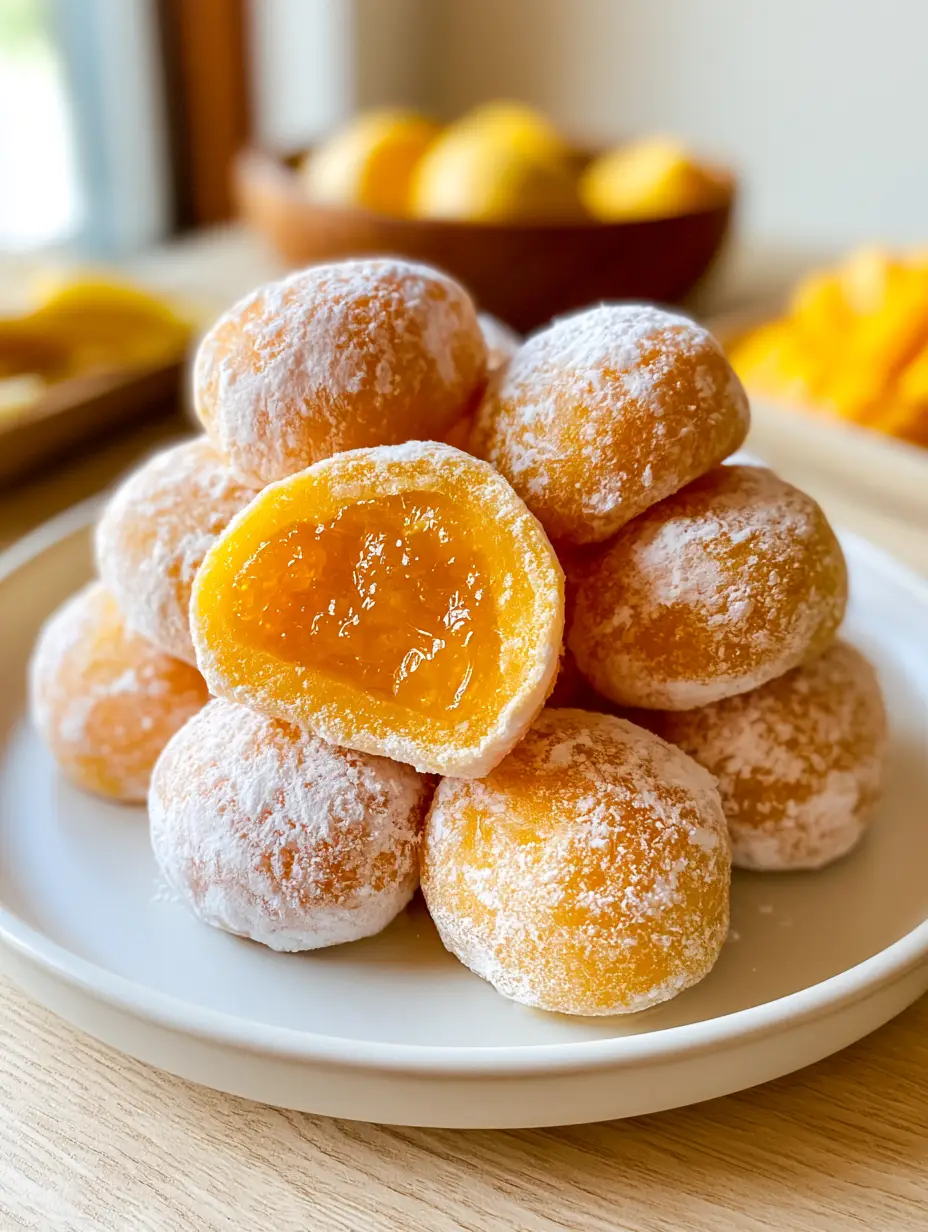
Inspired by the vibrant colors of peak-season Alphonso and Manila mangos, this version features a pale orange-hued dough and a dual-textured filling of fresh fruit and concentrated jam. Whether you are a seasoned pastry chef or a curious home cook, this guide provides the forensic culinary detail needed to achieve professional-grade results in your own kitchen. We are focusing on that signature handheld aesthetic—rounded balls with a fine, uneven dusting of starch that looks as beautiful on a minimalist ceramic plate as it does in a luxury bento box.

Why This Homemade Mango Mochi Recipe Is a Tropical Game Changer
- Perfect Elasticity: Using a precise ratio of glutinous rice flour to liquid ensures a dough that is chewy yet tender, never tough or rubbery.
- Dual-Layer Filling: We combine fresh, ripe mango slices with a glossy mango jam core for a multi-dimensional flavor profile that hits every part of the palate.
- Visually Stunning: The pale orange food coloring creates a soft, sunset-like aesthetic that perfectly complements the bright orange center.
- Professional Finish: We use a fine white cornstarch dusting technique to achieve that classic matte exterior seen in high-end Asian bakeries.
Essential Components for the Perfect Elastic Mango Dough
To create the foundation of our Homemade Mango Mochi, we need to understand the science of glutinous rice. Unlike standard wheat flour, glutinous rice flour (Mochiko) is high in amylopectin, which provides the “mochi-mochi” or bouncy texture we crave.
Glutinous Rice Flour (Mochiko): 1.5 cups (200g). This is the non-negotiable base. It provides the structural integrity and signature chewiness that defines a traditional mochi shell.
Granulated Sugar: 1/4 cup (50g). Sugar does more than sweeten; it acts as a tenderizer, preventing the rice starches from recrystallizing and becoming hard as the mochi cools.
Water or Coconut Milk: 1 cup (240ml). We use water for a clean flavor or full-fat coconut milk for a richer, more decadent mouthfeel that pairs beautifully with mango.
Pale Orange Food Coloring: 1-2 drops. This creates the visual bridge between the dough and the fruit, giving the mochi an inviting, sun-kissed appearance.
Mango Jam: 1/2 cup (120ml). Choose a high-quality, translucent jam. This provides the “glossy core” described in our visual blueprint, acting as a flavor concentrate.
Fresh Ripe Mango: 1 large (approx. 300g). You’ll want firm but ripe mango slices to provide a structural contrast to the soft jam and dough.
Cornstarch or Potato Starch: 1/2 cup (60g). This is used for dusting. It prevents the incredibly sticky dough from clinging to your hands and work surface.
Neutral Oil: 1 tsp (5ml). A small amount of grape seed or vegetable oil helps the dough stay supple and adds a slight sheen to the cooked mixture.
Critical Equipment for Success
Achieving the translucent, elastic texture of a professional Homemade Mango Mochi requires the right tools to manage heat and moisture. A traditional bamboo steamer is excellent for even heat distribution, though a microwave-safe glass bowl can work for a modern shortcut.
You will also need a silicone spatula, which is essential for folding the sticky dough without losing half of it to the utensil. A fine-mesh sieve is required for the cornstarch dusting to ensure the coating is “fine and white” rather than clumpy. Finally, a sharp knife is necessary to achieve the clean, forensic-style cross-section that shows off the glossy jam core.

The Step-by-Step Blueprint for Mango Perfection
1. Preparing the Tropical Core
Before touching the dough, prepare your filling. Slice the fresh mango into 1-inch (2.5cm) cubes. Place a small dollop of mango jam onto each mango cube, or if your jam is thin, chill it in the freezer for 10 minutes to make it easier to handle. This ensures that when you bite into the mochi, the jam flows out as a glossy, bright orange liquid.
2. Mixing the Pale Orange Base
In a medium heat-proof bowl, whisk together the glutinous rice flour and sugar. Gradually pour in your liquid (water or coconut milk) while whisking constantly to prevent lumps. Add 1-2 drops of pale orange food coloring until the mixture reaches a soft, pastel peach hue. The color will deepen slightly as it cooks, so aim for a shade lighter than your target final result.
3. The Steaming Process
Cover the bowl with plastic wrap (pierce a few holes) or a damp cloth. Steam over boiling water for 15-20 minutes. At the 10-minute mark, use a wet silicone spatula to scrape the sides and fold the dough. You are looking for a visual cue: the dough should transition from an opaque, milky liquid to a translucent, matte solid that is incredibly stretchy.
4. Kneading for Elasticity
Transfer the hot dough onto a surface heavily dusted with cornstarch. While the dough is still warm, gently knead it. This aligns the starch molecules, increasing the “bounce” of your Homemade Mango Mochi. Work quickly but carefully to avoid burns; the warmth is what allows the dough to stay pliable.
5. Assembly and the Starch Dusting
Divide the dough into 8-10 equal portions. Flatten a portion into a disk, making the edges slightly thinner than the center. Place your mango and jam core in the middle. Pinch the edges together to seal, then roll into a sphere. The “uneven coating” of starch mentioned in the visual prompt is achieved by rolling the ball in a tray of cornstarch and then lightly shaking off the excess with your hands.
Expert Tips for Forensic Culinary Accuracy
- Temperature Control: Never try to fill mochi dough while it is cold. It loses its elasticity and will crack, causing the jam to leak.
- Sifting the Starch: For that “fine white powder” look, always sift your cornstarch. Clumpy starch creates a gritty mouthfeel that ruins the elegance of the dish.
- The Jam Secret: If your mango jam is too runny, simmer it in a small saucepan for 5 minutes to reduce the water content. This creates the “thick, translucent, glossy” core seen in the sliced mochi.
- Handling Stickiness: Keep a small bowl of water nearby to dip your fingers in if the dough becomes unmanageable, but rely primarily on the starch for the exterior finish.
How to Store and Preserve Freshness
Homemade Mango Mochi is best enjoyed within hours of creation when the dough is at its peak elasticity. However, if you have leftovers, store them in an airtight container at room temperature for up to 24 hours. Placing them in the refrigerator will cause the rice starch to undergo retrogradation, making the dough tough and opaque.
If you must store them longer, wrap each mochi individually in plastic wrap and freeze. Thaw at room temperature for 30 minutes before serving. Note that the fresh mango inside may release some moisture during the thawing process, so the texture is best when fresh.
What to Serve with Your Tropical Mochi
These mochi balls are a rich, sweet treat that pairs beautifully with a variety of textures. For a complete dessert spread, consider serving them alongside a creamy banana pudding fluff salad (coming soon) to keep the fruit theme going. If you’re hosting a summer gathering, the light and airy nature of these mochi balances out a heavier meal like garlic butter steak pasta.
For those who enjoy a variety of handheld treats, try pairing these with strawberry cheesecake wonton bites (coming soon) for a beautiful contrast in textures—crispy vs. chewy. If you are leaning into the stone fruit season, a slice of fresh peach cake makes a wonderful companion on a minimalist dessert platter.
Frequently Asked Questions
Yes! Mix the ingredients in a microwave-safe bowl, cover with plastic wrap, and microwave in 1-minute intervals, stirring in between, for about 3-4 minutes until the dough is translucent and elastic.
No, regular rice flour will result in a crumbly, non-elastic texture. You must use glutinous rice flour (like Mochiko) to achieve the signature ‘mochi-mochi’ chew.
Use a high-quality mango preserve and chill it before filling. If the jam is too thin, simmer it for a few minutes to reduce and thicken it into a glossy concentrate.
Soak your bowls and utensils in cold water immediately. Glutinous rice starch is easier to remove before it dries and hardens.
Glutinous rice flour is naturally very sticky when cooked. Ensure you use enough cornstarch on your hands and work surface, and work with the dough while it is still warm for better control.
Mastering the Homemade Mango Mochi Recipe
Homemade Mango Mochi: The Ultimate Guide to Soft, Elastic Tropical Bliss
Ingredients
Equipment
Method
- Slice fresh mango into 1-inch cubes and top with a small dollop of mango jam.
- Whisk glutinous rice flour, sugar, and liquid with food coloring until smooth.
- Steam for 15-20 minutes, folding halfway through, until translucent and elastic.
- Knead dough on a starch-dusted surface. Divide into 10 pieces, flatten, fill with mango/jam, and seal.
- Roll in cornstarch and shake off excess for an uneven, matte finish.
Notes
Avoid refrigerating as it causes the dough to harden.

Final Thoughts on This Tropical Delicacy
Creating Homemade Mango Mochi is a meditative process that rewards patience and precision. From the soft, pale orange dough to the glossy, vibrant jam core, every element of this recipe is designed to provide a sensory experience that rivals any professional confectionery. The contrast of the matte, powdered exterior with the translucent, elastic interior is a hallmark of culinary craftsmanship.
We invite you to share your results! Did you achieve that perfect elastic stretch? Let us know in the comments below. For more visual inspiration and tropical recipe ideas, be sure to follow us on Pinterest and save this recipe to your favorite dessert boards!


