There is a specific, nostalgic magic in watching a cloud of pink sugar bloom before your eyes at a county fair. But what if I told you that you could recreate that ethereal, wispy texture in your own kitchen using nothing more than a few pantry staples? Learning how to make Cotton Candy Without a Machine is a culinary rite of passage for any home cook looking to master the art of sugar work.
This isn’t just about melting sugar; it is a delicate dance of temperature and technique. Our goal is to transform a hot, granulated sugar syrup into a large, airy bundle of hand-spun pink sugar threads that catch the light and melt the moment they hit your tongue. Imagine holding a wooden skewer wrapped in delicate, translucent strands that look just as professional as any machine-spun treat.
By mastering the hand-spun method, you unlock a world of gourmet possibilities. Whether you are decorating a cake or looking for a whimsical party trick, this technique delivers high-impact results with minimal equipment. Let’s dive into the science and soul of hand-spun sugar.
The Irresistible Charm of Hand-Spun Pink Sugar Clouds
- Visually Stunning Textures: Achieve those iconic, wispy spun sugar threads that are delicate, translucent, and catch natural daylight beautifully.
- Budget-Friendly Fun: No need for a bulky, expensive appliance; we use a modified whisk and a wooden skewer to get the job done.
- Customizable Flavors: While we are focusing on the classic pink aesthetic, this method allows for endless experimentation with extracts and colors.
- Pure Culinary Science: Experience the thrill of reaching the “Hard Crack” stage and watching liquid gold turn into a fibrous, cotton-like texture.

The Essential Components for Cotton Candy Success
To achieve the fibrous texture seen in professional food photography, we need a specific blend of ingredients that ensure the sugar remains pliable enough to stretch but brittle enough to hold its thread-like shape.
Granulated White Sugar: 1 cup (200g). This is our base. White sugar provides the cleanest flavor and the most predictable melting point for high-heat sugar work.
Water: 1/2 cup (120ml). Water acts as the medium to dissolve the crystals and ensures even heating, preventing the sugar from scorching before it reaches the desired temperature.
Light Corn Syrup: 1/3 cup (80ml). An essential “invisible” ingredient. Corn syrup is an invert sugar that prevents the sucrose from recrystallizing into a grainy mess, ensuring a smooth, glassy syrup.
Pink Food Coloring: 2-3 drops. Use a high-quality gel or liquid coloring to achieve that vibrant, iconic pink hue that defines classic cotton candy.
Salt: A tiny pinch (approx. 1/8 tsp). Salt balances the intense sweetness of the sugar and enhances the subtle toasted notes that develop during the boiling process.
The Toolkit: Household Items Turned Professional Confectionery Gear
To create Cotton Candy Without a Machine, you don’t need a centrifuge. You need tools that allow for rapid, repetitive motion to “throw” the sugar into the air.
Heavy-Bottomed Saucepan: This is critical for even heat distribution. A thin pan will create hot spots that burn the sugar syrup.
Candy Thermometer: Precision is everything in sugar work. You must reach 300°F (150°C) exactly to achieve the “Hard Crack” stage.
Modified Wire Whisk: Take an old wire whisk and use wire cutters to snip the ends of the loops. This creates a series of individual tines that will “flick” the sugar into threads.
Parchment Paper: You will need a large surface covered in parchment paper to catch the stray sugar crystals and wispy strands as they fall.
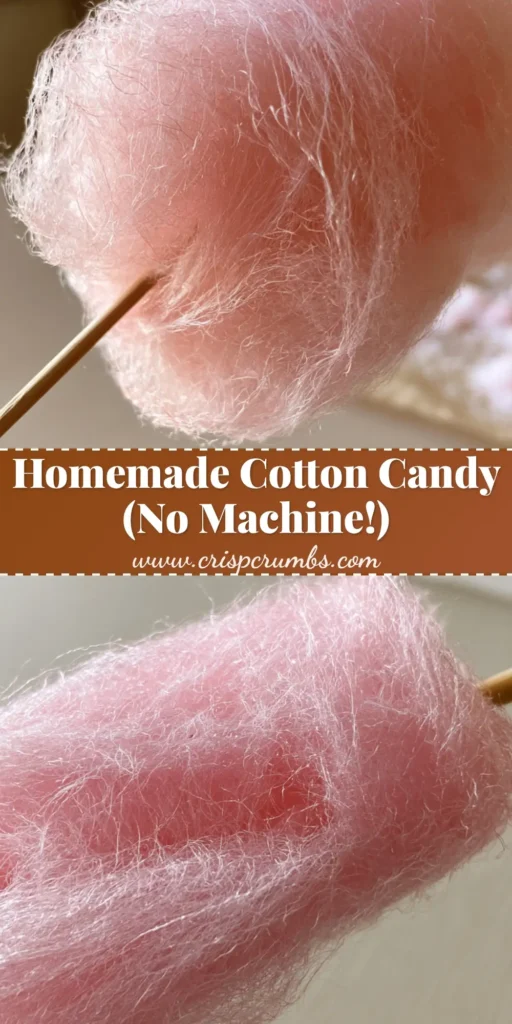
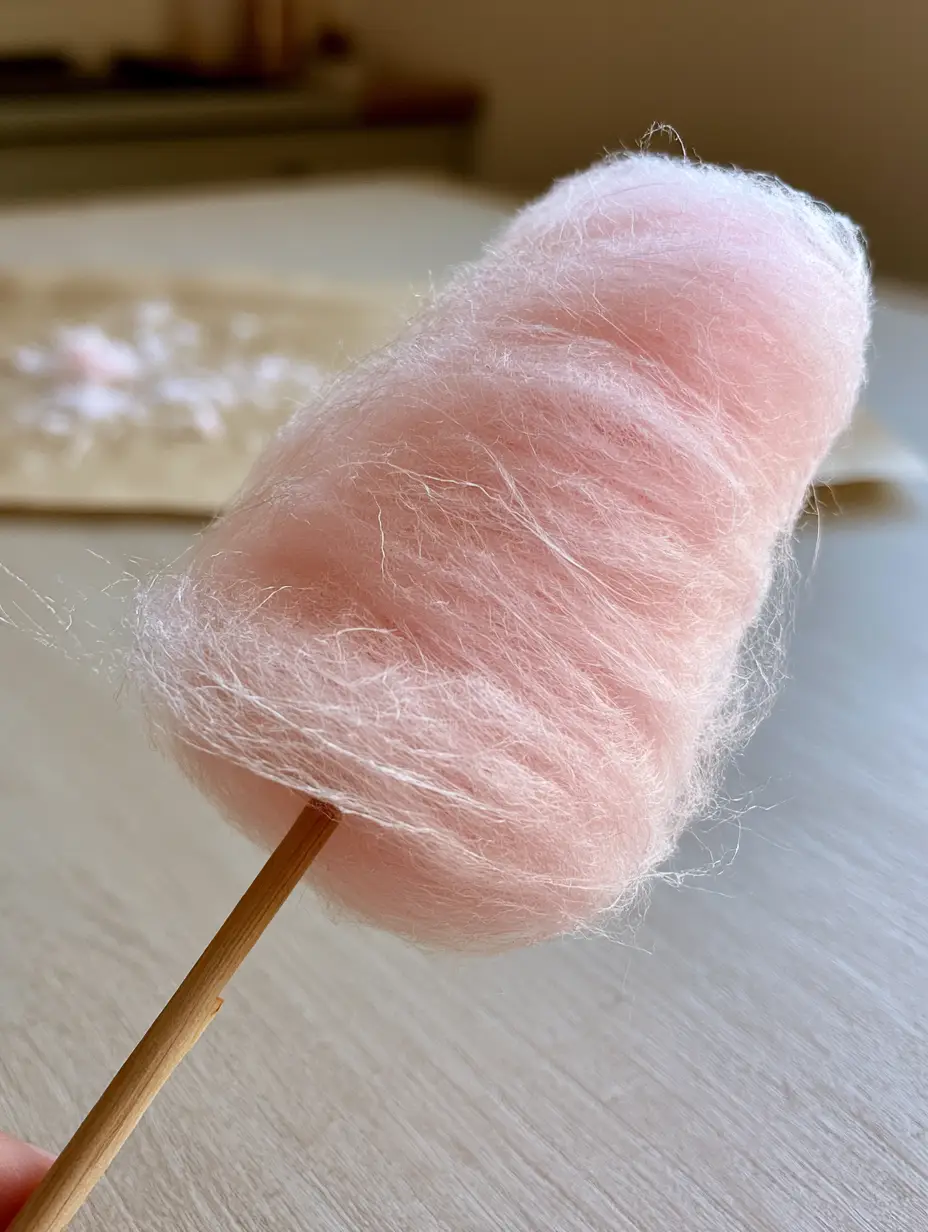
Wooden Skewers: These serve as the anchor. You will wrap the newly formed threads around these to create the handheld bundle shown in our visuals.
The Master Blueprint: How to Spin Sugar by Hand
Preparing the Sugar Laboratory
Before you turn on the stove, prep your station. Lay down two large sheets of parchment paper over a light-colored wooden tabletop or counter. Place two heavy objects (like jars or cans) a few inches apart with a wooden skewer resting across them to act as a “rack” if needed, though most prefer to hold the skewer by hand for a larger bundle.
Reaching the Hard Crack Stage
In your heavy-bottomed saucepan, combine 1 cup (200g) granulated sugar, 1/2 cup (120ml) water, 1/3 cup (80ml) corn syrup, and a pinch of salt. Stir over medium heat until the sugar is fully dissolved and the liquid is clear. Stop stirring immediately once it begins to boil.
Clip your candy thermometer to the side. Watch the temperature climb. As it hits 280°F (138°C), add your 2-3 drops of pink food coloring. Do not stir; the boiling action will incorporate the color. Continue cooking until the thermometer reads exactly 300°F (150°C).
The Art of the Flick
Remove the pan from the heat and let it sit for about 30 seconds until the bubbles subside. The syrup should be thick and viscous, like warm honey. Dip your modified whisk into the pink syrup, letting the excess drip off for a second.
Hold your wooden skewer in one hand over the parchment paper. With the other hand, flick the whisk back and forth about 12 inches above the skewer. You will see wispy, fibrous threads begin to drape over the skewer and the parchment paper.

Building the Airy Bundle
Continue the dipping and flicking motion rapidly. As the threads accumulate on the parchment and the skewer, use a gentle rotating motion with the wooden skewer to “harvest” the strands. The sugar will catch the soft natural daylight, appearing translucent and delicate.
Work quickly! As the sugar cools in the pan, it will become too thick to spin. If this happens, you can gently reheat it over low flame for a minute to regain the proper consistency for Cotton Candy Without a Machine.
Expert Secrets for the Perfect Spun Sugar
- Humidity is the Enemy: Sugar is hygroscopic, meaning it absorbs moisture from the air. Only make this on a dry day, or your beautiful threads will turn into a sticky puddle within minutes.
- The “V” Motion: When flicking the whisk, use a sharp “V” or “Z” motion. This helps stretch the sugar into the finest possible filaments.
- Clean Your Tools: If the sugar starts to build up a crust on the whisk tines, dip it in hot water, dry it thoroughly, and start fresh to keep the threads thin.
- Safety First: 300°F sugar is essentially “culinary lava.” Wear an apron and be extremely careful not to let the syrup touch your skin.
Serving Suggestions and Flavor Pairings
While this cotton candy is a showstopper on its own, it also makes for a fantastic garnish. The light, airy texture provides a sweet contrast to more savory or complex dishes. If you are hosting a summer BBQ, serve this after a refreshing jalapeno slaw (coming soon) to cleanse the palate with a burst of sweetness.
For a full dessert spread, pair these pink clouds with a creamy no-bake banana pudding or use them to top a vibrant ambrosia fruit salad. The juxtaposition of the crunchy, wispy sugar and the creamy fruit is a five-star dining experience at home.
If you’re feeling adventurous, these sugar threads can even be draped over savory appetizers like blueberry brie jalapeno poppers for a “sweet and heat” profile that will leave your guests talking.
Preserving the Cloud: Storage and Shelf Life
Cotton candy is meant to be enjoyed immediately. Because of the delicate nature of the wispy spun sugar threads, they will begin to deflate and crystallize if left out for more than an hour. However, if you must store it, place the bundles in an airtight container with a silica gel packet to keep the air dry. Do not refrigerate, as the humidity inside a fridge will melt the sugar instantly.
Frequently Asked Questions
Corn syrup is recommended because it prevents crystallization. However, you can substitute it with a 1/4 teaspoon of cream of tartar or a teaspoon of lemon juice to achieve a similar ‘invert sugar’ effect, though corn syrup provides the most reliable results for threads.
Hand-spun cotton candy is very sensitive to humidity. It is best enjoyed within 20-30 minutes of creation. If kept in a strictly airtight container with a desiccant, it may last a few hours, but it will never have the shelf life of machine-spun versions.
Absolutely! Add 1/2 teaspoon of your desired extract (like vanilla, strawberry, or raspberry) at the same time you add the food coloring (at 280°F). Be careful, as the extract may cause the syrup to bubble vigorously.
Sugar dissolves in water. Simply soak your whisk and saucepan in hot, soapy water for 10-15 minutes, and the hardened sugar will melt away without any scrubbing required.
Graininess usually occurs if the sugar crystals recrystallize during boiling. Ensure you stop stirring once the mixture boils and use a clean brush dipped in water to wipe down any sugar crystals on the sides of the pan.
The Final Result: Your Homemade Pink Cotton Candy
Cotton Candy Without a Machine: The Ultimate DIY Guide to Airy Spun Sugar
Ingredients
Equipment
Method
- In a heavy-bottomed saucepan, combine the sugar, water, corn syrup, and salt. Stir over medium heat until the sugar crystals have completely dissolved and the liquid is clear.
- Stop stirring and attach a candy thermometer. Boil the mixture until it reaches 300°F (150°C). Add pink food coloring at 280°F and let the bubbles incorporate the color naturally. Remove from heat immediately once 300°F is reached.
- Let the syrup sit for 30 seconds to settle. Dip your modified whisk into the pink syrup. Hold a wooden skewer over parchment paper and flick the whisk rapidly back and forth, creating wispy, fibrous threads that drape over the skewer.
- As the threads accumulate on the parchment paper and skewer, rotate the skewer gently to gather the airy bundle. Continue until the syrup is too thick to spin.
Notes
If the syrup hardens in the pan, reheat gently over low flame to liquefy again.
Bring the Fairground Home Today
Mastering Cotton Candy Without a Machine is a rewarding challenge that proves you don’t need fancy gadgets to create professional-grade confections. The sight of those pink, fibrous threads catching the natural light is enough to make anyone feel like a kid again. Once you’ve mastered the “flick,” the possibilities for garnishing and gifting are endless.
Did your sugar threads turn out perfectly wispy? We want to see your creations! Leave a comment below with your success stories or tag us on social media. Don’t forget to save this recipe to your “Dessert Goals” board on Pinterest so you can whip up a batch of magic whenever the craving strikes!


