When you close your eyes and imagine the sun-drenched coastlines of the Cyclades, the first flavor that hits your palate is the Authentic Greek Salad. Known in Greece as Horiatiki, which literally translates to “Village Salad,” this dish is a masterclass in culinary simplicity. It is a vibrant, rustic assembly of ingredients that celebrates the peak of summer harvest without the distraction of leafy greens or heavy dressings.
The beauty of an Authentic Greek Salad lies in its unpretentious presentation. There are no delicate julienne cuts or emulsified vinaigrettes here. Instead, you are greeted by chunky, sun-ripened tomatoes and thick slices of crisp cucumber that glisten under a generous pool of golden-green olive oil. It is a sensory experience designed to be shared, preferably with a loaf of crusty bread to soak up the “salata” juices left at the bottom of the bowl.
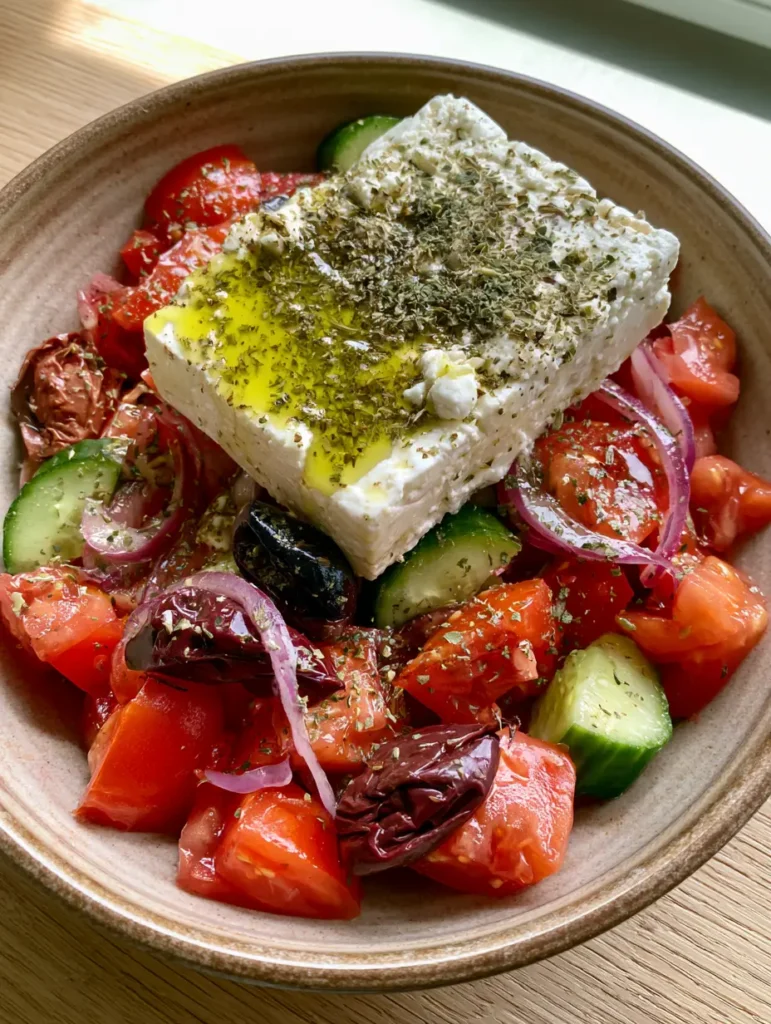
This recipe adheres strictly to the traditional blueprint: no lettuce, no fillers, and a proud, singular block of feta cheese resting on top like a crown. Whether you are serving this as a refreshing lunch or a side for your Greek Lamb Gyro Bowls, every bite promises a harmonious balance of salty, tangy, and sweet notes that define Mediterranean cuisine.
Why This Traditional Horiatiki Recipe Stands Out
- Zero Lettuce Policy: This is a true Authentic Greek Salad, meaning we rely on the crunch of unpeeled cucumbers and the juiciness of tomatoes rather than watery greens.
- Structural Integrity: By using large, irregular “village-style” cuts, the vegetables maintain their snap and don’t turn into a mushy mess even after sitting for twenty minutes.
- The Feta Slab: Traditionally, feta is never crumbled into the salad during preparation; it is served as a whole rectangular block to preserve its creamy texture and tangy bite.
- Flavor Extraction: We utilize the science of osmosis by lightly salting the tomatoes early, drawing out their juices to create a natural “dressing” when mixed with premium olive oil.
The Anatomy of a Perfect Authentic Greek Salad
Creating an Authentic Greek Salad requires high-quality components because there is nowhere for subpar ingredients to hide. Each element must be chosen for its freshness and flavor profile to achieve that iconic rustic look and taste.
Vine-Ripened Tomatoes: You need 4 large (approx. 600g) tomatoes that are heavy for their size and fragrant at the stem. These provide the essential juice that forms the base of the salad’s “sauce.”
Unpeeled Crisp Cucumbers: Use 1 medium (300g) cucumber, preferably a Persian or English variety. Keeping the skin on is vital for that bright green visual contrast and the necessary structural crunch described in our visual blueprint.
Red Onion Half-Moons: One small (100g) red onion provides a sharp, spicy counterpoint to the sweet tomatoes. Slicing them into translucent half-moons ensures they mellow out slightly when hit with the acidity of the vinegar.
Whole Kalamata Olives: You will need about 1/2 cup (75g) of dark, wrinkled Kalamata olives. Keep them whole to maintain their briny integrity and to match the rustic, home-cooked aesthetic of a true Greek table.
Block of Sheep’s Milk Feta: Look for a 7 oz (200g) block of high-quality feta stored in brine. The texture should be firm yet creamy, capable of holding its rectangular shape when placed atop the salad.
Extra Virgin Olive Oil (EVOO): Use 1/4 cup (60ml) of the best cold-pressed olive oil you can find. It should have a golden-green hue and a peppery finish that ties the raw vegetables together.
Dried Greek Oregano (Rigani): 1 tablespoon (approx. 1g) of dried oregano is the essential aromatic. It must be heavily dusted over the feta and vegetables to provide that earthy, floral scent that defines the dish.
Red Wine Vinegar & Sea Salt: These are the “invisible” workhorses. 1 tablespoon (15ml) of vinegar adds the necessary zing, while a pinch of fine sea salt (3g) awakens the natural sugars in the tomatoes.
Essential Equipment for a Rustic Presentation
Achieving the look of a professional Horiatiki doesn’t require complex gadgets, but the right tools make the “village cut” much easier to execute. You want your salad to look effortlessly thrown together, yet perfectly balanced.
A sharp Chef’s Knife is non-negotiable for slicing through tomato skins without bruising the delicate flesh. You will also need a Rustic Ceramic Bowl, much like the one seen in our visual guides, to hold the ingredients. The wide rim of a ceramic bowl allows the olive oil to coat every surface evenly without the need for aggressive tossing.
For the onions, a Mandoline Slicer (used with caution!) can help achieve those translucent, paper-thin half-moons that drape beautifully over the cucumbers. Finally, ensure you have a Wooden Serving Set to gently move the vegetables without breaking the thick slices of cucumber or crushing the whole olives.

Step-by-Step Instructions for the Perfect Village Salad
1. Preparing the “Village Cut” Vegetables
Start by washing your tomatoes and cucumbers in cold water and drying them thoroughly. Cut the 4 large (600g) tomatoes into chunky, irregular wedges—think “bite-sized but bold.” Place them into your rustic ceramic bowl and sprinkle with a pinch of sea salt. This allows the tomatoes to begin releasing their flavorful juices immediately.
2. Adding Texture with Unpeeled Cucumbers
Take your medium (300g) unpeeled cucumber and slice it into thick rounds, roughly 1/2 inch (1.25cm) thick. If the cucumber is particularly large, you can halve the rounds into semi-circles. Add these to the bowl with the tomatoes. The unpeeled skin provides a vibrant green visual that is essential for an Authentic Greek Salad.
3. Layering the Aromatics and Olives
Thinly slice your red onion into translucent half-moons. If the onion is very pungent, you can soak the slices in cold water for five minutes then pat dry to mellow the bite. Scatter the onions and the 1/2 cup (75g) of whole Kalamata olives over the tomato and cucumber base. Do not stir yet; we want to maintain the distinct layers.
4. The Traditional Dressing Technique
Drizzle 1 tablespoon (15ml) of red wine vinegar over the vegetables, followed by 3 tablespoons of your extra virgin olive oil. Use your hands or wooden spoons to very gently toss the ingredients just once or twice. You want the oil to begin emulsifying with the tomato juice, creating a glistening coating on every piece of produce.
5. Crowning with the Feta Block
Place the entire 7 oz (200g) rectangular block of feta cheese directly in the center on top of the vegetables. Do not crumble it. The block should look prominent and textured. Drizzle the remaining 1 tablespoon of olive oil specifically over the cheese, allowing it to pool in the slight crumbles on the surface.
6. The Final Herbal Dusting
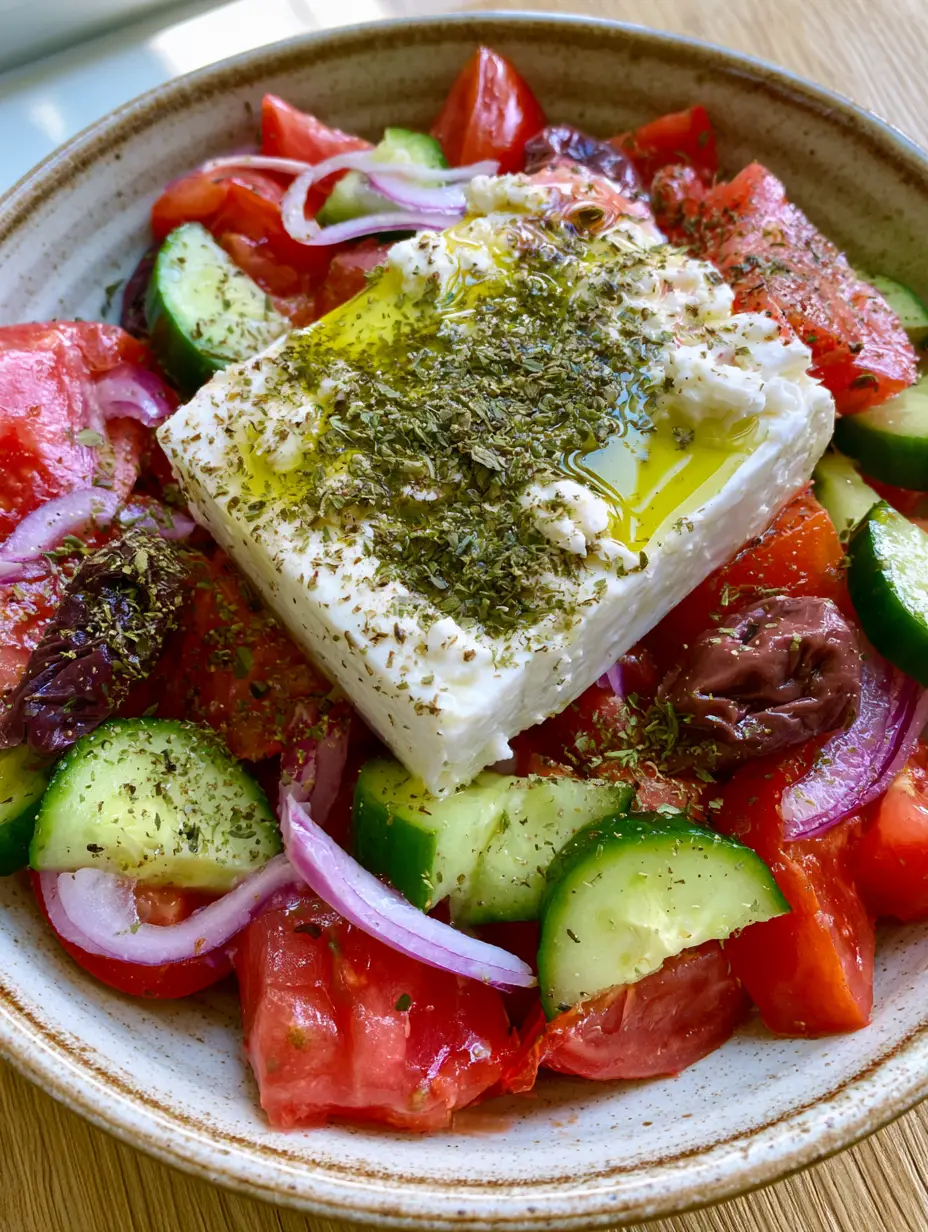
Take your dried oregano and rub it between your palms directly over the bowl. This friction releases the essential oils in the herb. Apply a heavy dusting over the feta block and the surrounding vegetables. The salad should look “glistening” and “heavy with herbs,” exactly as described in our culinary blueprint.
Expert Tips for Success
- Temperature Matters: Never serve a Greek salad ice-cold. Let the vegetables sit at room temperature for 15 minutes before serving so the fats in the olive oil and feta can soften and release their full bouquet.
- The “Papara” Factor: Always serve this salad with high-quality sourdough or pita. In Greece, “papara” refers to the act of dipping bread into the leftover olive oil and tomato juice at the bottom of the bowl—it’s often considered the best part of the meal!
- Skip the Pepper: While many modern recipes add black pepper, a traditional Horiatiki relies on the peppery bite of high-quality EVOO and the pungency of raw onions for spice.
- Olive Integrity: Ensure your Kalamata olives are the “wrinkled” variety if possible. This indicates they were cured naturally in brine, offering a deeper, more complex saltiness than smooth, canned olives.
Storage and Freshness Guidelines
The Authentic Greek Salad is best enjoyed within an hour of assembly. Because of the high salt content in the feta and the added sea salt, the tomatoes will continue to release moisture, eventually making the salad too watery if left overnight.
If you must prepare it in advance, chop the vegetables but store the tomatoes, cucumbers, and onions in separate airtight containers in the fridge. Do not add the salt, vinegar, or oil until the moment of serving. The feta block should remain in its brine until it is ready to be placed on top of the dish. This recipe is not suitable for freezing.
What to Serve With Authentic Greek Salad
This salad is incredibly versatile and serves as the perfect cooling side dish for grilled meats or hearty Mediterranean pastas. If you are looking for a full feast, pair it with Greek Chicken Gyros or a plate of Greek Grilled Chicken.
For a vegetarian spread, it complements a Mediterranean Pasta Salad beautifully, offering a raw, fresh contrast to the cooked grains. If you enjoy a variety of textures on the table, try serving it alongside a tray of Mexican Street Corn Salad for a fusion-style summer BBQ. And for a unique twist on the fruit-and-feta combination, don’t miss our Peach Watermelon Salad!
Frequently Asked Questions
While it tastes the same, an authentic presentation always uses a whole rectangular block of feta placed on top. This prevents the cheese from dissolving into the dressing and keeps the textures distinct.
It is best served fresh. Within 2-3 hours, the salt will draw too much water out of the tomatoes, making the salad soggy. If you have leftovers, they are best eaten within 24 hours.
No, you should leave the cucumber unpeeled. The skin provides a necessary crunch and a vibrant green color that contrasts beautifully with the red tomatoes.
Kalamata olives are the standard. Look for whole, dark purple olives that are slightly wrinkled, as these have the best briny flavor and rustic appearance.
Traditional Greek Horiatiki is a ‘village salad’ designed to highlight summer produce like tomatoes and cucumbers. Lettuce is not traditionally grown in the same season or used in this specific rustic preparation.
Authentic Greek Salad (Horiatiki) Recipe Card
Authentic Greek Salad (Horiatiki): The Traditional Village Recipe
Ingredients
Equipment
Method
- Cut the tomatoes into chunky wedges and the unpeeled cucumber into thick slices. Add to a rustic bowl.
- Scatter thin red onion half-moons and whole Kalamata olives over the base vegetables.
- Add sea salt, red wine vinegar, and 3 tablespoons of olive oil. Gently toss to combine juices.
- Place the whole block of feta on top. Drizzle the remaining oil over the cheese and dust heavily with dried oregano.
Notes
Don't skip the unpeeled skin on the cucumber; it provides essential crunch and color.
Join the Crisp Crumbs Community!
We hope this Authentic Greek Salad brings a taste of the Mediterranean sunshine to your kitchen. There is nothing quite like the combination of sun-ripened tomatoes and creamy feta to make a meal feel special yet simple. If you made this recipe, we would love to hear about it!
Leave a comment below and tell us—did you do the “papara” with some crusty bread? Be sure to follow us on Pinterest for more rustic recipe inspiration and share your creations with the hashtag #CrispCrumbs. Don’t forget to sign up for our newsletter to get elite recipes delivered straight to your inbox!


