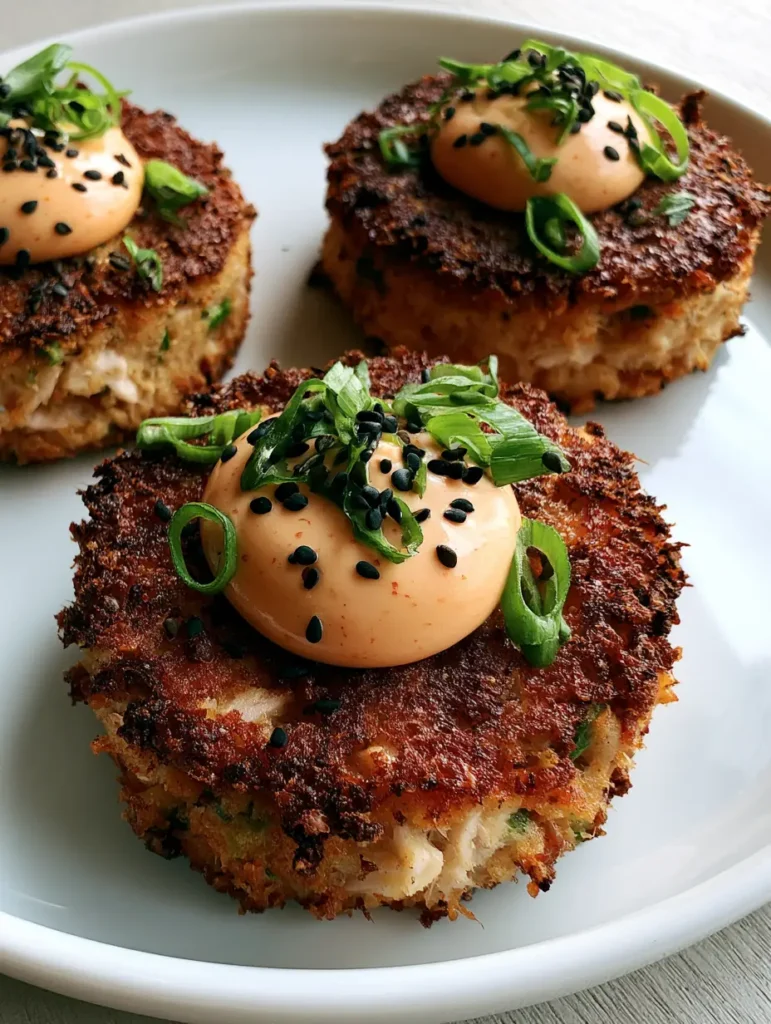
When you crave a gourmet seafood experience without the high-end restaurant price tag, these Asian Tuna Cakes are the ultimate solution. Perfectly balanced between pantry-staple convenience and sophisticated culinary technique, this dish transforms humble canned tuna into a show-stopping centerpiece. The visual appeal is undeniable: three thick, circular patties resting on a stark white ceramic plate, their rustic, golden-brown crusts promising a satisfying crunch with every bite.
The magic of these Asian Tuna Cakes lies in the interplay of textures and temperatures. You have the piping hot, pan-seared exterior contrasting with a cool, glossy dollop of pale orange sriracha mayonnaise. A fine dusting of black sesame seeds and a scatter of vibrant green scallions provide the final sensory layers, making this dish as beautiful as it is delicious. Whether you are hosting a light lunch or looking for a quick, protein-packed dinner, this recipe delivers on every front.
In this guide, we will dive deep into the science of the perfect sear, the importance of moisture control in fish cakes, and how to achieve that professional food-photography look right in your own kitchen. By following these professional methods, you will ensure your patties never fall apart and always maintain that signature “handheld smartphone photo” aesthetic that looks as good as it tastes.
Why You Will Love This Crispy Seafood Masterpiece
- Textural Contrast: The panko-crusted exterior provides a rustic, “shattering” crunch that gives way to a tender, flakey center.
- Visual Sophistication: Arranged on a plain white plate, the contrast between the golden cakes, the orange mayo, and the green herbs creates a restaurant-quality presentation.
- Bold Flavor Profile: Unlike traditional crab cakes, these Asian Tuna Cakes lean into umami-rich ingredients like soy sauce, ginger, and sesame.
- Speed and Efficiency: From pantry to plate in under 30 minutes, making it a reliable staple for busy weeknights.
The Essential Pantry Staples for Bold Asian Flavor
Canned or Pouched Light Tuna (12 oz / 340g): This provides the structural foundation; ensuring it is well-drained is the secret to a cake that holds its shape. Use light meat flakes to achieve the specific visual texture seen in professional food photography.
Panko Breadcrumbs (1 cup / 60g): Unlike standard breadcrumbs, Panko creates a jagged, rustic surface area that captures more heat and fat for a superior golden-brown crust. We use half inside the mixture for binding and half as an external coating.
Large Eggs (2): These act as the primary protein binder, coagulating during the searing process to lock the tuna and aromatics together. Without them, your Asian Tuna Cakes would crumble the moment they hit the pan.
Mayonnaise (2 tbsp / 30g): This adds essential fats and moisture to the interior, preventing the tuna from becoming dry during the high-heat searing process. It works in tandem with the egg to create a creamy, cohesive texture.
Thinly Sliced Scallions (1/4 cup / 25g): These provide the “green herb flecks” visible in the patties, offering a mild, onion-like bite that cuts through the richness of the fish. Always use both the white and green parts for maximum flavor depth.
Fresh Grated Ginger (1 tsp / 5g): This provides a bright, aromatic heat that is foundational to the Asian flavor profile. It cleanses the palate and complements the oceanic notes of the tuna.
Soy Sauce (1 tbsp / 15ml): This is your primary salt source and umami booster. It seasons the tuna from within and helps achieve that deep golden hue during the Maillard reaction.
Neutral Frying Oil (3 tbsp / 45ml): A high-smoke point oil like avocado or grapeseed is required to achieve the blistering, golden-brown exterior without the oil breaking down or smoking. This is the “invisible” ingredient that creates the sear.
The Signature Garnish and Sauce Components
Sriracha Mayonnaise (1/4 cup / 60g): To achieve the “pale orange” dollop described in our visual blueprint, mix quality mayo with sriracha until the color is consistent and glossy. It provides the creamy, spicy finish that ties the dish together.
Black Sesame Seeds (1 tsp): These are strictly for visual and textural contrast. Their dark silhouette against the golden crust and orange sauce adds a layer of professional culinary “finish.”
Extra Sliced Scallions: Reserved for the final garnish to provide a pop of vibrant green. This ensures the dish looks fresh and “natural,” as if captured in soft daylight.
Essential Equipment for the Perfect Pan-Sear
To replicate the rustic, textured crust of these Asian Tuna Cakes, you need a heavy-bottomed skillet. A well-seasoned cast-iron pan or a high-quality non-stick skillet is ideal for distributing heat evenly. You will also need a wide, thin spatula to flip the cakes delicately without breaking the panko shell.
A set of mixing bowls and a microplane for the ginger will ensure your aromatics are finely integrated. Finally, a small cookie scoop or measuring cup helps in forming three thick, circular patties that are uniform in size, ensuring they cook at the exact same rate.

Mastering the Perfect Pan-Sear for Golden Crusts
Preparing the Tuna Foundation
Start by draining your tuna thoroughly. Any excess moisture is the enemy of a crispy crust; if the mixture is too wet, it will steam rather than sear. Flake the tuna into a bowl and mix with the egg, 1/2 cup (30g) of panko, mayo, soy sauce, ginger, and the 1/4 cup (25g) of sliced scallions.
Listen for the “squish” sound as you mix—you want a consistency that holds together when pressed but isn’t overly dense. If it feels too loose, add an extra tablespoon of panko. Let this mixture rest for 5 minutes to allow the breadcrumbs to hydrate, which improves the structural integrity of your Asian Tuna Cakes.
Shaping and Coating for Maximum Crunch
Divide the mixture into three thick, circular patties. Aim for a thickness of about 1 inch (2.5cm) to ensure a significant contrast between the crunchy exterior and the tender middle. Gently press the remaining panko onto the outside of each patty, ensuring the edges are well-coated for that “rustic” look.
For the best results, place the formed cakes in the refrigerator for 10 minutes before cooking. This “sets” the fats and binders, making them much easier to handle when they hit the hot oil. This is a pro-tip used to create the perfectly circular shapes seen in high-end food photography.
Executing the Professional Sear
Heat your oil over medium-high heat until it shimmers. Carefully place the three cakes into the pan—you should hear a vigorous sizzle immediately. Sear for 3-4 minutes per side. Do not move them once they touch the pan; this stillness is what allows the deep, golden-brown crust to form.
Watch for the visual cue: the edges of the panko will turn brown first. Once you flip them, the second side usually takes slightly less time. The goal is an internal temperature that is hot through, while the exterior achieves a rustic, textured appearance with visible flakes of meat and herb flecks.
The Final Garnish and Plating Technique
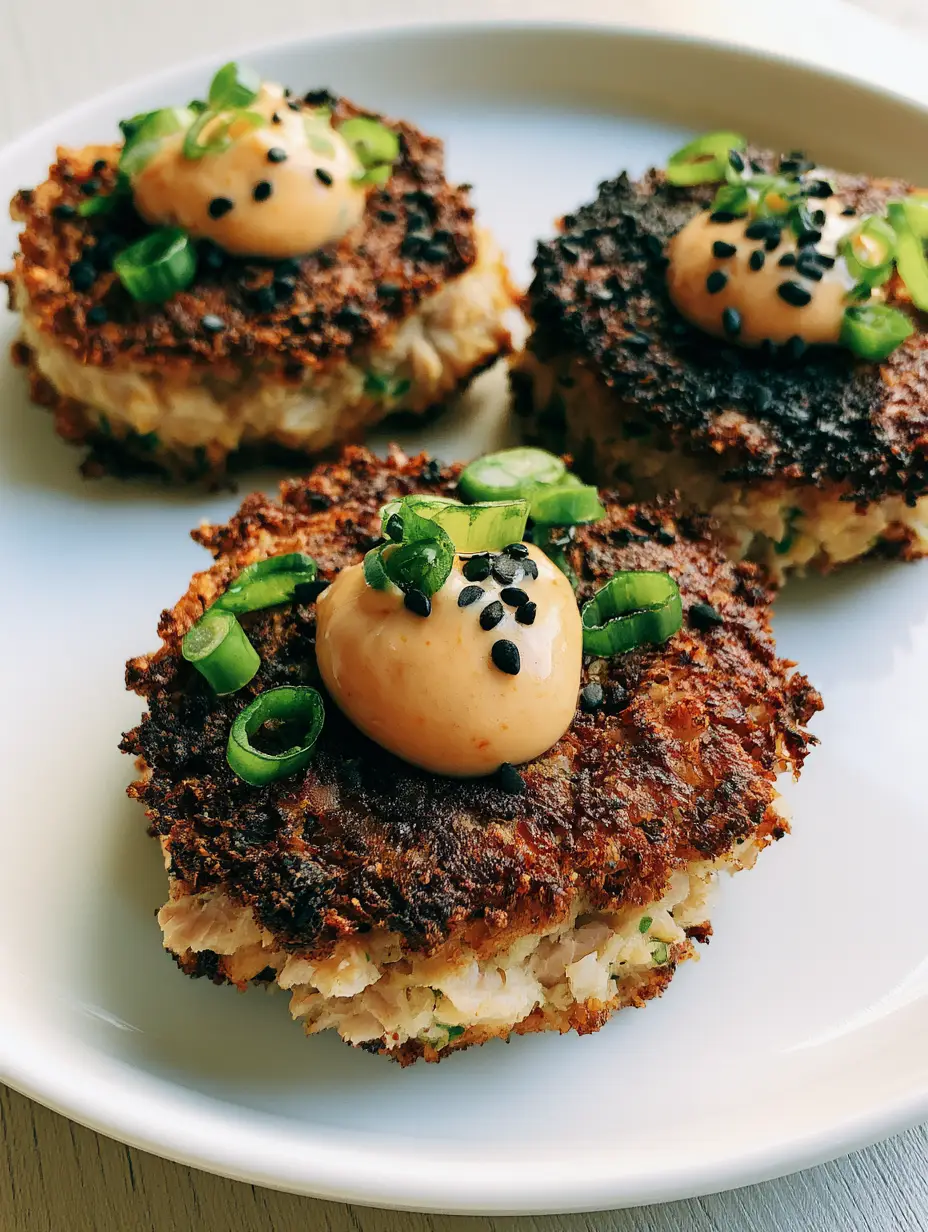
Place the three cakes on a plain white ceramic plate. Use a small spoon or a piping bag to place a “thick, glossy dollop” of the sriracha mayo precisely in the center of each cake. The pale orange color should pop against the golden-brown tuna.
Finally, sprinkle the black sesame seeds from a height of about six inches to ensure an even “fine dusting.” Top with the reserved thinly sliced green scallions. This layering of color—brown, orange, black, and green—is what creates the “high resolution, natural food photography” look.
Expert Tips for Culinary Success
- The Moisture Secret: If using canned tuna in water, squeeze it through a clean kitchen towel to remove every drop of liquid. Dry tuna equals a better sear.
- Don’t Overcrowd: Only cook three cakes at a time. Overcrowding the pan drops the oil temperature, leading to greasy, soggy cakes instead of crispy ones.
- Temperature Matters: Ensure your oil is hot before adding the cakes. If the oil isn’t shimmering, the panko will simply soak up the fat.
- Symmetry in Plating: For the best visual result, use a circular mold or a large biscuit cutter to shape the patties before searing.
Storage, Reheating, and Freezing Advice
These Asian Tuna Cakes are best enjoyed immediately to preserve the crunch of the panko. However, if you have leftovers, store them in an airtight container in the refrigerator for up to 2 days. To reheat, avoid the microwave as it will make the crust soggy.
Instead, reheat them in a dry skillet over medium heat for 2 minutes per side or in an air fryer at 350°F (175°C) for 3-4 minutes. You can also freeze the uncooked patties by wrapping them individually in plastic wrap and storing them in a freezer bag for up to 3 months. Thaw in the fridge before searing as directed.
What to Serve with Your Asian Tuna Cakes
To balance the rich, fried texture of the cakes, we recommend serving them alongside a bright, acidic side dish. A crunchy jalapeno slaw (coming soon) is the perfect companion, offering a vinegar-based bite that cleanses the palate between mouthfuls of tuna.
If you are looking for a more substantial meal, these cakes pair beautifully with a light noodle salad or our vibrant Thai chickpea salad. For those who enjoy a variety of textures, serving these alongside spicy garlic beef croquettes (coming soon) can create a fun “surf and turf” appetizer platter for guests.
If you have leftover sriracha mayo, it makes an excellent dipping sauce for egg roll in a bowl or even as a spread for a zesty chicken club sandwich.
Frequently Asked Questions
As written, they contain panko and soy sauce which have gluten. You can easily make them gluten-free by using GF-certified panko and tamari instead of soy sauce.
You can, but you won’t achieve the same rustic, golden-brown crust. If baking, spray them generously with oil and bake at 400°F (200°C) for 15-20 minutes, flipping halfway through.
Yes, you can use finely diced fresh tuna. However, you may need an extra egg or a bit more mayonnaise to act as a binder since fresh tuna doesn’t flake the same way canned tuna does.
The key is using a high-smoke point oil and medium-high heat. Once the cakes hit the pan, do not move them for at least 3 minutes to allow the Maillard reaction to create that rustic, textured crust.
This is usually caused by excess moisture. Ensure your tuna is thoroughly drained and squeezed dry before mixing. Chilling the patties for 10 minutes before searing also helps the binders set.
The Ultimate Asian Tuna Cakes Recipe
Asian Tuna Cakes with Crispy Panko and Sriracha Mayo
Ingredients
Equipment
Method
- In a medium bowl, combine the drained tuna, eggs, 1/2 cup panko, mayo, scallions, ginger, and soy sauce. Mix until cohesive.
- Let the mixture sit for 5 minutes to allow the panko to absorb moisture for better binding.
- Divide into 3 thick, circular patties. Press the remaining 1/2 cup panko onto the exterior of each cake.
- Optional but recommended: Refrigerate for 10 minutes to help the cakes hold their shape during searing.
- Add oil to the skillet over medium-high heat until shimmering. Carefully add patties.
- Cook for 3-4 minutes per side without moving them, until a deep golden-brown rustic crust forms.
- Place on a white plate. Top each with a dollop of sriracha mayo, black sesame seeds, and extra scallions.
Notes
Use a high-smoke point oil like avocado oil for the best crust.
Asian Tuna Cakes with Crispy Panko and Sriracha Mayo
Ingredients
Equipment
Method
- In a medium bowl, combine the drained tuna, eggs, 1/2 cup panko, mayo, scallions, ginger, and soy sauce. Mix until cohesive.
- Let the mixture sit for 5 minutes to allow the panko to absorb moisture for better binding.
- Divide into 3 thick, circular patties. Press the remaining 1/2 cup panko onto the exterior of each cake.
- Optional but recommended: Refrigerate for 10 minutes to help the cakes hold their shape during searing.
- Add oil to the skillet over medium-high heat until shimmering. Carefully add patties.
- Cook for 3-4 minutes per side without moving them, until a deep golden-brown rustic crust forms.
- Place on a white plate. Top each with a dollop of sriracha mayo, black sesame seeds, and extra scallions.
Notes
Use a high-smoke point oil like avocado oil for the best crust.
Bring the Golden Crunch to Your Kitchen
These Asian Tuna Cakes prove that simple ingredients can lead to extraordinary results when handled with professional technique. The combination of the rustic panko crust and the spicy sriracha mayo creates a flavor profile that is both comforting and adventurous. We invite you to try this recipe and see how easily you can achieve restaurant-quality plating at home.
Did you manage to get that perfect golden-brown sear? We would love to hear about your results in the comments below! If you enjoyed this recipe, please consider signing up for our newsletter for more culinary deep-dives. Don’t forget to share your creations and pin this recipe to Pinterest so you can find it whenever the craving for crispy seafood hits!


