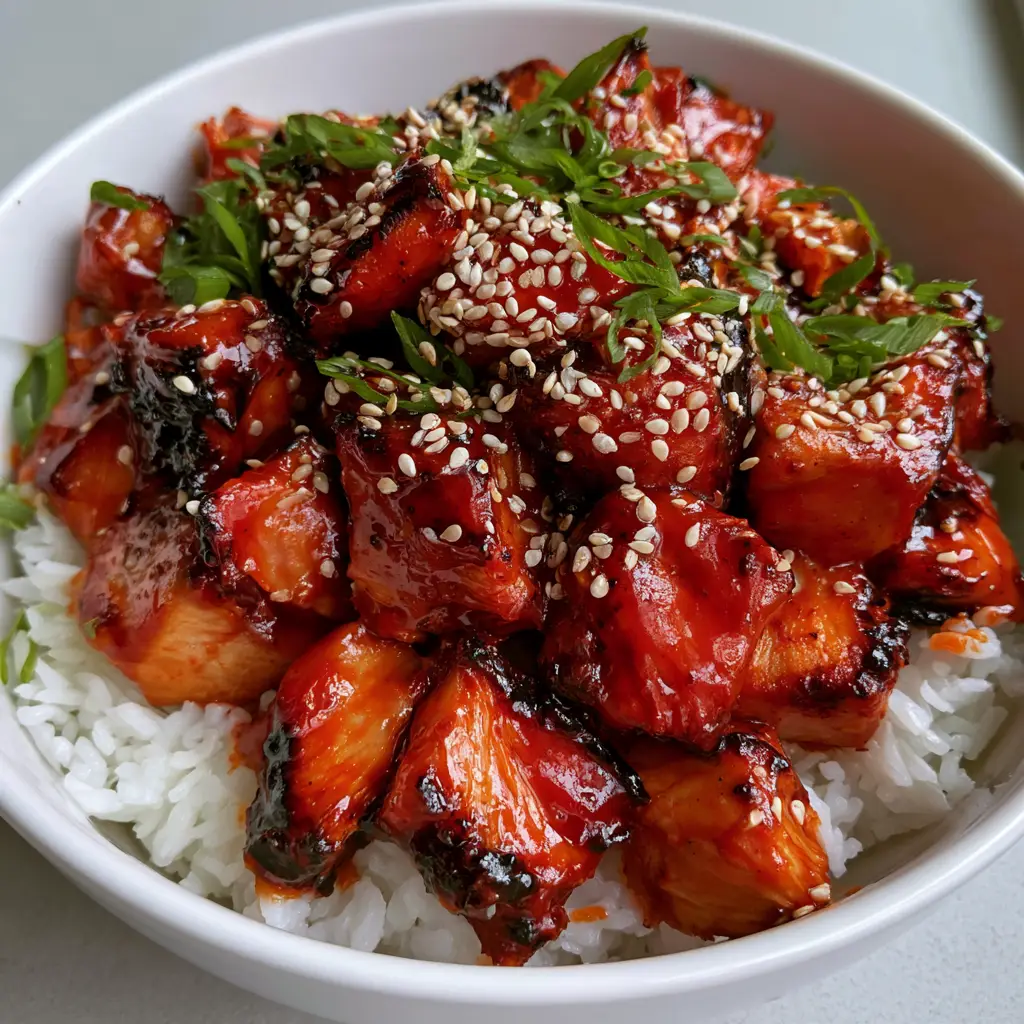
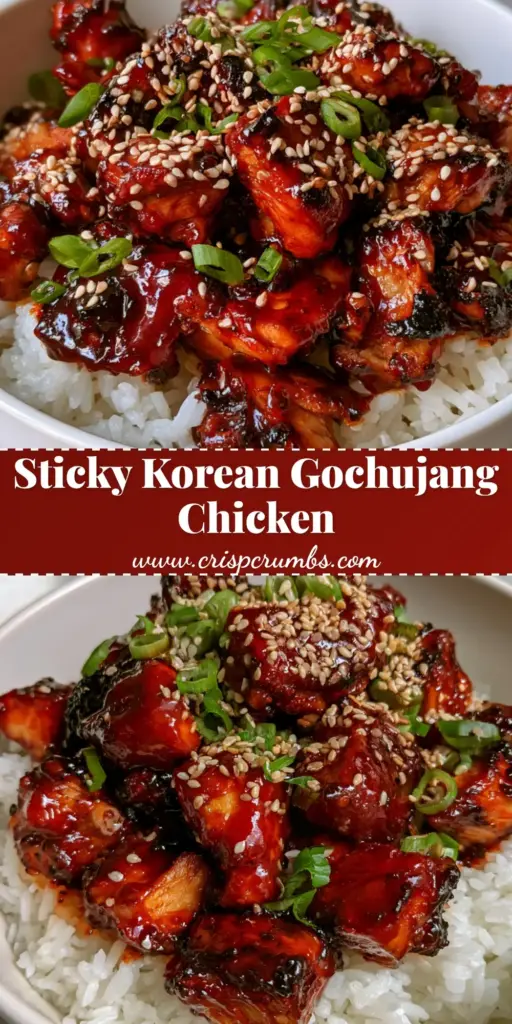
Gochujang Chicken is the vibrant, flavor-packed dinner you have been searching for to break your weeknight routine. If you are scrolling through Pinterest looking for that perfect balance of sweet, spicy, and savory, this handheld smartphone-style dish is exactly what you need. Imagine bite-sized seared chicken breast pieces, each one dripping in a thick glossy gochujang glaze that catches the light beautifully in a ceramic bowl. This recipe isn’t just about the heat; it is about the complex, fermented depth that only authentic Korean chili paste can provide, paired perfectly with fluffy steamed white jasmine rice.
This Gochujang Chicken recipe is designed for the home cook who wants restaurant-quality results without spending hours in the kitchen. We are focusing on caramelized chicken edges that offer a slight crunch, contrasting against the tender, juicy interior of the meat. The visual appeal is undeniable—the deep-red sauce pops against the white rice, especially when finished with a heavy garnish of toasted white sesame seeds and freshly sliced green onions. Whether you are a fan of sticky garlic chicken noodles or you love a good spicy kick, this dish will quickly become a permanent fixture in your meal rotation.
Why This Gochujang Chicken Recipe Works Every Time
- The Perfect Sear: We use high-heat techniques to ensure caramelized and slightly charred edges on every single piece of chicken, providing a smoky depth to the spice.
- Glossy Sauce Consistency: The ratio of gochujang to honey and soy sauce creates a thick, vibrant deep-red glaze that clings to the chicken rather than pooling at the bottom of the bowl.
- Balanced Heat: By balancing the fermented spice of the gochujang with sweetness and acidity, we create a dish that is approachable yet exciting for all palates.
- Speed & Simplicity: From prep to table in under 25 minutes, making it even faster than ordering takeout.
The Secret Ingredients for a Vibrant Deep-Red Glaze
To achieve the authentic flavor and thick glossy gochujang glaze seen in professional food photography, you need the right components. Each ingredient serves a specific culinary purpose to balance the profile of this Gochujang Chicken.
Chicken Breast: 1.5 lbs (680g) of boneless, skinless chicken breast. Cutting these into uniform 1-inch (2.5cm) bite-sized pieces ensures even cooking and maximum surface area for the glaze to adhere to.
Gochujang Paste: 3 tbsp (45ml). This is the soul of the dish. It is a fermented Korean chili paste that provides a savory, pungent, and spicy base that cannot be substituted with standard chili sauce.
Honey or Brown Sugar: 2 tbsp (30ml). This provides the necessary sweetness to balance the heat and helps create those caramelized chicken edges through the process of caramelization during the final glaze reduction.
Soy Sauce: 1 tbsp (15ml). For that essential hit of umami and saltiness that rounds out the fermented notes of the gochujang.
Rice Vinegar: 1 tsp (5ml). A tiny bit of acidity cuts through the richness of the paste and brightens the entire dish.
Fresh Garlic and Ginger: 1 tbsp (15ml) each, minced. These aromatics provide the “high notes” of flavor that make the Gochujang Chicken taste fresh and vibrant.
Toasted Sesame Oil: 1 tsp (5ml). Added at the very end to preserve its delicate nutty aroma and add a professional finish to the thick glossy gochujang glaze.
High-Smoke Point Oil: 2 tbsp (30ml) of avocado or vegetable oil for searing the chicken at high temperatures without burning.
How to Master the Perfect Sear and Glaze
Step 1: Prepping the Chicken for Maximum Flavor
Start by patting your chicken breast pieces completely dry with paper towels. This is a critical step; moisture is the enemy of a good sear. If the chicken is wet, it will steam instead of developing those caramelized chicken edges we are looking for.
Season the bite-sized pieces lightly with salt and pepper. Remember that the gochujang and soy sauce are already salty, so don’t overdo it. If you enjoy this flavor profile, you might also like our honey garlic chicken skewers for your next BBQ.
Step 2: The High-Heat Searing Process
Heat your oil in a large skillet or wok over medium-high heat until it is shimmering. Add the chicken in a single layer. Do not crowd the pan! If you add too much chicken at once, the temperature of the pan will drop, and you won’t get that “charred” look.
Let the chicken sit undisturbed for 2-3 minutes. You want to hear a vigorous sizzle. Flip the pieces only once they have developed a golden-brown crust. Continue cooking until the chicken is almost cooked through, about 5-6 minutes total.
Step 3: Creating the Glossy Deep-Red Glaze
In a small bowl, whisk together the gochujang, honey, soy sauce, rice vinegar, garlic, and ginger. Once the chicken is seared, pour this mixture directly into the pan. The sauce will immediately begin to bubble and thicken.
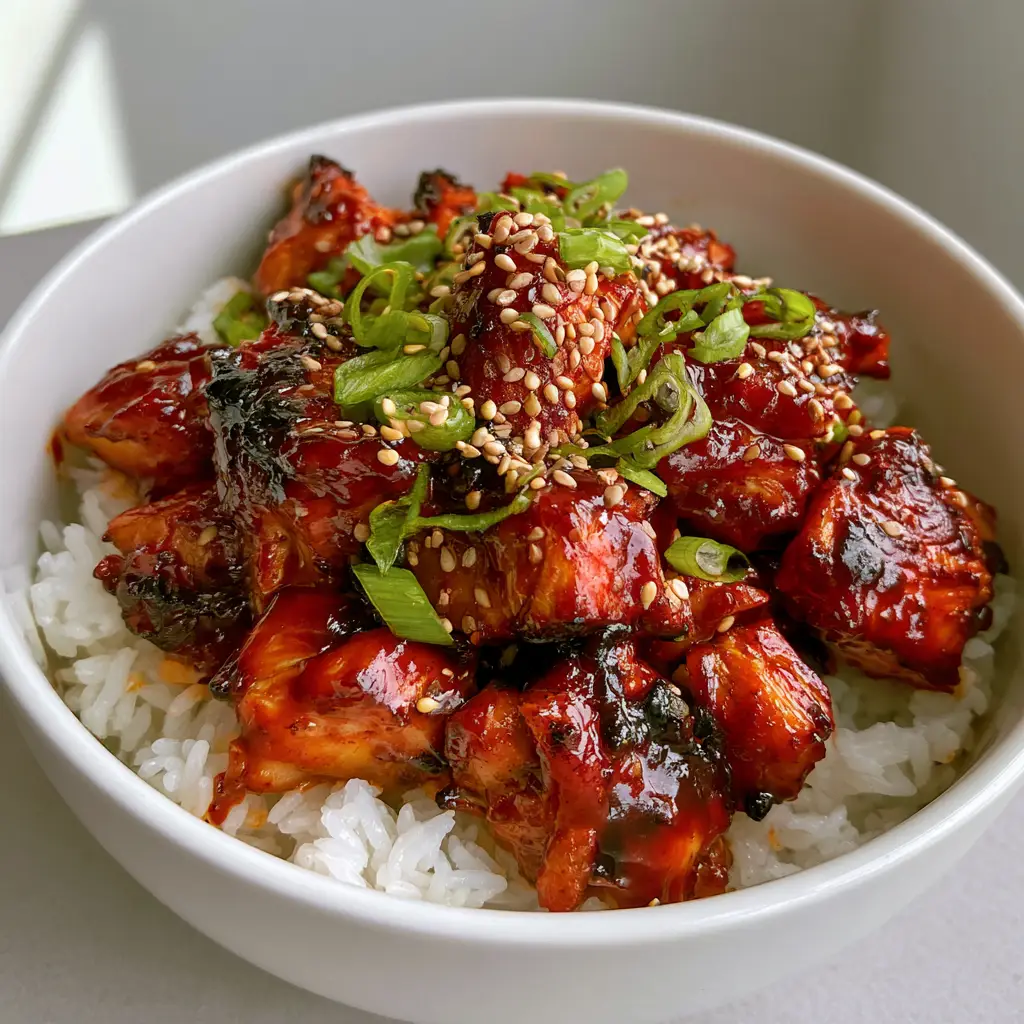
Toss the chicken continuously. You will see the sauce transform from a thin liquid into a thick, vibrant deep-red glaze that coats every nook and cranny of the seared bite-sized chicken. This process only takes about 1-2 minutes. Look for the sauce to become shiny and translucent—this is your visual cue that the sugars have emulsified with the fats.
Step 4: The Final Garnish and Presentation
Remove the pan from the heat and stir in the toasted sesame oil. Serve the Gochujang Chicken immediately over a bed of steamed white jasmine rice. The heat from the chicken will slightly soften the rice, allowing the sauce to soak in.
Finish the dish with a heavy garnish of toasted white sesame seeds. The white seeds provide a stunning visual contrast against the deep red sauce. Finally, scatter a generous handful of freshly sliced green onions over the top for a pop of green and a fresh, sharp bite that cuts through the sticky glaze.
Expert Tips for the Best Gochujang Chicken
- Control the Heat: Gochujang brands vary in spiciness. If you are sensitive to heat, start with 2 tablespoons and work your way up.
- Use a Cast Iron Skillet: For the most authentic caramelized chicken edges, a cast iron skillet retains heat better than non-stick, resulting in a superior sear.
- Rice Matters: While you can use brown rice, white jasmine rice is traditional because its floral aroma and fluffy texture complement the bold, spicy sauce perfectly.
- Don’t Overcook: Chicken breast dries out quickly. As soon as the internal temperature hits 165°F (74°C), remove it from the heat. The thick glossy gochujang glaze will keep it moist, but timing is key.
Storage, Reheating, and Freezing Instructions
Storage: Store leftovers in an airtight container in the refrigerator for up to 3-4 days. The flavors of the Gochujang Chicken actually deepen overnight, making it a fantastic meal-prep option.
Reheating: To maintain the glossy glaze, reheat the chicken in a skillet over low heat with a splash of water or chicken broth. This loosens the sauce without overcooking the chicken. Avoid the microwave if possible, as it can make the chicken rubbery.
Freezing: You can freeze the cooked chicken for up to 2 months. Thaw in the refrigerator overnight before reheating. The texture of the green onions will change, so we recommend adding fresh garnishes after reheating.
What to Serve with Spicy Korean Chicken
To create a balanced meal, pair this Gochujang Chicken with refreshing sides. A simple cucumber salad with rice vinegar and sesame oil is a classic choice. You could also serve it alongside some steamed broccoli or bok choy to soak up the extra thick glossy gochujang glaze.
If you are looking for more bowl-style inspirations, check out our mediterranean chicken bowls for a different flavor profile that uses similar meal-prep techniques. For a side with a bit more crunch, a quick cabbage slaw works wonders against the soft jasmine rice.
Frequently Asked Questions about Gochujang Chicken
Yes! Chicken thighs are excellent for Gochujang Chicken as they contain more fat, which leads to even more succulent caramelized chicken edges.
The secret to a thick glossy gochujang glaze is the emulsification of the honey and the oils in the pan over high heat during the last 2 minutes of cooking.
Gochujang Chicken has a medium heat level. The spice is balanced by honey and soy sauce, but you can adjust the spiciness by using more or less gochujang paste.
To make it gluten-free, ensure your gochujang paste is certified GF (some contain barley) and swap the soy sauce for tamari or coconut aminos.
Gochujang has a unique fermented flavor, but in a pinch, you can mix Sriracha with a little miso paste and brown sugar to mimic the depth, though the flavor will differ.
The Best Gochujang Chicken Recipe Card
Gochujang Chicken: The Ultimate 20-Minute Sticky Spicy Korean Glazed Chicken
Ingredients
Equipment
Method
- Pat chicken breast dry and season lightly with salt. Cut into uniform bite-sized pieces.
- Heat oil in a large skillet over medium-high heat. Add chicken in a single layer and sear until caramelized and slightly charred on the edges, about 5-6 minutes.
- While chicken sears, whisk together gochujang, honey, soy sauce, rice vinegar, garlic, and ginger in a small bowl.
- Pour the sauce over the seared chicken. Toss constantly for 1-2 minutes until the sauce becomes a thick, glossy, deep-red glaze.
- Remove from heat, stir in sesame oil, and serve over jasmine rice with sesame seeds and green onions.
Notes
If the sauce gets too thick too quickly, add 1 tablespoon of water to loosen the glaze.
Save This Recipe to Pinterest!
Did you love the thick glossy gochujang glaze and those caramelized chicken edges? Make sure to save this recipe to your Pinterest boards so you can find it later! We love seeing your recreations, so please share a photo of your dish in the comments below and let us know how it turned out. Don’t forget to give this recipe a 5-star rating if it satisfied your spicy chicken cravings!
For more authentic, high-flavor recipes like our garlic parmesan chicken pasta, follow CrispCrumbs on social media and stay tuned for our next kitchen adventure!