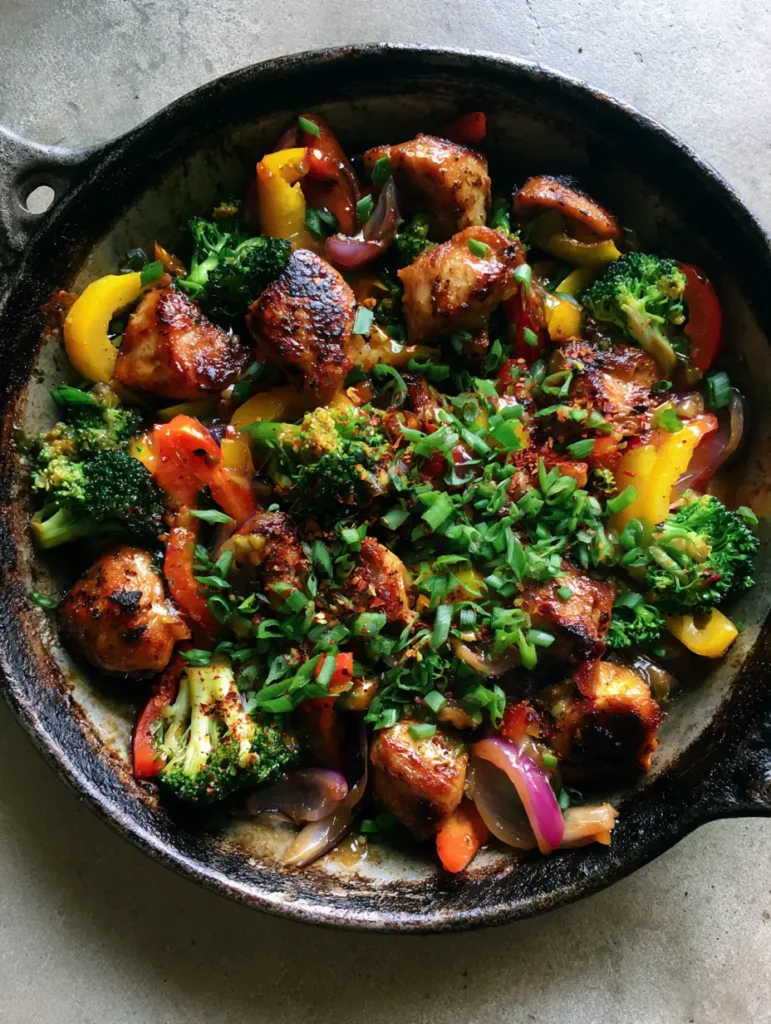
The Chicken and Vegetable Skillet is the holy grail of weeknight cooking, combining vibrant colors, lean protein, and a sauce so glossy it looks like it belongs in a professional food shoot. This recipe isn’t just about throwing ingredients into a pan; it is a masterclass in texture management and flavor layering. We are going to transform humble chicken breast and fresh produce into a restaurant-quality meal using a single rustic black skillet.
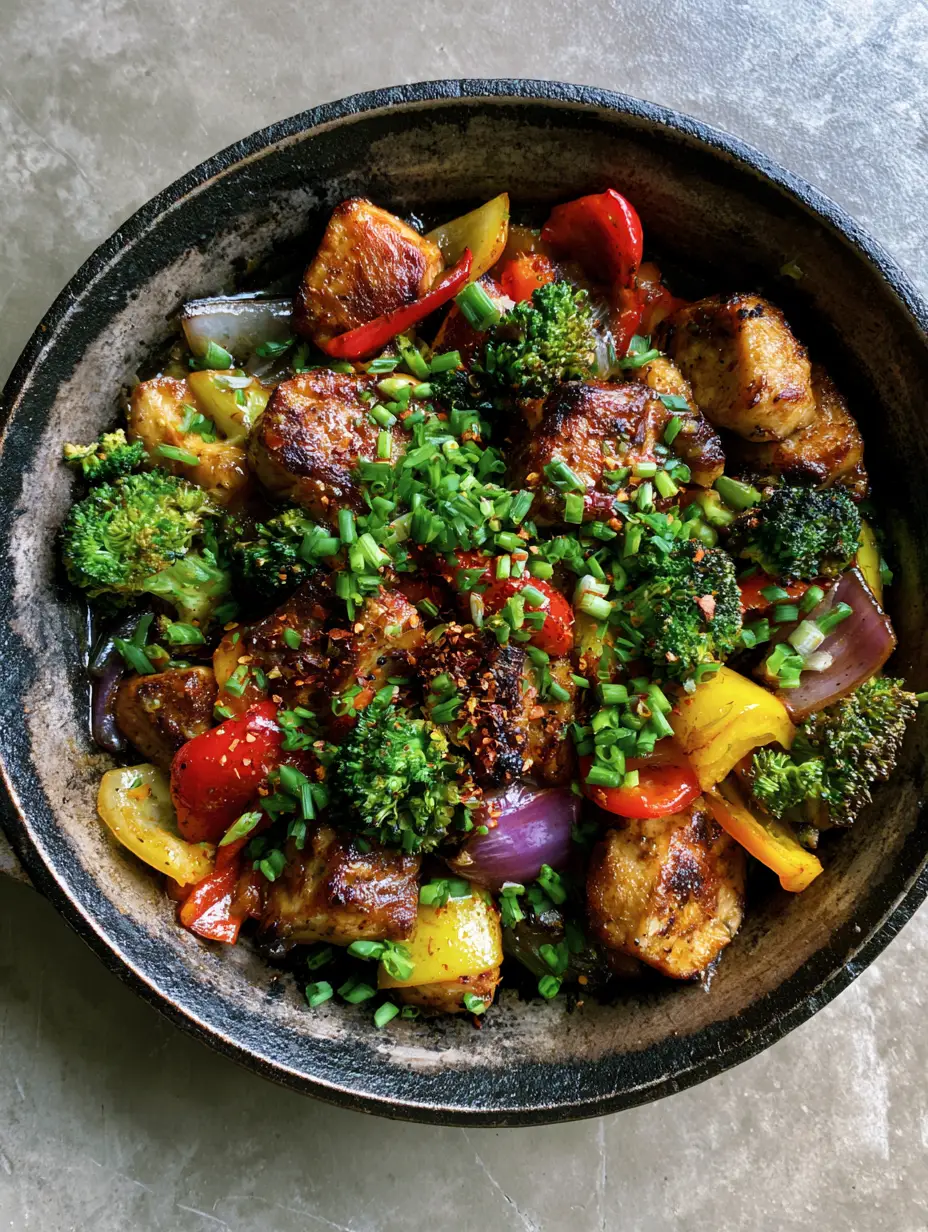
Imagine biting into a chunk of chicken that has been seared to a deep, golden-brown crust, followed by the satisfying snap of tender-crisp broccoli and the sweetness of softened red onion wedges. Every element is bound together by a savory, mahogany-hued sauce that clings to the edges of the meat. Finished with a punch of fresh green scallions and a whisper of heat from red chili flakes, this dish is a sensory powerhouse that looks exactly like a handheld smartphone photo from your favorite foodie influencer.
Why This Skillet Recipe Deserves a Permanent Spot in Your Rotation
- Textural Perfection: By searing the chicken at high heat and flash-cooking the vegetables, we achieve that elusive balance of “charred on the outside, juicy on the inside.”
- Visually Stunning: The contrast between the bright green broccoli, the fire-engine red bell peppers, and the sunny yellow peppers creates a rainbow in your pan.
- One-Pan Cleanup: Everything, from the searing of the meat to the thickening of the glossy sauce, happens in one vessel, making cleanup a breeze.
- Customizable Heat: The addition of dried red chili flakes at the end allows you to control the spice level without compromising the savory base of the brown sauce.
The Colorful Cast of Ingredients for This Skillet Meal
Every ingredient in this Chicken and Vegetable Skillet has been chosen to provide a specific visual and textural note. To get that “food blog” look, ensure your vegetables are cut into uniform sizes for even cooking and maximum aesthetic appeal.
Chicken Breast Chunks: 1.5 lbs (680g) of boneless, skinless breast cut into 1-inch (2.5cm) cubes. The lean meat provides a clean canvas for the golden-brown sear and absorbs the savory sauce perfectly.
Fresh Broccoli Florets: 2 cups (150g) of bite-sized florets. These act as little sponges for the sauce while providing a vibrant green pop and a necessary crunch.
Bell Pepper Duo: 1 medium red bell pepper and 1 medium yellow bell pepper, sliced into 1/4-inch (0.6cm) strips. These add a natural sweetness and essential “vibrancy” to the skillet.
Red Onion Wedges: 1 small red onion, cut into thin wedges rather than a dice. Wedges soften beautifully while maintaining their structural integrity and distinct purple-red hue.
The Glossy Savory Sauce: A blend of 1/2 cup (120ml) chicken broth, 1/4 cup (60ml) low-sodium soy sauce, 1 tbsp (15ml) honey, and 1 tsp (5g) grated ginger. This creates that professional, light-reflecting finish.
Cornstarch Slurry: 1 tbsp (8g) cornstarch mixed with 1 tbsp (15ml) water. This is the “invisible” ingredient that thickens the sauce into a glossy glaze that clings to every surface.
Garnish Flourish: 3 medium scallions, chopped, and 1/2 tsp (1g) dried red chili flakes. These provide the final layers of fresh flavor and a gentle heat that cuts through the savory sauce.
Cooking Fat: 2 tbsp (30ml) avocado oil or grapeseed oil. You need an oil with a high smoke point to achieve that deep golden sear on the chicken without burning.
Essential Equipment for a Professional Result
To replicate the rustic look of our visual blueprint, a 12-inch (30cm) cast-iron skillet or a heavy-bottomed stainless steel pan is best. The weight of the pan helps maintain a consistent temperature, which is the secret to getting those seared, golden-brown chicken chunks. You will also need a sharp chef’s knife for precision slicing and a silicone spatula to toss the ingredients without bruising the tender-crisp vegetables.

Mastering the Sear: Step-by-Step Skillet Success
Preparing the Protein and Sauce
Pat the chicken breast chunks dry with a paper towel. This is a critical step; any moisture on the surface will cause the chicken to steam instead of sear. Season the chicken lightly with salt and pepper. In a small bowl, whisk together the chicken broth, soy sauce, honey, and ginger. Set aside your cornstarch slurry in a separate small ramekin.
Achieving the Golden-Brown Crust
Place your rustic black skillet over medium-high heat and add the oil. Wait until the oil is shimmering and just starting to show a tiny wisp of smoke. Add the chicken chunks in a single layer, ensuring they aren’t crowded. Let them sit undisturbed for 2-3 minutes until a deep golden-brown crust forms on the bottom. Flip and sear the other side for another 2 minutes, then remove the chicken from the pan and set it aside on a plate.
Sautéing the Vegetable Medley
In the same skillet, add the red onion wedges and sliced bell peppers. Sauté for 3 minutes, using the moisture from the onions to scrape up any browned bits (fond) from the bottom of the pan. Add the broccoli florets and a splash of water (about 1 tbsp), then cover the pan for 60 seconds. This “steam-sauté” method ensures the broccoli becomes tender-crisp while maintaining its electric green color.
The Final Glaze and Garnish
Return the chicken and any accumulated juices to the skillet. Pour the savory brown sauce over the mixture and bring to a simmer. Give the cornstarch slurry a quick stir and pour it into the bubbling liquid. Stir constantly for 1 minute as the sauce transforms from a liquid into a glossy, thick glaze. Once the sauce clings perfectly to the chicken and vegetables, remove from heat.
Finishing Touches
Generously sprinkle the freshly chopped green scallions over the top. Add a light dusting of dried red chili flakes to taste. The heat from the pan will slightly wake up the oils in the flakes, adding a subtle warmth to the entire Chicken and Vegetable Skillet.
Expert Tips for Success
- Don’t Overcrowd the Pan: If your skillet is small, sear the chicken in two batches. Overcrowding drops the temperature, resulting in grey, rubbery meat rather than golden-brown chunks.
- The “Snap” Test: Your broccoli is done when you can pierce it with a fork but it still offers some resistance. If it turns olive green, it is overcooked.
- Balance the Sauce: If the sauce is too salty, add a teaspoon of rice vinegar or lime juice. The acidity will brighten the savory notes.
- Prep Everything First: This is a fast-moving recipe. Have your peppers sliced, onions wedged, and sauce mixed before you turn on the stove.
Storage, Reheating, and Meal Prep
This Chicken and Vegetable Skillet is an excellent candidate for meal prep. Store leftovers in an airtight container in the refrigerator for up to 4 days. When reheating, use a skillet over medium heat with a tiny splash of water to loosen the sauce. Avoid the microwave if possible, as it can turn the peppers mushy and the chicken tough.
Freezing is not recommended for this specific dish, as the bell peppers and broccoli lose their “tender-crisp” texture once thawed. However, the chicken and sauce alone freeze beautifully.
Creative Pairings and Side Dishes
While this skillet is a complete meal on its own, you can easily bulk it up. Serve it over a bed of jasmine rice or cauliflower rice to soak up that incredible glossy sauce. If you are looking for a cooling side to balance the chili flakes, a crispy jalapeño slaw (coming soon) offers a refreshing crunch. For a vegetable-forward feast, pair it with crunchy air fryer green beans. If you have guests over and want to lean into the “comfort food” vibe, a side of stuffed mashed potato nests creates a fun, textural contrast. Finally, finish the night with something sweet like brownie bottom cheesecake bites.
Frequently Asked Questions
Absolutely. Chicken thighs are more forgiving and will remain juicy even if cooked slightly longer. Follow the same searing instructions for the best flavor.
You can, but the texture will be softer. Thaw and pat the broccoli dry before adding it to the skillet to prevent the sauce from becoming watery.
The secret is drying the chicken thoroughly with paper towels and ensuring your oil is shimmering hot before adding the meat. Don’t move the chicken for at least 2 minutes to allow the crust to form.
It can be! Simply substitute the soy sauce for tamari or coconut aminos, and ensure your chicken broth is certified gluten-free.
The cornstarch slurry is responsible for the gloss. By boiling the sauce for one minute with the cornstarch mixture, the starch molecules gelatinize, creating a light-reflecting, thick glaze.
The Perfect Chicken and Vegetable Skillet Recipe Card
Chicken and Vegetable Skillet: The Ultimate 30-Minute One-Pan Dinner
Ingredients
Equipment
Method
- Pat the chicken chunks dry and season with salt and pepper. Whisk the sauce ingredients together in a small bowl.
- Heat oil in the skillet over medium-high heat. Sear chicken chunks until a deep golden-brown crust forms, about 5 minutes total. Remove from pan.
- Add onion wedges and peppers to the skillet. Sauté for 3 minutes. Add broccoli and a splash of water, cover for 60 seconds to steam.
- Return chicken to the pan. Add sauce and cornstarch slurry. Stir for 1 minute until sauce is glossy and thick. Garnish with scallions and chili flakes.
Notes
Use a cast-iron skillet for the best heat retention.
Closing & Call to Action
This Chicken and Vegetable Skillet proves that healthy eating doesn’t have to be bland or complicated. With its seared golden chicken and vibrant, glossy vegetables, it is a meal that satisfies both the eyes and the appetite. If you enjoyed this recipe, please leave a comment below and tell us how yours turned out! Don’t forget to follow us and share your creations on Pinterest so we can see your beautiful skillet masterpieces!


