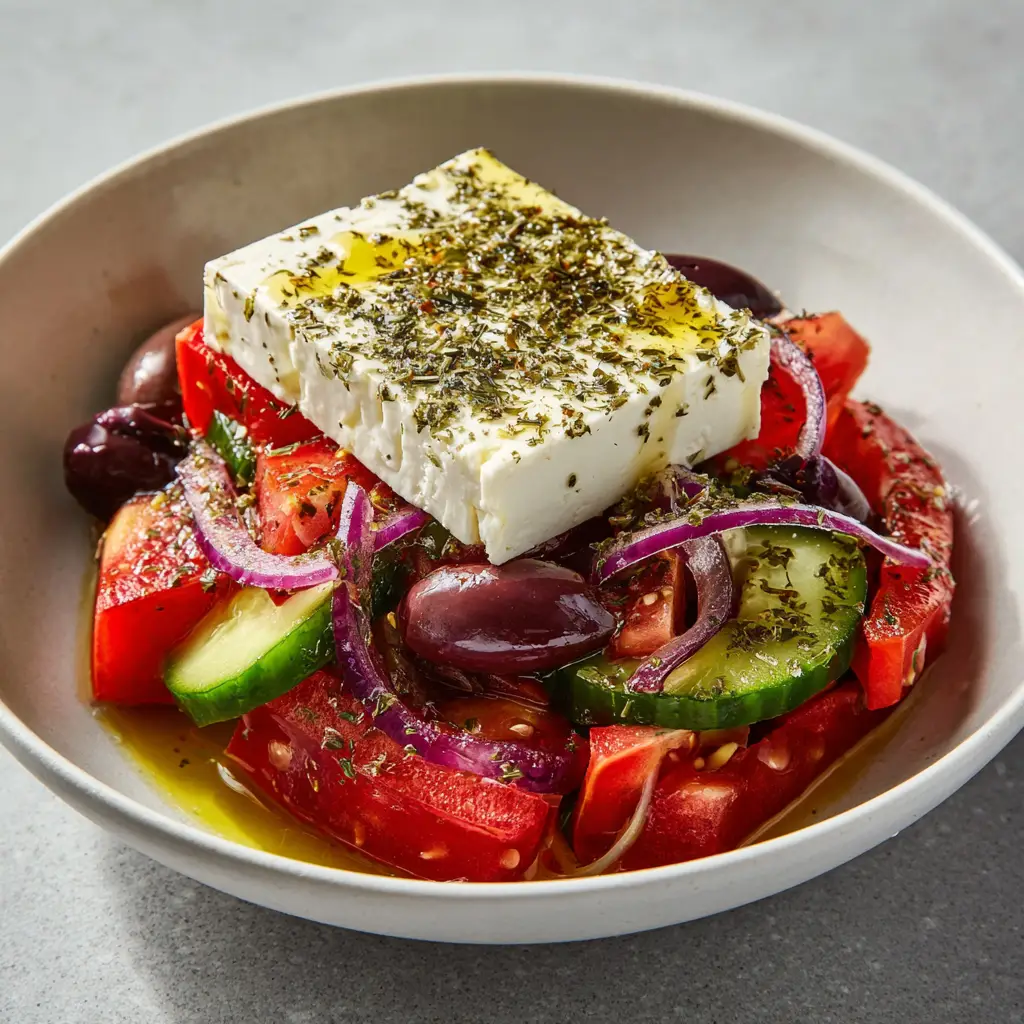
There is a profound, rustic beauty in a true Authentic Greek Salad, known in its homeland as Horiatiki. Unlike the lettuce-heavy versions often found abroad, a genuine village salad relies on the structural integrity of sun-drenched vegetables and the salty punch of high-quality feta. When you look into a shallow white ceramic bowl filled with these ingredients, you aren’t just looking at a side dish; you are seeing the culinary soul of the Mediterranean.
The visual appeal of this dish is undeniable, characterized by large, irregular wedges of juicy deep-red vine tomatoes and thick, semi-peeled cucumber slices that offer a satisfying crunch. Topped with a vibrant crown of red onion rings and glossy, dark purple Kalamata olives, the salad is anchored by a singular, majestic block of crumbly feta cheese. A heavy dusting of dried green oregano and a generous golden drizzle of extra virgin olive oil complete this edible masterpiece.
Creating this iconic dish at home requires no cooking, but it demands a forensic attention to ingredient quality and preparation technique. By following this guide, you will master the art of the Horiatiki, ensuring every bite transports you to a seaside taverna under the soft natural daylight of the Aegean coast.
Why This Traditional Horiatiki Recipe Works
- Structural Integrity: By using thick-cut vegetables, the salad maintains its crunch and doesn’t become a watery mess after five minutes on the table.
- Authentic Texture: Leaving the feta as a whole block preserves its creamy interior, allowing guests to break off exactly as much as they desire.
- Flavor Sophistication: The combination of brine from the olives and the acidity of a splash of red wine vinegar creates a natural dressing when mixed with the tomato juices.
- Visual Mastery: The contrast between the deep reds, vibrant greens, and the stark white of the feta creates a professional-grade presentation perfect for your next gathering.
The Anatomy of a Perfect Village Salad
Every ingredient in an Authentic Greek Salad serves a specific purpose, and understanding these roles is the key to culinary success. We do not use “fillers” here; every element must be of the highest caliber to achieve that glossy, brine-sheen finish seen in professional food photography.
Vine-Ripened Tomatoes: You need 4 large (600g) tomatoes. These must be room temperature to ensure the sugars are active and the flesh is yielding, providing the base “sauce” for the salad.
English or Persian Cucumbers: Use 1 large (300g) cucumber. We semi-peel these to create a striped aesthetic, which provides a beautiful visual contrast and the perfect balance of skin-snap and tender flesh.
Red Onion: Half of a medium (75g) red onion is sufficient. These should be sliced into paper-thin rings to provide a sharp, piquancy that cuts through the richness of the olive oil.
Kalamata Olives: Use 1/2 cup (75g) of whole, bone-in olives. Keeping them whole prevents the brine from muddying the colors of the other vegetables and maintains their glossy, dark purple sheen.
Sheep’s Milk Feta: One 7oz (200g) rectangular block is essential. Avoid pre-crumbled feta, which contains anti-caking agents that ruin the mouthfeel and the traditional “crumbly” visual.
Extra Virgin Olive Oil: Use 1/4 cup (60ml) of the highest quality “early harvest” oil. This is the golden-yellow thread that binds the earthiness of the oregano to the freshness of the vegetables.
Dried Oregano & Sea Salt: These are the invisible architects of flavor. Use 1 tsp (2g) of dried Greek oregano and a pinch of flaky sea salt to draw out the moisture from the tomatoes.
Red Wine Vinegar: While not always visible in photos, 1 tbsp (15ml) of vinegar is the secret to a professional-grade Horiatiki. It provides the necessary acid to balance the heavy oil drizzle.
Essential Tools for the Greek Kitchen
To achieve the handheld smartphone photo look of a professional food blogger, you don’t need expensive machinery. You need a very sharp chef’s knife to ensure clean cuts on the tomatoes without bruising the delicate flesh.
A vegetable peeler is required for the “striped” cucumber effect, and a shallow ceramic bowl is the traditional vessel of choice. This shallow profile allows the ingredients to spread out rather than stack, ensuring the feta block sits prominently on top without being buried.
Step-By-Step Assembly for Visual Perfection
Prepping the Foundation Vegetables
Start with your vine tomatoes. Instead of neat slices, cut them into large, irregular wedges. This rustic “village style” cut increases the surface area, allowing the sea salt to draw out those precious juices.
Take your cucumber and use a peeler to remove vertical strips of skin, leaving an alternating green-and-white pattern. Slice the cucumber into thick rounds, about 1/2 inch (1.25cm) thick. These thick slices are the structural “bones” of your Authentic Greek Salad.
Place the tomatoes and cucumbers in your shallow white bowl. Sprinkle them lightly with flaky sea salt and a splash of red wine vinegar. Let them sit for 2-3 minutes; you will actually hear the subtle sizzle of the salt working on the tomatoes.

Adding the Aromatics and Brine
Slice your red onion into very thin, translucent rings. If you find raw onion too harsh, soak the rings in ice water for 5 minutes before adding them to the bowl to mellow the bite.
Scatter the whole Kalamata olives over the vegetables. Ensure they are straight from the brine so they maintain that “glossy sheen” described in the visual blueprint. Do not pit them; the pit preserves the firm texture of the olive fruit.
The Final Flourish and Presentation
Place the entire rectangular block of feta cheese directly in the center of the salad. It should sit proudly on top of the vegetables like a pedestal. This is the hallmark of a true Mediterranean Horiatiki.
Generously drizzle the golden-yellow extra virgin olive oil over the cheese and the surrounding vegetables. You want the oil to pool slightly in the crevices of the tomato wedges.
Finally, take your dried oregano and crush it between your palms as you sprinkle it. This “activates” the oils in the dried herb, creating a fragrant green dust that covers the white feta and the vibrant vegetables perfectly.
Pro Tips for the Ultimate Salad Texture
- Temperature Control: Never serve this salad ice-cold. Room temperature vegetables release more flavor and create a better “jus” at the bottom of the bowl.
- The “Sop” Factor: Always serve with a side of crusty bread to soak up the leftover oil and tomato juice at the bottom.
- Olive Etiquette: Warn your guests that the olives have pits! Traditional Greek salads almost never use pitted olives as they lose their structural snap.
- Vinegar Choice: If you don’t have red wine vinegar, a squeeze of fresh lemon juice is a culinary-approved substitute to maintain that bright acidity.
What to Serve with an Authentic Greek Salad
This salad is remarkably versatile. For a complete Mediterranean feast, pair it with our savory rice and beans for a fiber-rich vegetarian meal. The acidity of the salad also cuts beautifully through the richness of grilled meats.
If you are firing up the grill, use a lemon-herb chicken marinade to create a protein pairing that echoes the flavors of the Horiatiki. For a more casual lunch, it serves as a refreshing side to crispy zucchini bites.
Preserving Your Horiatiki
The Authentic Greek Salad is best enjoyed immediately after assembly. However, if you have leftovers, they can be stored in an airtight container in the refrigerator for up to 24 hours. Note that the cucumbers will lose some of their snap and the tomatoes will release more water.
We do not recommend freezing this salad, as the high water content of the vegetables will cause them to become mushy upon thawing. If you are prepping ahead, chop the vegetables but wait to add the salt, oil, and feta until the moment of service.
Frequently Asked Questions
While you can, it isn’t traditional. In Greece, the oil and vinegar are drizzled directly over the salad, where they mix with the natural juices released by the salted tomatoes to create a spontaneous dressing.
No, a traditional Horiatiki (village salad) never contains lettuce. It is composed exclusively of tomatoes, cucumbers, peppers, onions, olives, and feta cheese.
The most authentic way is to semi-peel them, removing alternating strips of skin. This provides a beautiful striped visual and a balance between the crunch of the skin and the soft flesh.
Kalamata olives are the standard. They should be dark purple, almond-shaped, and ideally served whole with the pits still inside to ensure they remain firm and flavorful.
Serving the feta as a whole block is the traditional Greek way. It preserves the cheese’s moisture and allows each person to break off pieces, maintaining a fresher texture and better visual presentation.
The Authentic Horiatiki Experience
Authentic Greek Salad: The Ultimate Traditional Horiatiki Recipe
Ingredients
Equipment
Method
- Cut the vine tomatoes into large, irregular wedges. Place them into a shallow ceramic bowl.
- Using a vegetable peeler, remove vertical strips of the cucumber skin to create a striped look. Slice into rounds approximately 1/2 inch (1.25cm) thick and add to the bowl.
- Slice the red onion into very thin, translucent rings and scatter them over the tomatoes and cucumbers.
- Sprinkle flaky sea salt and red wine vinegar over the vegetables. Toss gently to combine and let sit for 2 minutes to allow juices to release.
- Add the whole Kalamata olives. Place the entire block of feta cheese prominently on top of the vegetable mixture.
- Generously drizzle the golden-yellow extra virgin olive oil over the entire salad. Finish by crushing the dried oregano between your palms and dusting it heavily over the feta and vegetables.
Notes
Never use pre-crumbled feta; the whole block is essential for the authentic Horiatiki look and texture.
Join the CrispCrumbs Culinary Community
Bringing the flavors of Greece into your kitchen is about more than just a recipe; it’s about embracing a lifestyle of fresh, vibrant ingredients. If you enjoyed this Authentic Greek Salad, we would love to hear from you! Leave a comment below with your favorite Mediterranean memory.
Don’t forget to follow us on Pinterest for more visually stunning recipe inspiration. Share your salad creations by tagging us—we love seeing how your Horiatiki turns out in your own kitchen!


