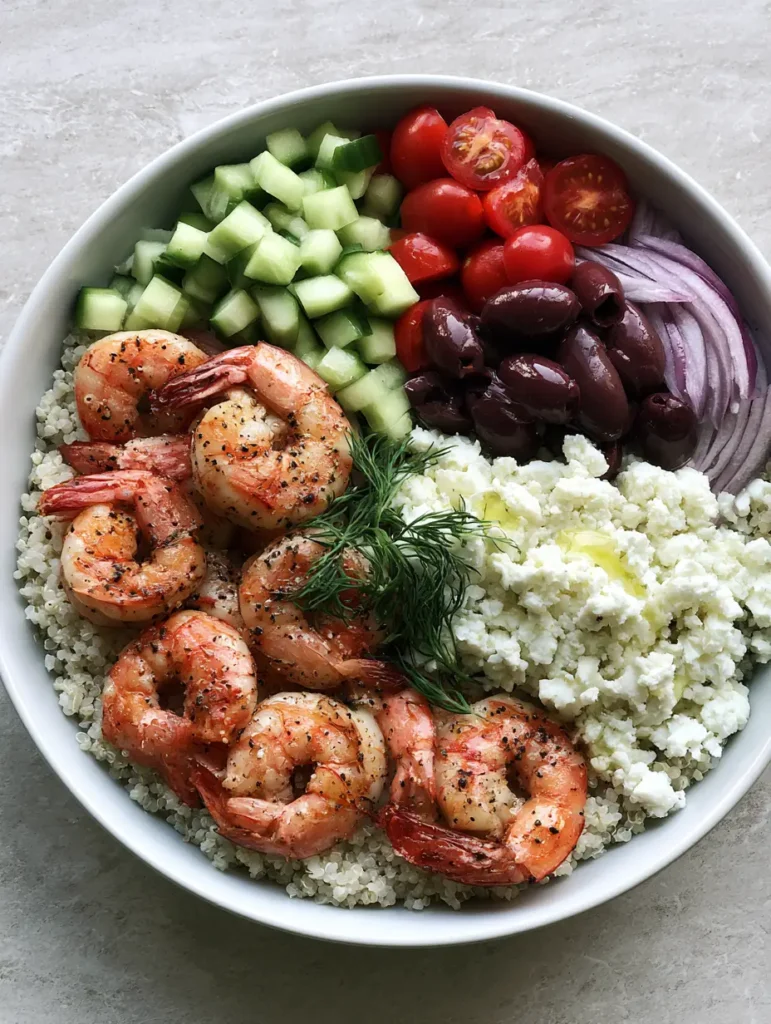
The Greek Shrimp Mediterranean Bowl is more than just a meal; it is a vibrant, nutrient-dense masterpiece that bridges the gap between gourmet dining and effortless home cooking. Imagine a shallow white ceramic bowl where every ingredient has its place, creating a rainbow of textures and flavors that are as pleasing to the eye as they are to the palate.
This recipe focuses on the “deconstructed” aesthetic, allowing each element—from the charred, black-pepper-crusted shrimp to the creamy crumbles of feta—to shine individually before you dive in. Whether you are looking for a post-workout fuel or a sophisticated weeknight dinner, this bowl delivers on every professional culinary promise.
By following our specific searing techniques and quinoa hydration methods, you will achieve a dish that looks exactly like a high-end food blog photograph. Let’s explore the science of the perfect sear and the art of the Mediterranean flavor profile.
Why This Greek Shrimp Mediterranean Bowl is Your New Go-To Recipe
- Textural Contrast: You get the crunch of English cucumbers, the pop of halved cherry tomatoes, and the fluffy, cloud-like foundation of perfectly cooked white quinoa.
- Protein-Packed Searing: We utilize high-heat mechanics to ensure six large pink shrimp achieve those iconic charred edges and visible black pepper seasoning described in our visual blueprint.
- Zesty Flavor Foundation: The clear lemon-herb vinaigrette acts as a bright, acidic bridge that ties the briny kalamata olives and salty feta cheese together.
- Aesthetic Organization: This dish is served in sections, making it a “visual recipe” that is perfect for hosting or simply treating yourself to a beautiful plate.
The Essential Flavor Building Blocks
To recreate the exact visual and flavor profile of our Greek Shrimp Mediterranean Bowl, you will need high-quality, fresh ingredients. Each component serves a structural and sensory purpose.
The Protein and Grain Foundation
Large Raw Shrimp: You will need 6 large shrimp (approximately 150g) per serving. Look for “tail-on” for the best visual presentation, and ensure they are patted dry to achieve that characteristic sear.
White Quinoa: 1 cup (185g) of dry white quinoa provides the fluffy, neutral base. Quinoa is a complete protein, making this bowl exceptionally satiating.
The Crisp Mediterranean Produce
English Cucumber: 1/2 cup (75g) of diced cucumber adds a cooling, crisp element. We recommend English cucumbers as they have thinner skin and fewer seeds, maintaining their structural integrity in the bowl.
Cherry Tomatoes: 1/2 cup (75g) of bright red cherry tomatoes, halved. These provide a burst of acidity and sweetness that balances the savory shrimp.
Red Onion: 1/4 small red onion (30g), very thinly sliced. The sharpness of the onion cuts through the richness of the feta cheese.
Briny Accents and Finishing Touches
Kalamata Olives: 8-10 dark purple pitted olives (40g). These provide the essential “umami” punch and healthy fats characteristic of Mediterranean cuisine.
Feta Cheese: 1/4 cup (40g) of crumbled white feta. This adds a creamy, salty finish that softens the bite of the lemon vinaigrette.
Fresh Dill Sprigs: 2-3 sprigs of fresh green dill. Dill offers a grassy, anise-like aroma that elevates the entire dish from basic to gourmet.
The Vinaigrette: 2 tbsp (30ml) extra virgin olive oil, 1 tbsp (15ml) fresh lemon juice, 1/2 tsp (1g) dried oregano, and a pinch of kosher salt. This creates the “clear lemon-herb oil” drizzle seen in the visual prompt.
Professional Tools for the Perfect Mediterranean Sear
To achieve the charred edges on the shrimp and the fluffy texture of the quinoa, a few specific tools are recommended. A heavy-bottomed cast iron or stainless steel skillet is vital for heat retention, ensuring the shrimp sear rather than steam.
You will also need a fine-mesh strainer to rinse the quinoa properly, removing the bitter saponin coating. A sharp chef’s knife is essential for the precision dicing of the cucumbers and the paper-thin slicing of the red onions to match our forensic visual blueprint.
The Step-by-Step Culinary Roadmap
Step 1: Achieving the Fluffiest Quinoa Base
Start by rinsing 1 cup (185g) of white quinoa under cold water for 30 seconds. In a small saucepan, combine the quinoa with 2 cups (480ml) of water or vegetable broth and a pinch of salt.
Bring the mixture to a rolling boil, then reduce the heat to low, cover, and simmer for 15 minutes. Once the water is absorbed, remove from heat and let it sit covered for 5 minutes; this “steams” the grains, making them fluffy rather than mushy.
Step 2: Crafting the Clear Lemon-Herb Vinaigrette
In a small glass jar, whisk together the extra virgin olive oil, fresh lemon juice, and dried oregano. This simple emulsion provides the bright, clear sheen that will finish the dish.
If you enjoy a bit of variety in your Mediterranean rotations, you might find this vinaigrette shares a similar flavor profile with our smoky red chimichurri sauce, though this version stays true to Greek traditions.
Step 3: Searing the Seasoned Shrimp
Pat your 6 large shrimp completely dry with paper towels. Season them generously with kosher salt and a heavy cracked black pepper—this is crucial for the “visible black pepper seasoning” described in the blueprint.
Heat 1 tbsp (15ml) of oil in your skillet over medium-high heat until it just begins to shimmer. Place the shrimp in the pan and sear for 2 minutes per side. You are looking for a deep pink color and distinct charred, golden-brown edges. Remove immediately to prevent overcooking.

Step 4: Precision Vegetable Prep and Assembly
While the shrimp rest, dice your English cucumber into uniform 1/2-inch (1.25cm) cubes and halve the cherry tomatoes. Slice the red onion into translucent half-moons.
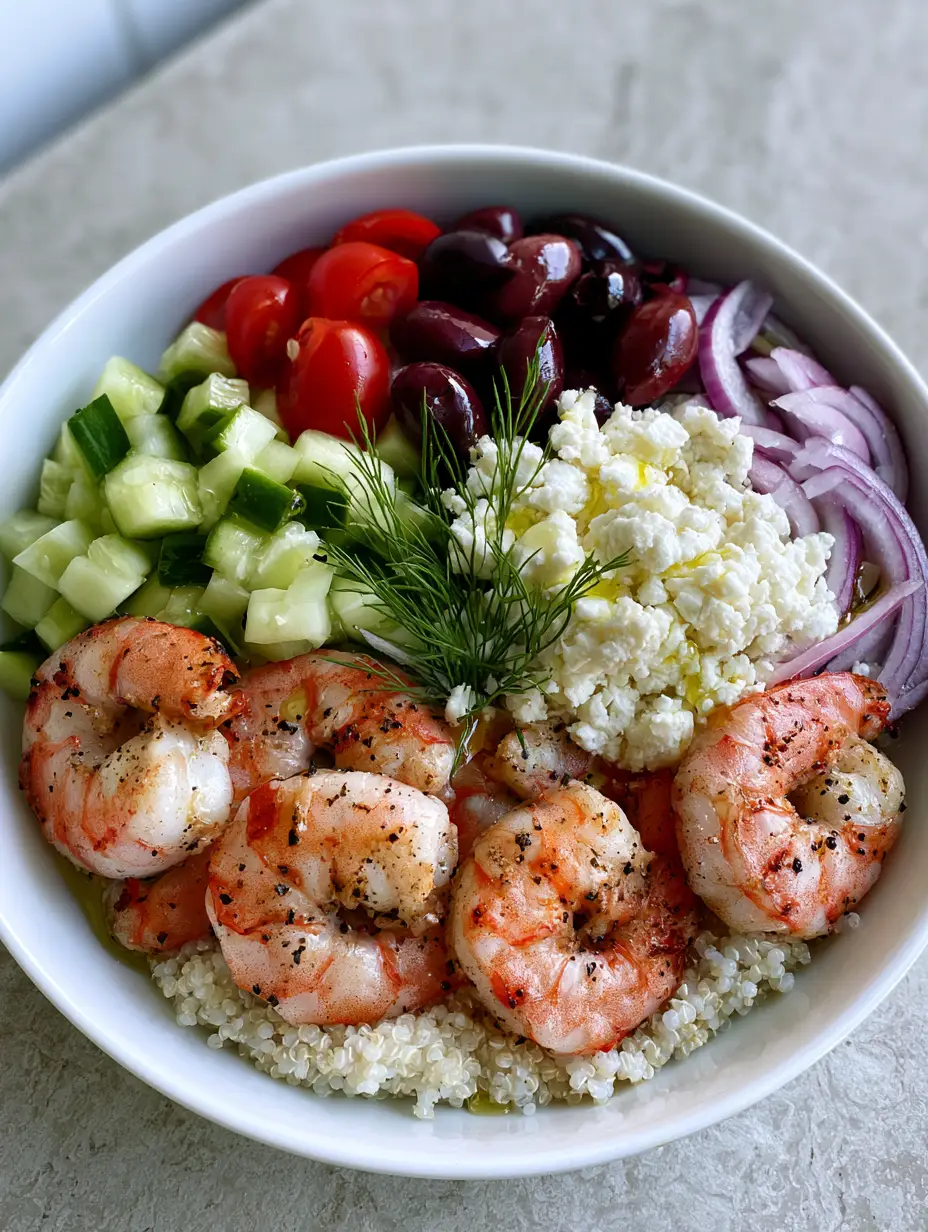
To assemble, place a generous layer of quinoa at the bottom of a shallow white ceramic bowl. Arrange the shrimp, cucumbers, tomatoes, onions, olives, and feta in distinct sections on top of the quinoa.
Expert Tips for Visual and Flavor Success
- The “Dry” Rule: Never put wet shrimp into a hot pan. The moisture will create steam, preventing the Maillard reaction (the browning/charring) that gives the shrimp its flavor and visual appeal.
- Sectional Plating: To achieve the “deconstructed” look, do not toss the ingredients. Keep them in organized piles to mimic the handheld smartphone photo style common in modern food photography.
- Onion Mellowing: If you find raw red onion too pungent, soak the slices in ice water for 10 minutes before serving. This maintains the crunch but removes the “burn.”
- Herb Freshness: Only add the fresh dill sprigs at the very end. Heat will wilt the dill and turn it gray, losing that vibrant green garnish look.
Strategic Pairings and Variations
The Greek Shrimp Mediterranean Bowl is a complete meal on its own, but it pairs beautifully with other light, fresh sides. If you want to expand your Mediterranean spread, consider serving this alongside some air fryer green beans for extra fiber.
For those who love seafood-centric meals, you might also enjoy comparing the zesty profile of this bowl to our garlic butter shrimp scampi (coming soon). If you are leaning more towards a low-carb lifestyle, this recipe can be easily adapted by swapping the quinoa for greens, similar to our whole30 steak and avocado bowl.
Frequently Asked Questions
Absolutely. While white quinoa provides the best fluffy texture, you can use farro, brown rice, or even cauliflower rice for a lower-carb option.
Yes, but ensure they are completely thawed and patted extremely dry. If there is excess moisture, the shrimp will steam rather than develop the charred edges essential for this recipe.
The components can be stored in the fridge for up to 3 days. We recommend keeping the vinaigrette separate until you are ready to eat to keep the vegetables crisp.
Tail-on shrimp generally provide a more professional visual presentation and help the shrimp stay slightly juicier during a high-heat sear, though tail-off is easier to eat.
Rinse the dry quinoa in a fine-mesh strainer under cold running water for at least 30 seconds. This removes saponins, the natural coating that can cause a bitter or soapy taste.
The Official Greek Shrimp Mediterranean Bowl Recipe Card
Greek Shrimp Mediterranean Bowl: A High-Protein Zesty Superfood Delight
Ingredients
Equipment
Method
- Rinse quinoa and combine with water in a saucepan. Bring to a boil, then simmer covered for 15 minutes. Let it stand for 5 minutes before fluffing with a fork.
- Whisk olive oil, lemon juice, and dried oregano in a small bowl until clear and combined.
- Pat shrimp dry with paper towels. Season both sides heavily with salt and black pepper.
- Heat oil in a skillet over high heat. Sear shrimp for 2 minutes per side until pink with visible charred edges.
- Place quinoa in the bowl. Arrange shrimp, cucumbers, tomatoes, onions, olives, and feta in distinct sections. Drizzle with dressing and garnish with dill.
Notes
Rinse your quinoa thoroughly to remove the bitter saponin coating.
Closing & Call to Action
The Greek Shrimp Mediterranean Bowl is a testament to the fact that healthy eating can be incredibly flavorful and visually stunning. With its combination of seared protein, whole grains, and fresh produce, it’s a recipe that satisfies every craving while keeping you energized.
Did you master the perfect sear on your shrimp? We want to hear about it! Leave a comment below and tell us how your bowl turned out. If you loved this recipe, please share it with your friends and follow us on Pinterest for more culinary inspiration.


