When the summer heat becomes unbearable, there is one dish that stands above the rest in the Korean culinary canon: Bibim Guksu. This isn’t just a meal; it is a sensory explosion of temperature and texture. Imagine thin, icy-cold wheat noodles tangled in a vibrant, glossy red sauce that balances fire, sweetness, and tang in every bite.
The beauty of Bibim Guksu lies in its minimalist presentation and complex flavor profile. In our version, we mirror the clean aesthetics of modern Seoul cafes, using a minimalist white ceramic bowl to let the colors pop. The deep crimson of the gochujang sauce contrasts beautifully against the fresh, bright green of julienned cucumbers and the striking orange of a perfectly jammy soft-boiled egg.
Whether you are a seasoned fan of Korean cuisine or a newcomer looking for a refreshing lunch, this Bibim Guksu recipe delivers a professional-grade experience right in your home kitchen. We have meticulously tested the sauce-to-noodle ratio to ensure that every strand is coated in that signature high-gloss sheen seen in world-class food photography.
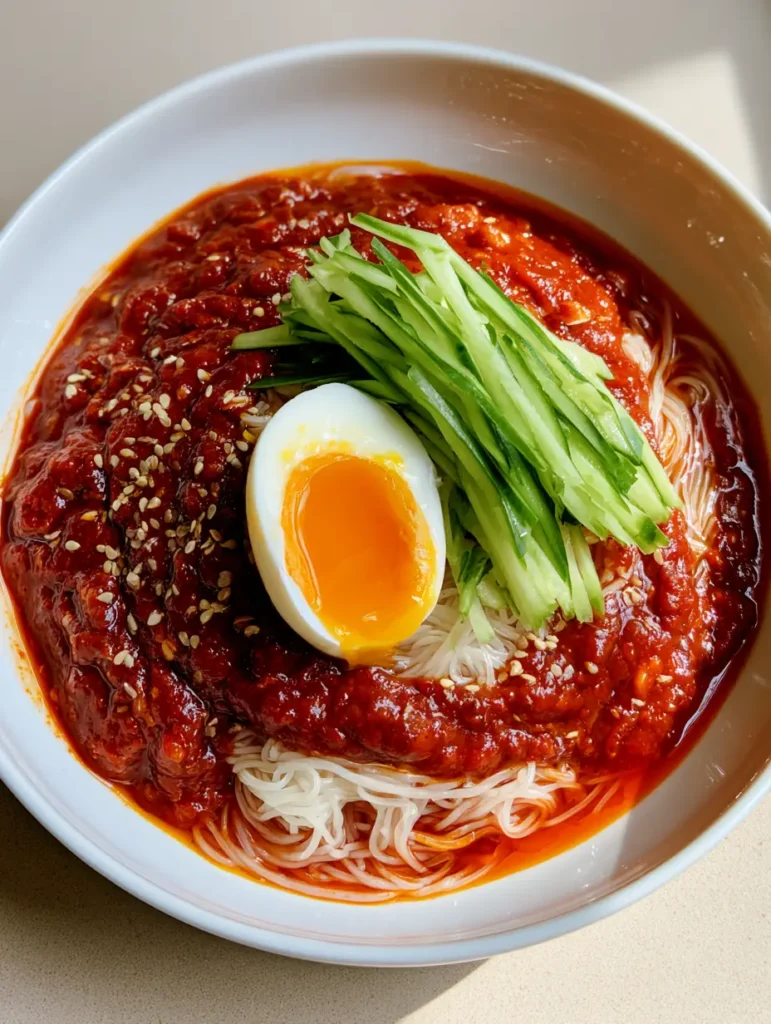
Why This Spicy Cold Noodle Dish Is a Summer Essential
- The Perfect Contrast: The heat from the Korean chili paste is immediately tempered by the refreshing, watery crunch of raw julienned cucumber.
- Textural Harmony: We use somyeon noodles, which offer a delicate, silky mouthfeel that captures the sauce far better than thicker pasta varieties.
- The Golden Yolk: A 6.5-minute soft-boiled egg provides a rich, liquid gold center that acts as a natural “sauce within a sauce,” adding creamy luxury to the spice.
- High-Gloss Finish: Through the strategic use of toasted sesame oil and liquid sweeteners, we achieve a photographic glow that makes the dish look as good as it tastes.
Essential Components for the Perfect Bibim Guksu Sauce
Korean Gochujang (Chili Paste): This is the backbone of the dish. It provides the thick, fermented depth and that iconic vibrant red color that defines Bibim Guksu.
Rice Vinegar: You need a sharp acidity to cut through the fermentation of the paste. This provides the “tang” that makes the dish feel light and refreshing rather than heavy.
Granulated Sugar or Honey: Balance is everything in Korean cooking. A touch of sweetness rounds out the sharp edges of the vinegar and the heat of the chili.
Toasted Sesame Oil: This isn’t just for flavor; it provides the “gloss” factor. It coats the noodles and gives the sauce its light-reflecting, slippery quality.
Soy Sauce: This adds the “invisible” salt and umami. It deepens the flavor profile without changing the signature red color of the sauce.
Grated Garlic: Fresh garlic provides a sharp, aromatic pungency that vibrates through the cold noodles, ensuring the dish tastes alive and bold.
The Foundation: Somyeon and Fresh Produce
Thin Wheat Somyeon Noodles: These are very thin, white wheat noodles. Their high starch content is key, but it must be managed correctly through a vigorous ice-water wash to reach the perfect “al dente” cold snap.
English or Persian Cucumber: These varieties are preferred because they have thinner skins and fewer seeds. We want thin, uniform julienned strips to mimic the shape of the noodles.
Large Eggs: The egg is the crown jewel of the Bibim Guksu. It must be room temperature before boiling to prevent cracking and ensure the yolk remains liquid and bright orange.
Toasted White Sesame Seeds: These provide a subtle nutty crunch and a visual “finish” that signals a professionally prepared dish.
Tools Required for Culinary Precision
To achieve the look of our handheld smartphone photo, you won’t need expensive gear, but a few specific tools make the process seamless. A high-quality julienne peeler or a sharp chef’s knife is essential for those matchstick-thin cucumbers. You will also need a large mesh strainer for the noodles and a timer—precision is non-negotiable for the 6.5-minute egg.

Mastering the 6.5-Minute Jammy Egg
The hallmark of a great Bibim Guksu is the egg. To get that liquid, bright orange yolk, bring a small pot of water to a rolling boil. Carefully lower your room-temperature eggs into the water using a slotted spoon. Immediately set a timer for exactly 6 minutes and 30 seconds.
While the eggs boil, prepare an ice bath (half ice, half water). As soon as the timer beeps, plunge the eggs into the ice bath to stop the cooking process instantly. This shock is what keeps the yolk from setting and ensures the whites are firm enough to peel. Let them sit for at least 5 minutes before gently cracking the shell all over and peeling under cold running water.
The Art of the Noodle Ice Bath
Cooking somyeon for Bibim Guksu is different than cooking Italian pasta. Bring a large pot of water to a boil and add the noodles, stirring to prevent sticking. Once the water starts to foam up and boil over, add a splash of cold water to the pot—this “shocks” the noodles and creates a better texture. Repeat this twice.
Once cooked (usually 3-4 minutes), drain them immediately. This next step is the most important: wash the noodles in cold, running water, literally “scrubbing” them between your hands. This removes excess surface starch, which is the secret to getting that glossy, non-clumping texture seen in our minimalist white bowl. For the best result, finish with a final soak in a bowl of ice water until the noodles are bone-chilly.
Assembling Your Masterpiece
In a large mixing bowl, whisk together your gochujang, vinegar, sugar, soy sauce, sesame oil, and garlic. Taste the sauce; it should be a balanced trio of spicy, sweet, and sour. Add the thoroughly drained somyeon noodles to the bowl. Use your hands (gloved, if you prefer) to toss the noodles until every single strand is coated in a thick, vibrant red sheen.
Twirl the noodles into a tight mound and place them into the center of a minimalist white ceramic bowl. This height creates visual interest for your photography. Pile a generous handful of julienned cucumbers right in the center. Carefully slice your jammy egg vertically and place both halves on top. Finish with a heavy sprinkle of toasted white sesame seeds across the sauce and the egg.
Expert Tips for Success
- Dry the Noodles Well: After the ice bath, ensure you squeeze out as much water as possible. Excess water will dilute the sauce and ruin the “glossy” aesthetic.
- Sauce Maturity: If you have time, make the sauce 30 minutes in advance. This allows the flavors of the garlic and gochujang to meld and the sugar to fully dissolve.
- Cucumber Salting: If you want a softer cucumber texture, salt the julienned strips for 5 minutes, then rinse and pat dry. However, for this specific Bibim Guksu, raw and crunchy is the visual standard.
- Spice Control: Gochujang brands vary in heat. Start with the recommended amount and add a teaspoon of Korean chili flakes (Gochugaru) if you want an even deeper red color and more fire.
Creative Pairings and Serving Suggestions
Bibim Guksu is often served as a refreshing lunch on its own, but it pairs beautifully with grilled proteins. The cold, spicy noodles act as a perfect foil for rich, warm meats. Consider serving this alongside a Steak and Avocado Bowl for a fusion feast that covers all the nutritional bases.
If you are hosting a summer BBQ, these noodles are a fantastic side dish for Honey Garlic Chicken Skewers. The sweetness of the honey garlic glaze complements the fermented heat of the gochujang perfectly. For a lighter, plant-based meal, a side of Chickpea and Black Bean Salad (coming soon) provides a great boost of protein and fiber.
Frequently Asked Questions
Yes! Substitute the somyeon noodles with thin rice noodles (rice vermicelli) and ensure you use a gluten-free gochujang and tamari instead of regular soy sauce.
Bibim Guksu is best enjoyed immediately because the noodles absorb the sauce over time and lose their chewy texture. If you must store it, keep the sauce and noodles separate and combine just before serving.
The secret is the ‘cold shock.’ After boiling, you must vigorously scrub the noodles in an ice-water bath. This removes the surface starch and stops the cooking, resulting in a firm, chewy texture.
It has a noticeable kick from the gochujang, but it is balanced by sugar and vinegar. If you are sensitive to heat, reduce the gochujang amount and increase the sesame oil and sugar slightly.
Somyeon are very thin, white wheat noodles used in Korean cuisine. You can find them in the dry noodle aisle of any Asian grocery store or the international section of well-stocked supermarkets.
The Complete Bibim Guksu Recipe
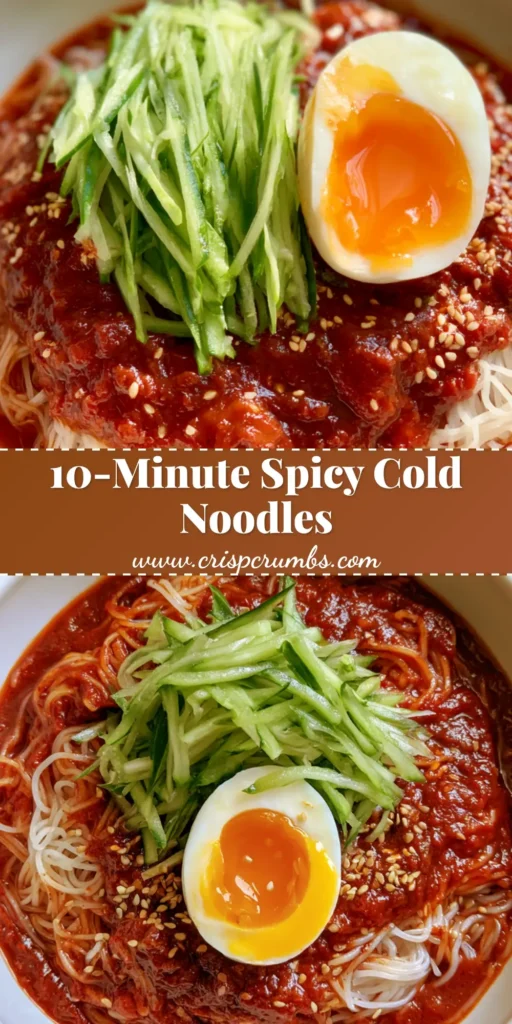
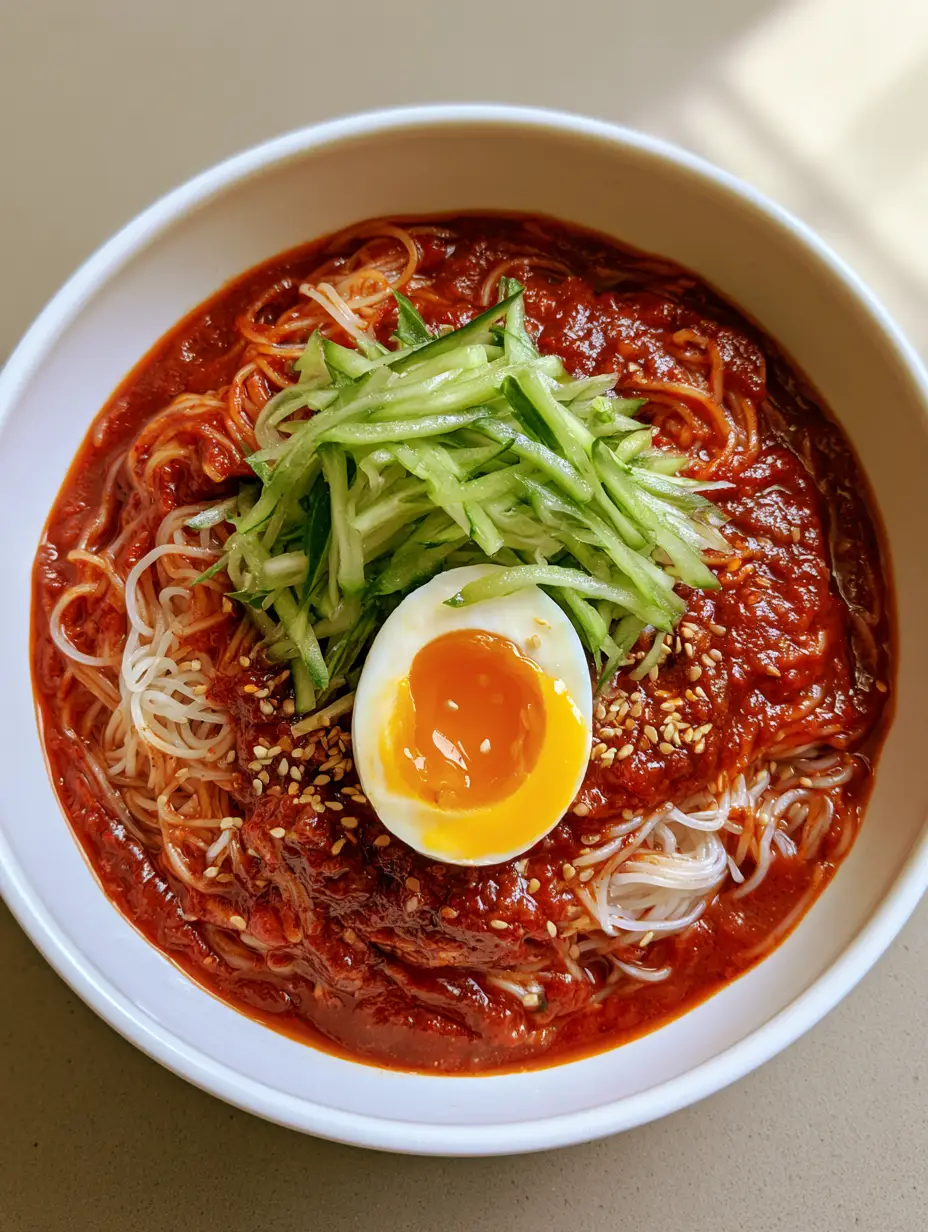
Bibim Guksu: The Ultimate Spicy Korean Cold Noodle Recipe
Ingredients
Equipment
Method
- Bring water to a boil, lower eggs carefully, and boil for 6 minutes and 30 seconds. Transfer immediately to an ice bath, peel when cool, and slice vertically.
- In a large bowl, whisk together gochujang, rice vinegar, soy sauce, sugar, sesame oil, and grated garlic until glossy and smooth.
- Boil somyeon noodles for 3-4 minutes, shocking with cold water if they foam up. Drain and scrub under cold running water to remove starch, then soak in ice water and drain thoroughly.
- Toss the cold noodles in the sauce bowl until coated. Plate in a white bowl, top with julienned cucumber, egg halves, and toasted sesame seeds.
Notes
Use English cucumbers for the best crunch without bitterness.
Closing & Call to Action
There is something incredibly satisfying about the ritual of making Bibim Guksu. From the rhythmic slicing of the cucumber to the vibrant transformation of the white noodles as they hit the red sauce, it is a dish that rewards your effort with incredible visual and culinary payoff. It’s a staple in our home, and we hope it becomes one in yours too!
If you enjoyed this recipe, please leave a comment below and let us know how your jammy eggs turned out! Don’t forget to sign up for our newsletter for more Korean-inspired recipes and high-RPM cooking tips. If you want to save this for later, be sure to pin it to your “Healthy Lunch Ideas” board on Pinterest.
Happy cooking, and enjoy the refreshing heat of your homemade Bibim Guksu!


