When the sun is high and the air is thick with the scent of summer, there is nothing quite as satisfying as a bowl of Greek Olive Pasta Salad. This dish isn’t just a side; it is a vibrant, textural masterpiece that captures the essence of the Mediterranean in every forkful. Imagine al dente rotini pasta spirals, their ridges perfectly designed to catch every drop of a glistening, translucent herb vinaigrette. This is the foundation upon which we build layers of bold, briny flavors and crisp, refreshing textures.
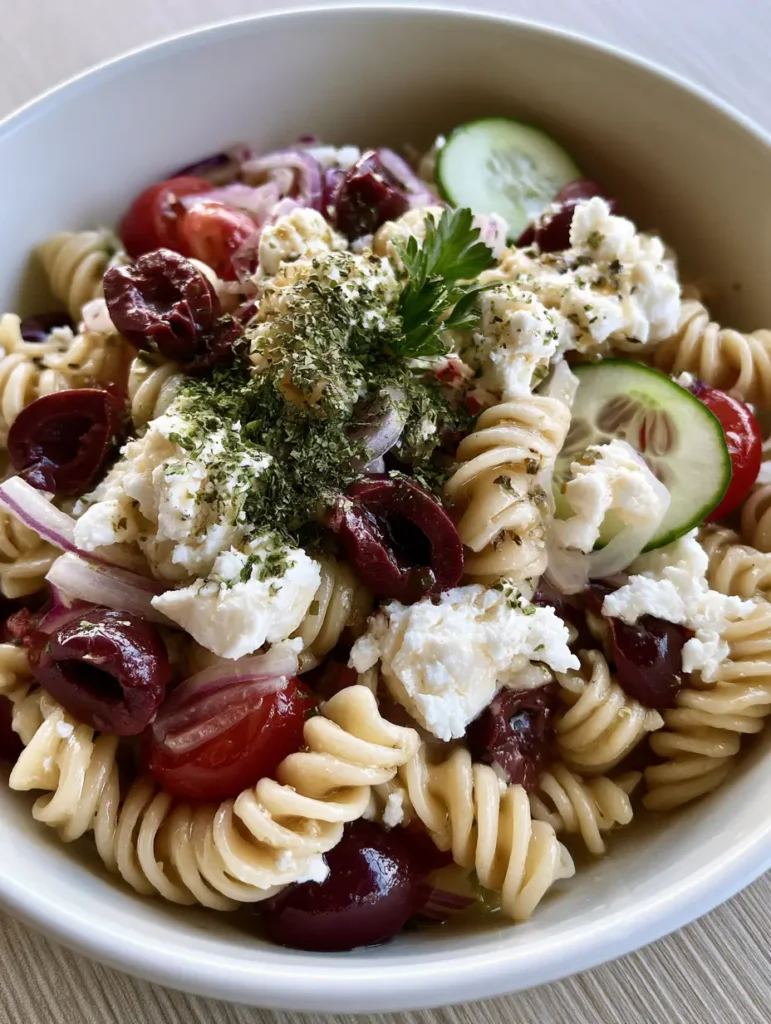
The visual appeal of this Greek Olive Pasta Salad is undeniable, especially when served in a wide, shallow white ceramic bowl that allows every ingredient to shine. You will see the deep purple of halved Kalamata olives contrasting against the matte white crumbles of salty feta cheese. Vibrant red cherry tomato halves burst with sweetness, while the cool green of cucumber half-moons and the delicate purple slivers of raw red onion provide a refreshing crunch. A final dusting of dried green oregano and a scattering of fresh parsley leaves tie the entire experience together under the soft glow of natural daylight.
Why This Refreshing Mediterranean Salad Works
- Textural Harmony: The contrast between the soft, chewy rotini and the crisp snap of fresh cucumbers and onions creates a satisfying mouthfeel in every bite.
- Briny and Tangy Profiles: The combination of Kalamata olives and feta cheese provides a punchy saltiness that is perfectly balanced by the acidity of the herb vinaigrette.
- Visual Vibrancy: Utilizing a “rainbow” of ingredients—red tomatoes, purple olives, green cucumbers, and white cheese—makes this dish the centerpiece of any table.
- Make-Ahead Simplicity: Unlike leaf-based salads, this Greek Olive Pasta Salad actually tastes better after the flavors have had time to meld in the refrigerator.
The Essential Elements for an Authentic Greek Pasta Bowl
To achieve the forensic accuracy required for this dish, every ingredient must be selected for its specific contribution to the flavor profile and visual aesthetic. We start with 16 oz (450g) of high-quality rotini pasta; its corkscrew shape is essential for holding the dressing. For the briny heart of the salad, you will need 1 cup (150g) of pitted and halved Kalamata olives, which offer a much deeper, more complex flavor than standard black olives.
The creamy component comes from 6 oz (170g) of feta cheese, which should be broken into large, rustic crumbles to maintain that “matte white” appearance described in our visual blueprint. For freshness, we include 1 pint (250g) of cherry tomatoes, sliced exactly in half to reveal their juicy interiors. One large English cucumber (300g) should be sliced into half-moons, and half of a small red onion (50g) should be cut into paper-thin slivers to ensure the flavor is present but not overpowering.
The dressing is a foundational herb vinaigrette made from 1/2 cup (120ml) extra virgin olive oil and 1/4 cup (60ml) red wine vinegar. We add 1 tsp (5g) of Dijon mustard as an emulsifier to ensure the dressing remains “glistening and translucent” rather than separated. Seasoning is vital: use 1 tsp (2g) of dried oregano for that earthy Mediterranean aroma and a handful of fresh parsley (10g) for a bright green garnish.
Kitchen Tools for the Perfect Al Dente Texture
Achieving the perfect Greek Olive Pasta Salad requires a few key tools to ensure structural integrity. A large 6-quart (5.7L) stockpot is necessary to boil the pasta in plenty of salted water, allowing the rotini to move freely and cook evenly. You will also need a fine-mesh strainer or colander to drain the pasta immediately once it reaches that elusive al dente state.
For the vegetables, a sharp chef’s knife is non-negotiable for achieving those “delicate slivers” of red onion and clean “half-moon” cuts on the cucumber. A large mixing bowl provides ample space for tossing the ingredients without crushing the delicate feta crumbles. Finally, a small glass jar or whisk and bowl are needed to properly emulsify the herb vinaigrette before it hits the pasta.
Mastering the Perfect Pasta Base and Dressing
The secret to a world-class Greek Olive Pasta Salad lies in the treatment of the starch. Bring a large pot of water to a rolling boil and season it heavily with salt—it should taste like the sea. Add the 16 oz (450g) of rotini and cook for approximately 8-10 minutes. Begin testing the pasta 2 minutes before the package directions suggest; you are looking for a firm bite with no floury center.
The Cooling Process
Once drained, do not rinse the pasta with cold water unless you are in an extreme rush. Instead, spread it out on a large baking sheet and drizzle with a tablespoon of olive oil. This prevents sticking while allowing the pasta to cool naturally, which helps it better absorb the vinaigrette later. While the pasta cools, whisk together your olive oil, red wine vinegar, minced garlic, and Dijon mustard until the mixture is beautifully emulsified and glossy.

The Art of Layering Briny Olives and Tangy Feta
Assembly is where the visual blueprint truly comes to life. In your wide shallow bowl, combine the cooled rotini with the halved cherry tomatoes and cucumber half-moons. Pour three-quarters of the dressing over the base and toss gently. You want to see the pasta spirals “lightly coated in a glistening translucent herb vinaigrette,” ensuring every nook and cranny is flavored.
Adding the Final Flourishes
Now, fold in the dark purple Kalamata olives and the thin slivers of red onion. The red onion adds a sharp visual contrast against the green cucumbers. Finally, sprinkle the large crumbles of feta cheese across the top. Avoid over-mixing once the cheese is added, as you want the feta to remain in distinct, matte white chunks rather than dissolving into the dressing. Finish with a generous dusting of dried oregano and the fresh parsley leaves for a professional, unedited look.
Pro Tips for a Non-Mushy Pasta Salad
- Salt the Water, Not Just the Salad: Salting the boiling water is your only chance to season the pasta itself from the inside out.
- Under-cook Slightly: If you plan to let the salad sit overnight, cook the pasta for 1 minute less than al dente. The acidity in the vinaigrette will continue to “cook” and soften the pasta as it marinates.
- Emulsify Your Dressing: Use a jar and shake vigorously. A well-emulsified dressing clings to the rotini spirals instead of pooling at the bottom of the bowl.
- Room Temp Service: For the best flavor, take the salad out of the fridge 20 minutes before serving. This allows the olive oil to liquefy and the aromas of the oregano to bloom.
Safe Storage and Meal Prep Secrets
This Greek Olive Pasta Salad is a meal-prepper’s dream. It can be stored in an airtight container in the refrigerator for up to 4 to 5 days. Because there are no leafy greens to wilt, the vegetables stay remarkably crisp. If the pasta seems to have soaked up all the dressing by day three, simply whisk a tablespoon of red wine vinegar and olive oil together and toss it back through to restore that glistening sheen.
Freezing is not recommended for this recipe. The cellular structure of the cucumbers and tomatoes will break down when frozen, resulting in a watery, mushy mess upon thawing. This dish is best enjoyed fresh or chilled from the fridge. If you are serving this at an outdoor event, keep the bowl nestled in a larger bowl of ice to keep the feta and vegetables at a food-safe temperature.
What to Serve With This Mediterranean Feast
This salad is incredibly versatile and can act as a standalone lunch or a vibrant side dish for a larger spread. For a protein-packed dinner, pair it with these Greek chicken gyros for a cohesive theme. The acidity of the salad also cuts through the richness of fried appetizers beautifully.
If you are hosting a party, consider serving this alongside feta rolls to double down on that tangy cheese flavor. For a more “surf and turf” vibe, it works exceptionally well with garlic butter shrimp scampi (coming soon). If you’re looking for something more substantial for a potluck, this salad provides a refreshing counterpoint to a heavier one-pot black beans and rice.
Common Pasta Salad Pitfalls to Avoid
Absolutely. Grilled chicken, chickpeas, or even canned tuna pair beautifully with the briny olives and tangy vinaigrette to turn this salad into a protein-rich entree.
Yes, while rotini is ideal for catching dressing in its ridges, penne or fusilli are excellent substitutes that maintain structural integrity when tossed with heavy ingredients like olives and feta.
Ensure the pasta is completely cooled before adding the vinaigrette. Additionally, emulsifying the dressing with Dijon mustard creates a barrier that coats the pasta rather than being absorbed into it.
This specific recipe is vegetarian due to the feta cheese. To make it vegan, simply substitute the feta with a plant-based almond-based cheese or extra seasoned chickpeas for texture.
Always use block feta stored in brine. Crumbing it yourself results in larger, creamier ‘matte white’ pieces that provide a better textural contrast than the drier, powdery pre-crumbled versions.
The Ultimate Greek Olive Pasta Salad Recipe
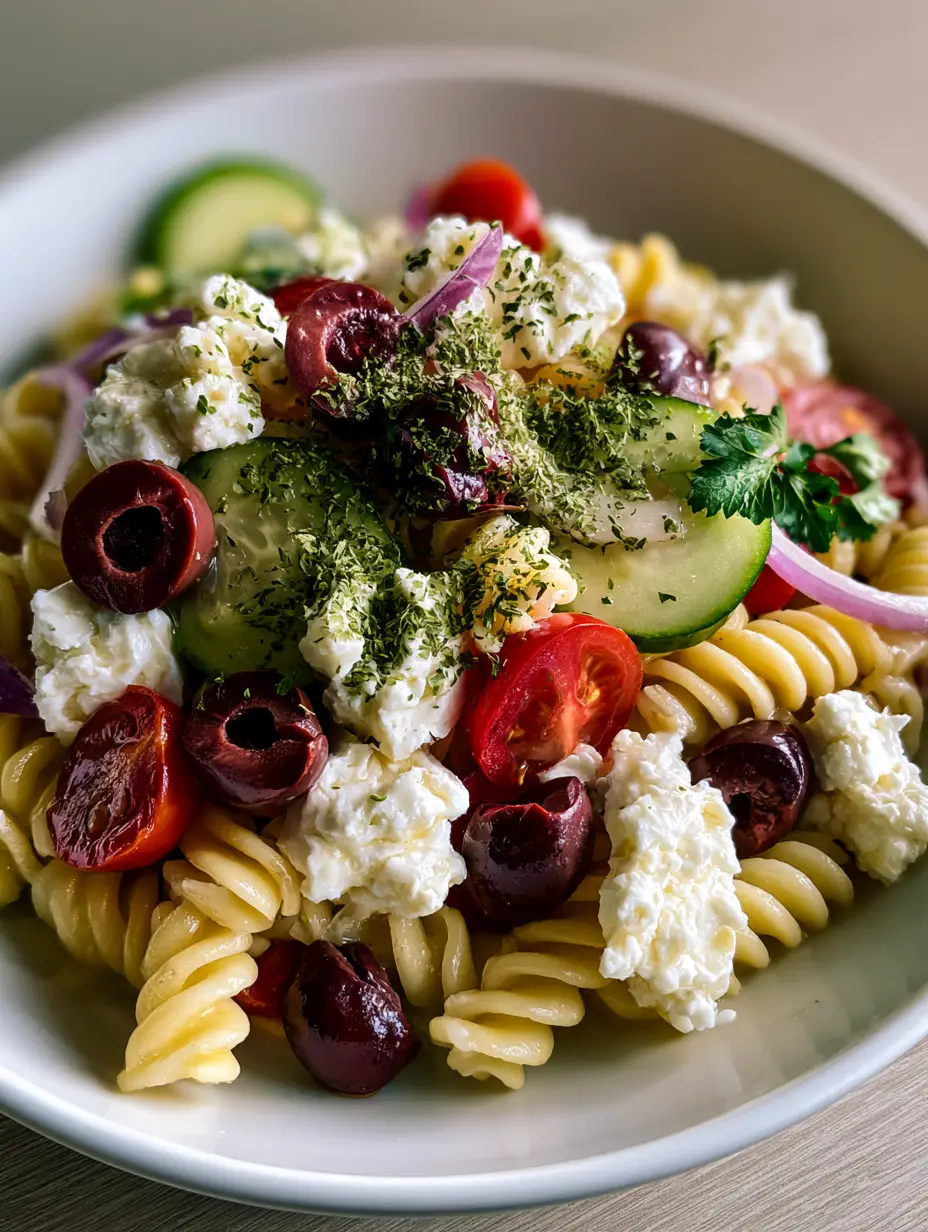
Greek Olive Pasta Salad with Feta and Herb Vinaigrette
Ingredients
Equipment
Method
- Boil the rotini in salted water for 8-10 minutes until al dente. Drain and spread on a sheet pan to cool.
- Whisk olive oil, red wine vinegar, and oregano in a small bowl until emulsified and glistening.
- In a large bowl, combine cooled pasta with tomatoes, cucumber, and red onion. Drizzle with most of the dressing and toss.
- Gently fold in the halved Kalamata olives and large feta crumbles to maintain their texture.
- Dust with additional dried oregano and top with fresh parsley leaves before serving.
Notes
If making ahead, reserve a little dressing to toss in right before serving to refresh the pasta.
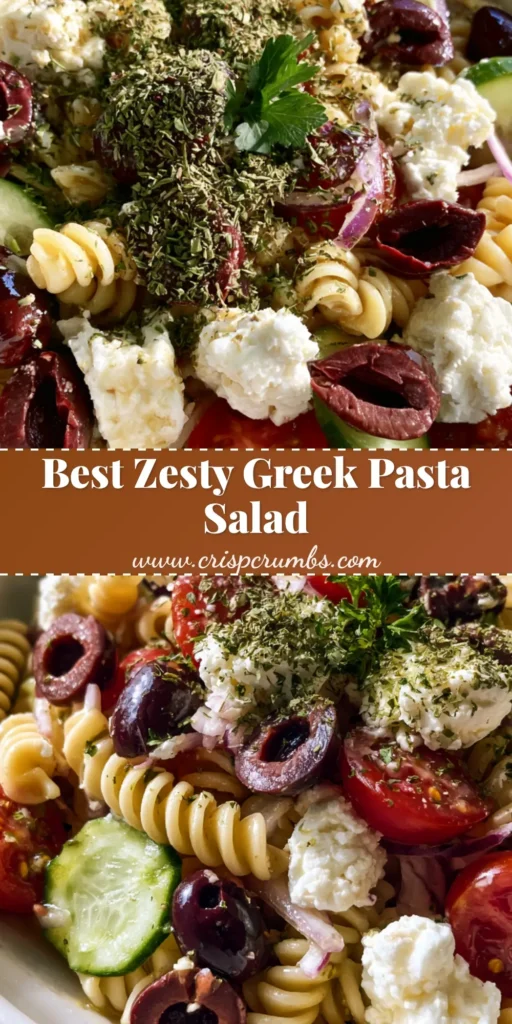
Join the CrispCrumbs Community!
We hope this Greek Olive Pasta Salad becomes a staple in your summer recipe rotation. The balance of briny olives, creamy feta, and zesty vinaigrette is a crowd-pleaser every single time. If you enjoyed this recipe, please leave a comment below and let us know how it turned out! Don’t forget to sign up for our newsletter for more culinary forensic deep-dives and follow us on Pinterest to save this recipe for your next gathering.


