Craving a trip to the Mediterranean? This authentic Greek Salad recipe is your ticket. Forget the sad, lettuce-filled versions you might be used to. We’re diving deep into the heart of Greek cuisine with a traditional Horiatiki salad—a vibrant, refreshing mix of sun-ripened tomatoes, crisp cucumbers, sharp red onion, and salty Kalamata olives, all crowned with a generous slab of feta cheese. It’s simple, it’s wholesome, and it’s bursting with flavor.
This is more than just a recipe; it’s a celebration of fresh ingredients. Whether you need a quick and healthy lunch, a light dinner, or the perfect side dish for a summer barbecue, this classic Greek Salad recipe is guaranteed to impress. Let’s get started!
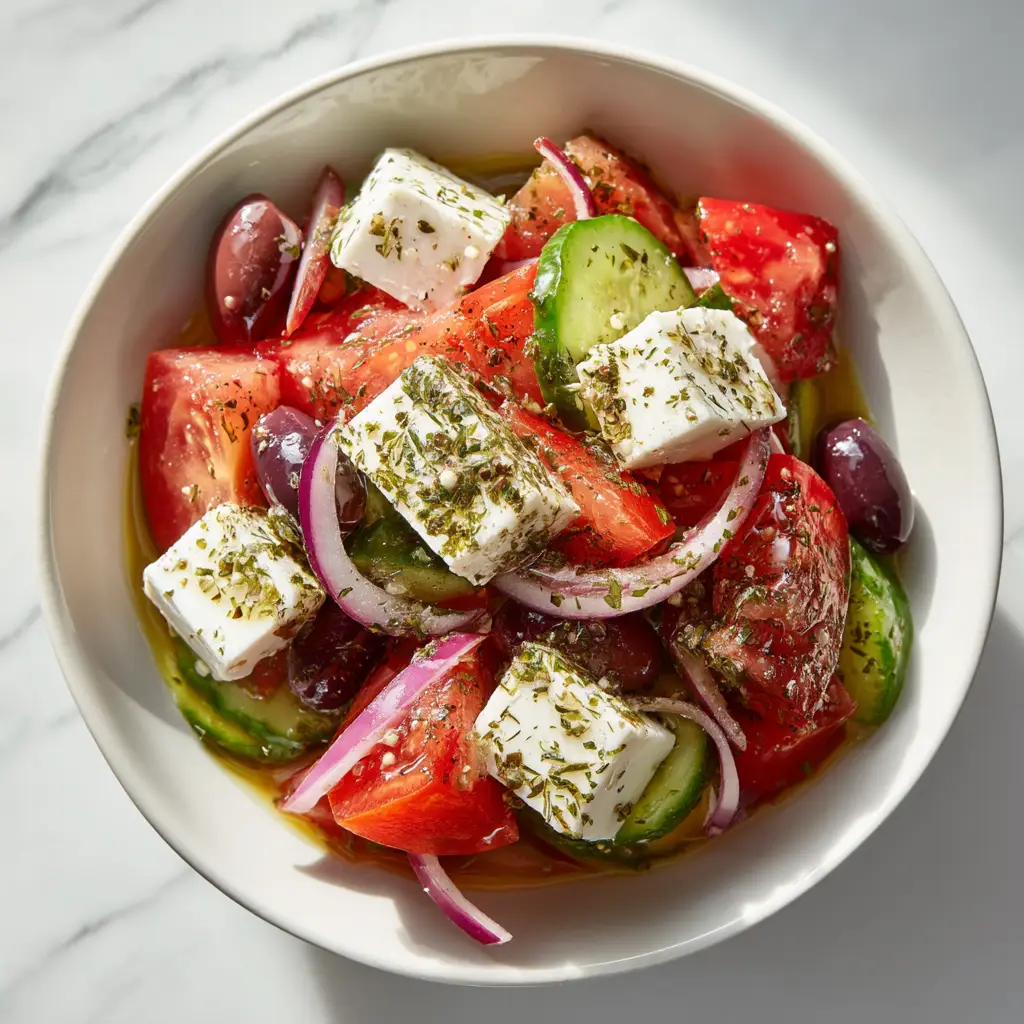
What Makes a Greek Salad Truly Authentic?
The key to an authentic Greek salad, known as Horiatiki, is its beautiful simplicity. The word “Horiatiki” literally translates to “village” or “peasant” salad, reflecting its rustic origins and reliance on fresh, locally available ingredients. The most important distinction? A traditional Greek salad never contains lettuce. Its body and crunch come from the crispness of the cucumber and the firmness of the other fresh vegetables.
Instead of a complicated, emulsified dressing, a true Horiatiki is simply dressed with high-quality extra virgin olive oil and a splash of red wine vinegar, seasoned with dried oregano. The final, non-negotiable element is a thick slice of feta cheese placed right on top, not crumbled throughout.
The Core Ingredients for the Perfect Greek Salad Recipe
The quality of your salad depends entirely on the quality of your ingredients. There are no heavy sauces or complex flavors to hide behind, so sourcing the best produce and cheese is essential for this Greek Salad Recipe.
Choosing the Right Feta
Authentic Greek feta is made from sheep’s milk (or a blend of sheep’s and goat’s milk) and is sold in brine. This keeps it creamy, tangy, and flavorful. Avoid dry, pre-crumbled feta, as it lacks the moisture and rich taste of a block. Look for a firm, creamy block of feta in brine for the best results.
Selecting Fresh Vegetables
For the most vibrant salad, use the freshest vegetables you can find. Look for ripe, fragrant tomatoes—heirloom or vine-ripened varieties are fantastic. Your cucumbers should be firm with bright, unblemished skin. A sharp, crisp red onion and plump, flavorful Kalamata olives are the final pieces of the puzzle. For a similar crunch with a sweeter note, try our Cucumber and Sweet Pepper Salad.

Crafting the Perfect Greek Salad Dressing
The dressing for this Greek Salad recipe couldn’t be simpler, allowing the fresh ingredients to shine. It’s a testament to the idea that less is often more. All you need is high-quality extra virgin olive oil—the fruitier, the better—and a good red wine vinegar. A generous sprinkle of dried oregano ties it all together with an earthy, distinctly Mediterranean aroma. That’s it! No mustard, no sugar, no garlic—just pure, simple flavor.
How to Make Our Authentic Greek Salad Recipe
This recipe comes together in just a few minutes. The key is to chop the vegetables into large, bite-sized chunks to maintain their texture and rustic appeal.
- Prepare the Vegetables: Start by washing and thoroughly drying your tomatoes and cucumber. Chop them into generous 1-inch chunks. Thinly slice the red onion.
- Combine the Base: In a large, shallow bowl, combine the chopped tomatoes, cucumber, and sliced red onion. Add the Kalamata olives.
- Dress the Salad: Drizzle the vegetables generously with extra virgin olive oil and a smaller amount of red wine vinegar. Sprinkle with dried oregano and a pinch of sea salt. Gently toss everything together until the vegetables are lightly coated.
- Add the Feta: Place the entire block or a thick slice of feta cheese directly on top of the salad. Do not crumble it in. Drizzle a little more olive oil and a sprinkle of oregano over the feta.
- Serve Immediately: For the best texture and flavor, serve the salad right away.
Expert Tips for the Best-Ever Greek Salad
While this recipe is simple, a few expert tips can elevate it from good to unforgettable.
- Don’t Over-Toss: Gently combine the ingredients to avoid bruising the tomatoes and making the salad watery.
- Use a Shallow Bowl: Serving in a shallow bowl or platter, as is traditional in Greece, ensures the ingredients aren’t crushed under their own weight.
- Salt Strategically: Remember that the feta and olives are already salty. Add a small pinch of salt to the vegetables, but taste before adding more.
- Let It Marinate (Briefly): For a slightly softer texture and more mingled flavors, you can let the salad sit for 10-15 minutes before serving. However, don’t let it sit for too long, as the vegetables will lose their crispness. For another great make-ahead option, check out this Zesty Italian Pasta Salad.
Delicious Serving Suggestions
This versatile Greek Salad recipe works beautifully as a light main course or a perfect side dish. It pairs wonderfully with grilled meats like chicken, lamb, or fish. For a heartier meal, serve it alongside our Sheet Pan Balsamic Chicken or some delicious Garlic Parmesan Roasted Potatoes. It’s also fantastic with crusty bread for dipping into the flavorful juices at the bottom of the bowl.
Storage and Make-Ahead Tips
A Greek salad is best enjoyed fresh. The salt will draw moisture from the vegetables, causing them to lose their crispness over time. If you need to prep ahead, you can chop the vegetables and store them in an airtight container in the refrigerator for up to 24 hours. Keep the dressing separate and do not add the feta until just before you’re ready to dress and serve.
Frequently Asked Questions
It’s best served fresh, but you can do some prep ahead of time. You can chop the cucumbers, tomatoes, and onions and store them in an airtight container in the fridge for up to 24 hours. Wait to add the olives, dressing, and feta until just before serving to keep the vegetables crisp.
No, a traditional and authentic Greek salad (Horiatiki) should never contain lettuce. The body and crunch of the salad come from the fresh, chunky vegetables like cucumber and tomatoes.
Authentic Greek salad dressing is very simple. It consists of high-quality extra virgin olive oil, a splash of red wine vinegar, and a generous sprinkle of dried oregano. Salt is added to taste, but no other spices, mustard, or garlic are typically included.
There is no difference! Horiatiki is the traditional Greek name for what is commonly known as a Greek salad. It translates to ‘village’ or ‘peasant’ salad and always refers to the authentic recipe made with tomatoes, cucumbers, onions, olives, and feta, without any lettuce.
Kalamata olives are the classic and best choice for a Greek salad. They have a rich, fruity flavor and soft texture that perfectly complements the other ingredients.
Share Your Creations!
We hope you love this authentic Greek Salad recipe! It’s a fresh, flavorful, and incredibly simple dish that brings a taste of Greece to your kitchen. If you make it, we’d love to see it! Leave a comment below or share a photo on Pinterest. Happy cooking!
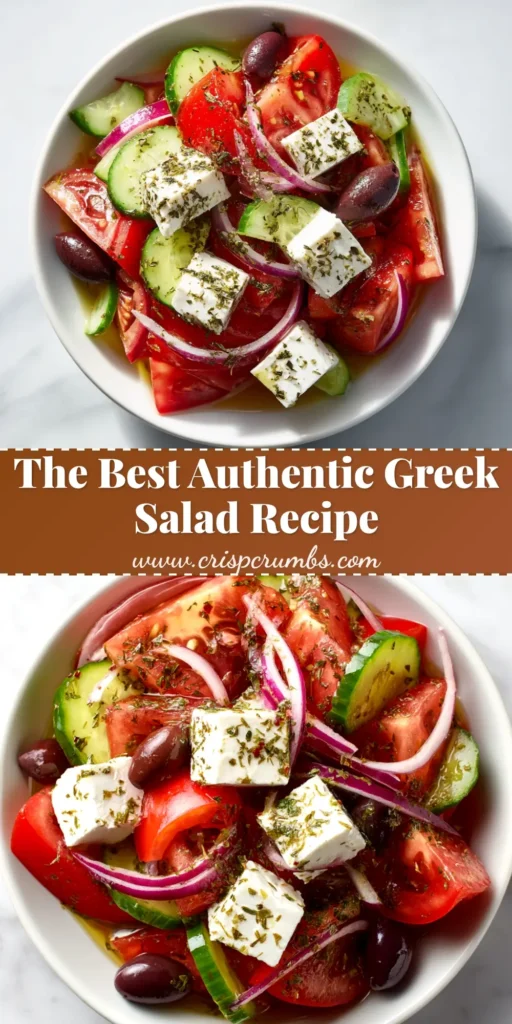
Greek Salad Recipe
Greek Salad Recipe (Authentic Horiatiki)
Ingredients
Equipment
Method
- Start by washing and thoroughly drying your tomatoes and cucumber. Chop them into generous 1-inch chunks. Thinly slice the red onion.
- In a large, shallow bowl, combine the chopped tomatoes, cucumber, and sliced red onion. Add the Kalamata olives.
- Drizzle the vegetables generously with extra virgin olive oil and a smaller amount of red wine vinegar. Sprinkle with dried oregano and a pinch of sea salt. Gently toss everything together until the vegetables are lightly coated.
- Place the entire block or a thick slice of feta cheese directly on top of the salad. Do not crumble it in. Drizzle a little more olive oil and a sprinkle of oregano over the feta.
- For the best texture and flavor, serve the salad right away.
Notes
Don't Add Lettuce: A traditional Horiatiki salad does not contain lettuce or any other leafy greens.
Serve Fresh: This salad is best enjoyed immediately after being prepared to ensure the vegetables stay crisp.


